
Victorian Footrest
A victorian footrest brings nineteenth-century comfort to firesides and seating groups, offering solid timber frames beneath traditional upholstery.
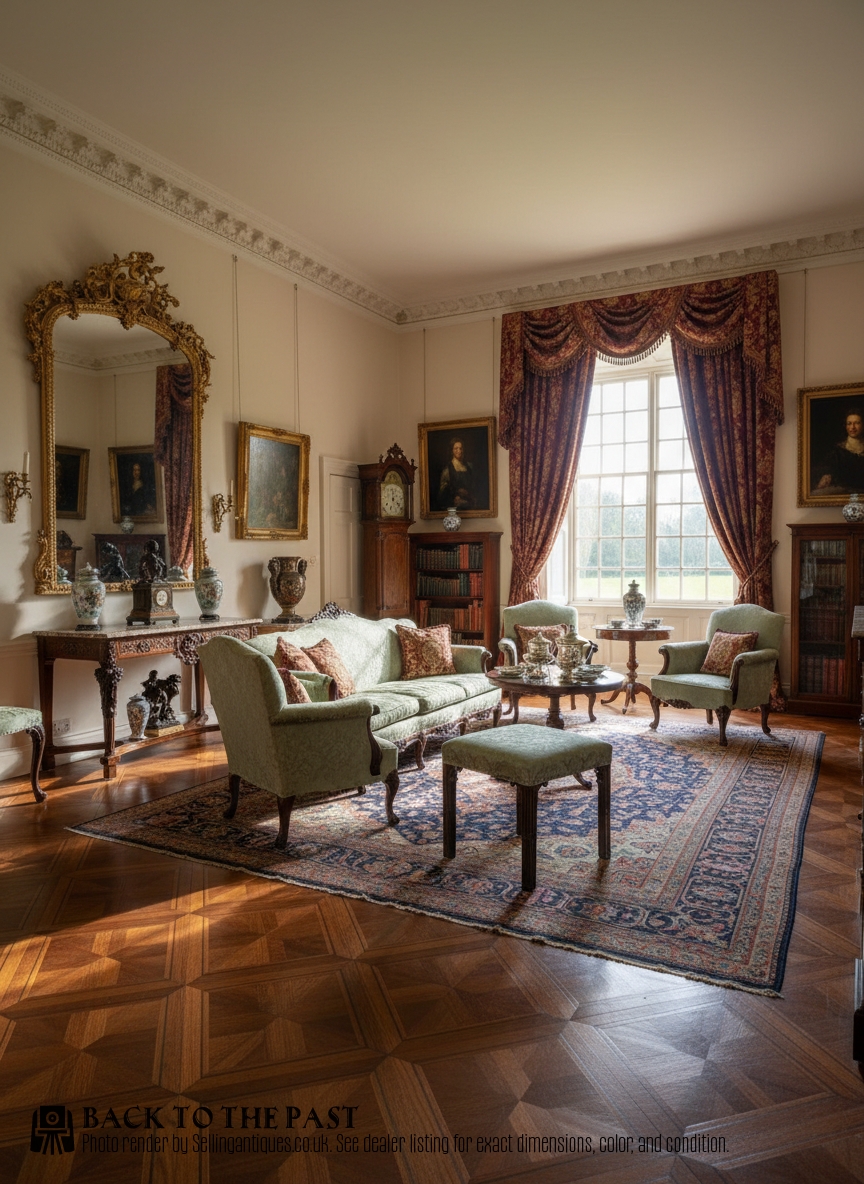
Victorian Footrest
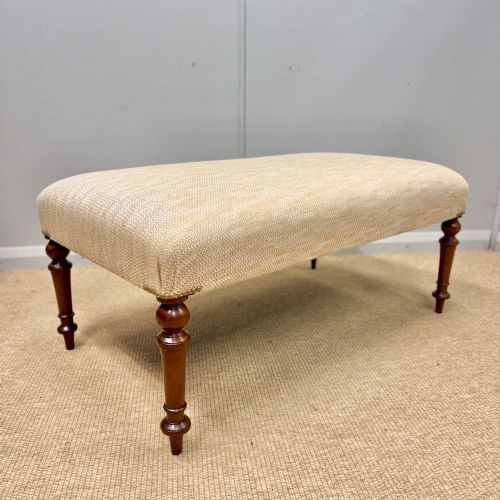
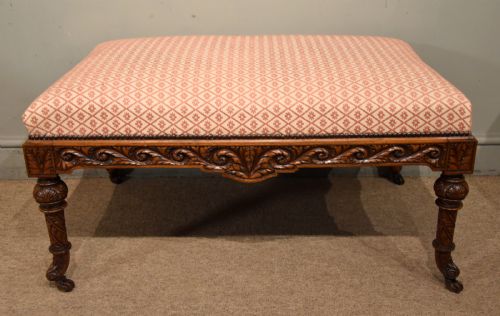
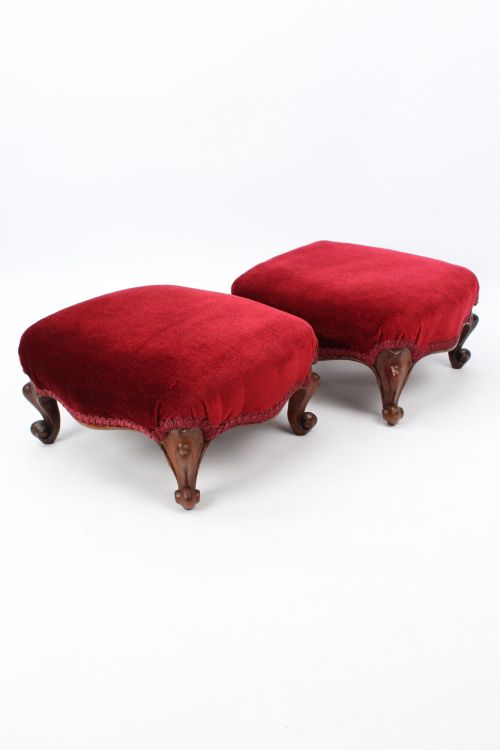
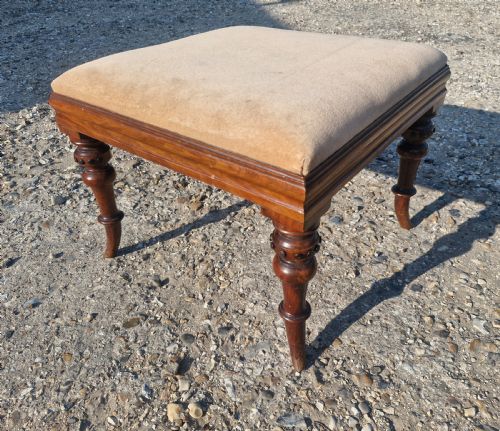
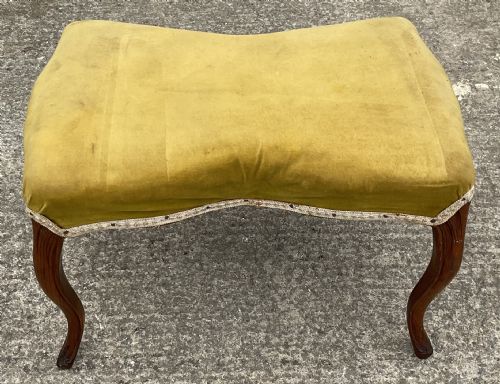
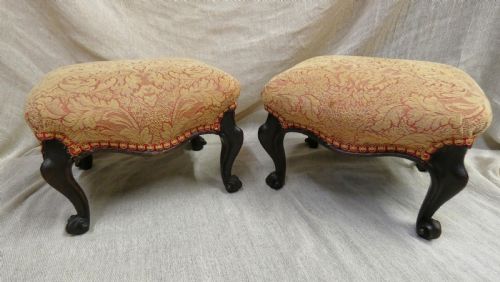
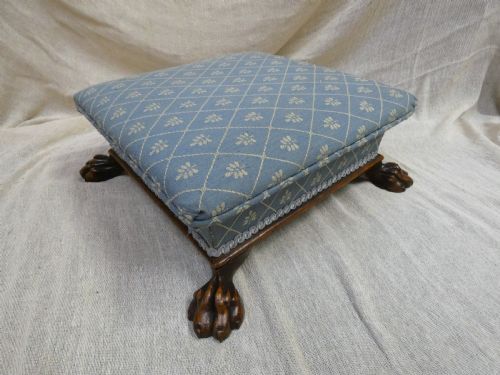
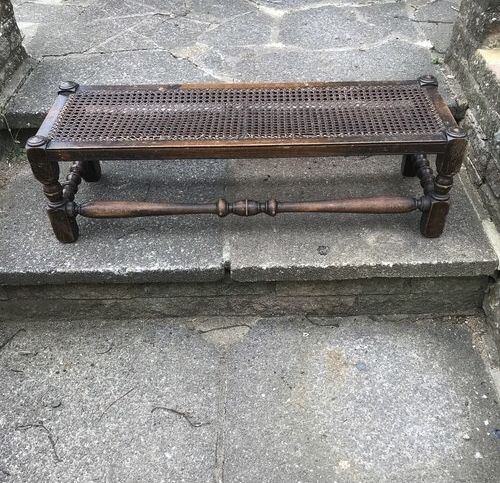
A victorian footrest takes many forms across this selection, from low fireside stools to larger ottomans and specialised gout stools designed for elevation. Buyers find oblong and oval shapes upholstered in needlepoint, fabric, leather, or velvet, often standing on short timber legs.
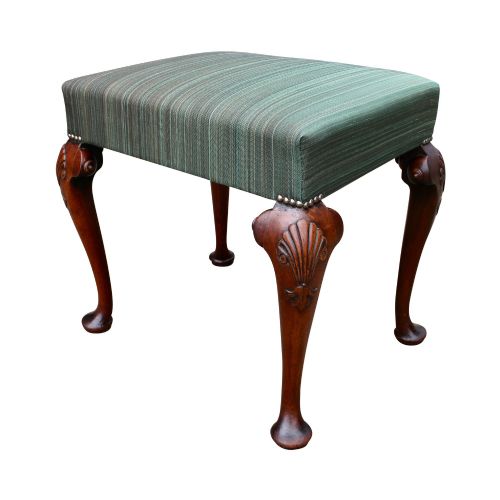
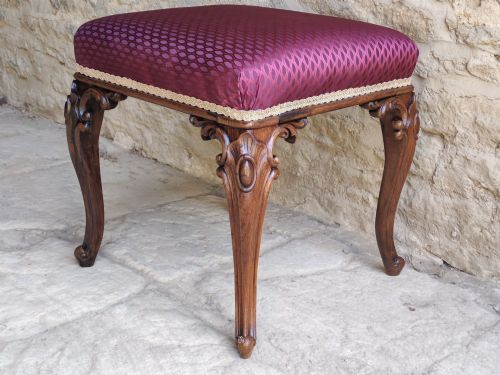
The most common examples on this page date from the nineteenth century in walnut, mahogany, or rosewood. Makers produced simple footstools alongside elaborately carved dressing stools and reclining armchair combinations.
Materials and construction
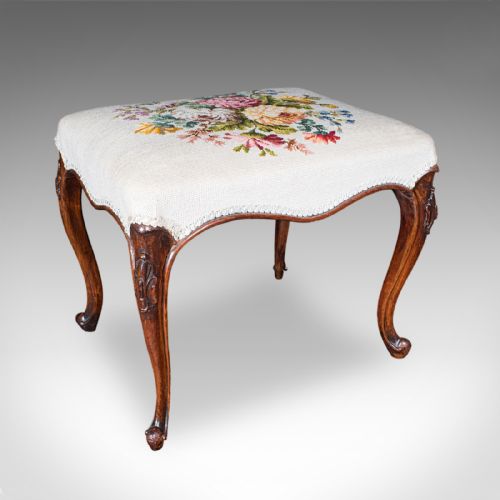
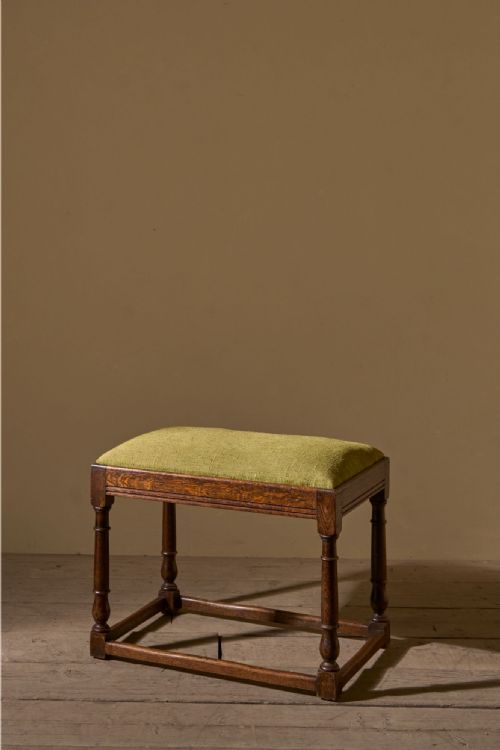
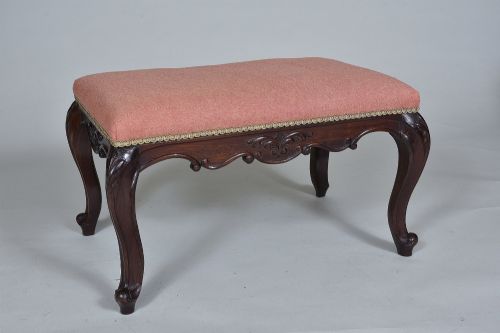
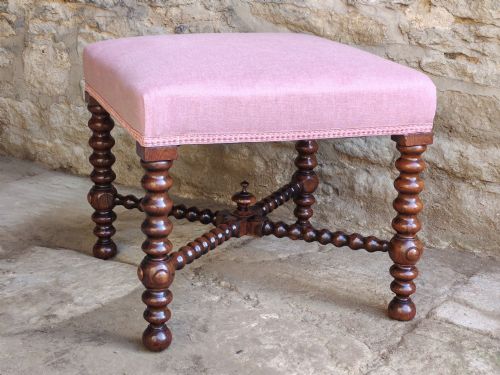
Frames rely on dense hardwoods including mahogany, walnut, rosewood, oak, and beech, joined with traditional carpentry methods. Many examples incorporate turned legs, cabriole legs, or bobbin turnings, while some sit on brass castors.
Upholstery utilises textiles such as wool needlework, green linen, velvet, and leather over padded foundations. Specialised pieces like gout stools integrate mechanical reclining actions or rocking timber frames.
Several footrests come equipped with built-in rocking mechanisms, proving that Victorian comfort took many forms.
Quality differences
Quality rests in the crispness of the timber carving and the density of the chosen hardwood. Finely figured walnut or rosewood framing indicates higher ambition than plain stained beech.
The integrity of the frame construction and the fidelity of revival styles, such as Queen Anne or Rococo Revival details, separate standard production from superior pieces.
The Victorian Footrest Glossary
- Gout stool
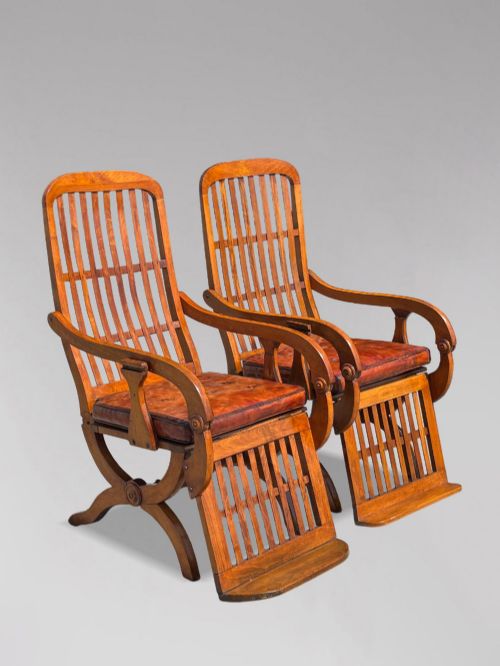
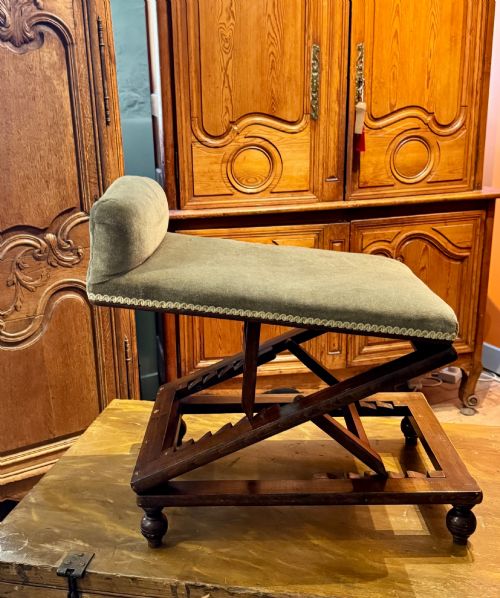
- A specialised nineteenth-century footrest featuring an adjustable or rocking mechanism designed to elevate aching feet. These pieces often include padded leather or upholstered supports.
- Cabriole leg
- A furniture leg with a double curve resembling the leg of an animal, moving outward in a convex arc then bending inward in a concave arc. This style appears frequently on walnut and mahogany stools.
- Needlepoint
- A form of canvas work embroidery utilising wool yarn to create intricate floral or geometric patterns. It covers the top surface of many traditional fireside stools.
- Ottoman
- A low, upholstered seat or footstool without a back or arms, sometimes incorporating internal storage space. Larger examples function as central coffee tables or benches.
- Bobbin leg
- A turned timber support shaped to resemble a series of wooden bobbins or spools stacked end to end. This decorative turning technique appears on mid-century rosewood frames.
Victorian Footrest: Frequently Asked Questions
How were these footrests used?
Nineteenth-century households placed low stools by firesides and armchairs to keep feet elevated away from cold drafts near the floor.
Specialised variants like gout stools served those needing specific leg elevation for health reasons during long periods of sitting.
What woods should I look for?
The listings feature dense timbers typical of nineteenth-century cabinetmaking, predominantly walnut, mahogany, and rosewood.
Other examples utilise oak, teak, or beech, sometimes finished with staining or gilding depending on the specific revival style.
Are the upholstery fabrics original?
Many pieces retain antique needlepoint, tapestry, or leather, while others feature modern replacement textiles or arrive ready for reupholstering.
Needlework covers often display period floral motifs worked in wool yarn over traditional canvas foundations.
How do I spot a gout stool?
Gout stools stand out through their mechanical reclining actions or curved rocking bases built to adjust the angle of elevation.
They frequently pair with armchairs and utilise adjustable supports upholstered in leather or heavy fabric.