
Victorian Floral Tapestry
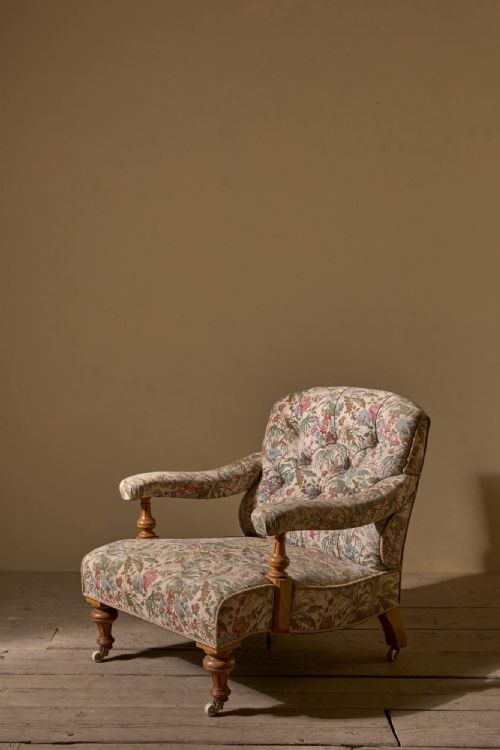
These nineteenth-century furnishings upholstered in needlework depict botanic patterns that bring rich nineteenth-century colour and texture into a room.
Victorian Floral Tapestry
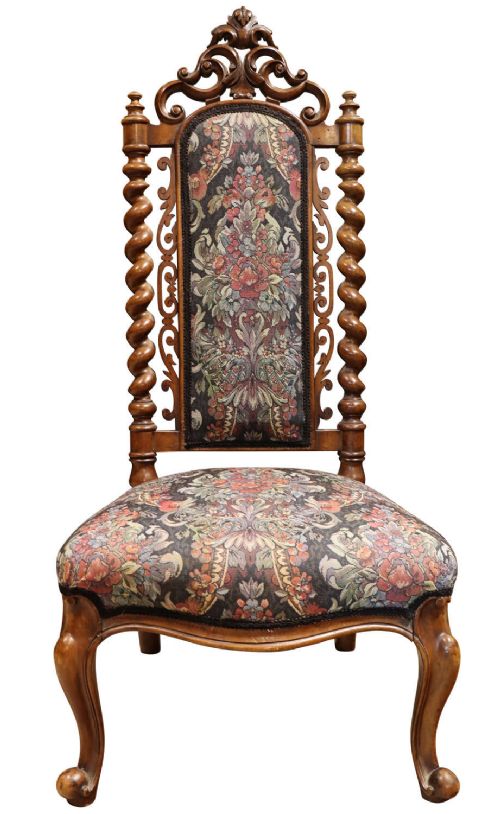
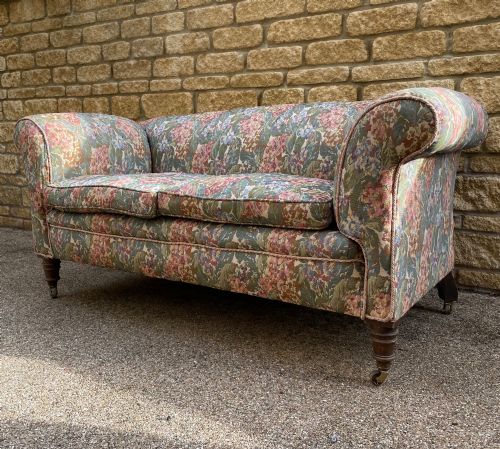
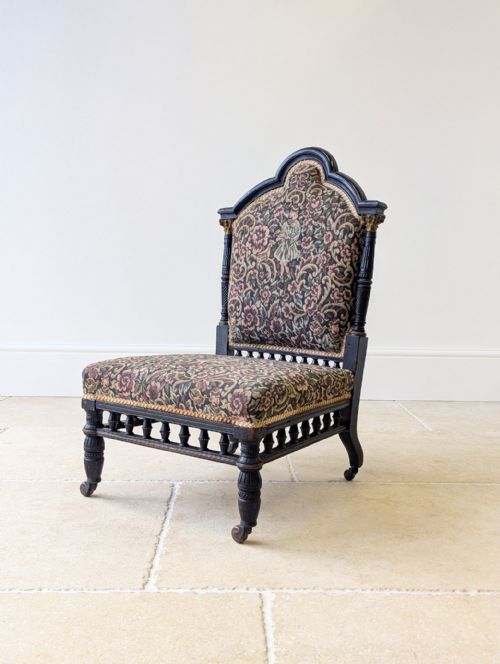
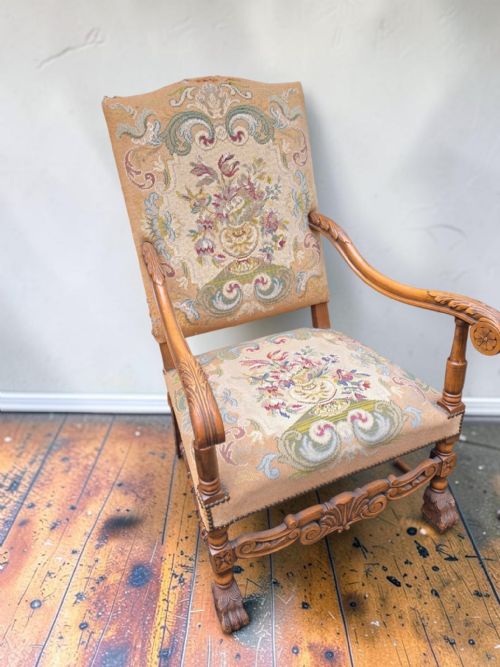
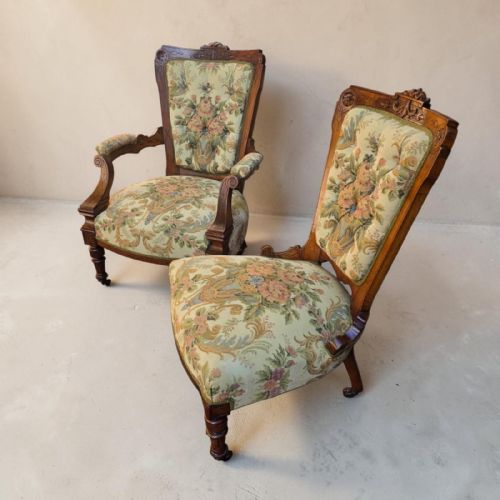
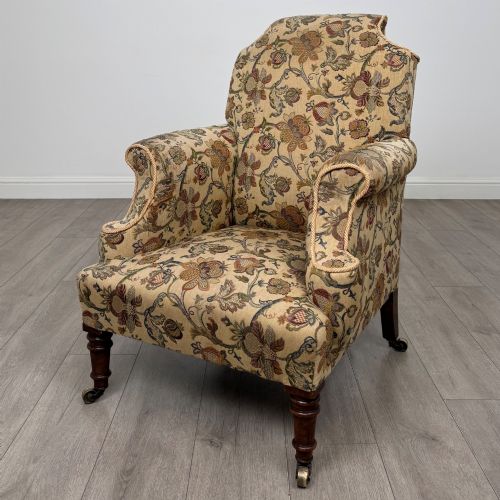
When you search for Victorian floral tapestry, you encounter a specialised group of nineteenth-century furnishings including armchairs, footstools, side chairs, and fire screens. The pieces span the Victorian period alongside related nineteenth-century idioms such as Early Victorian, Aesthetic Movement, and Victorian Gothic Revival, capturing botanical motifs worked in wool and fabric.
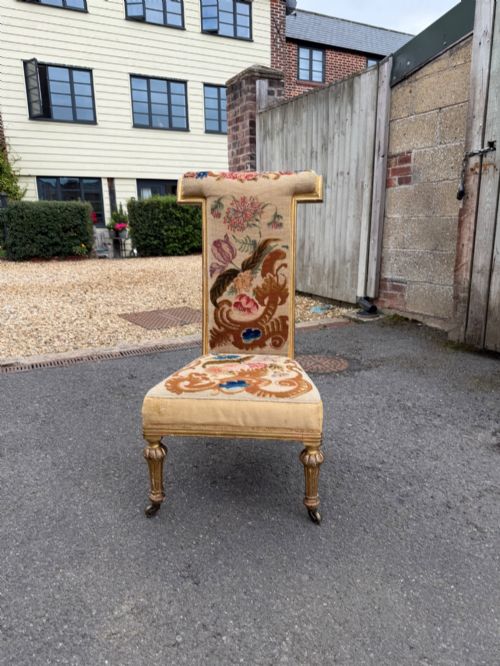
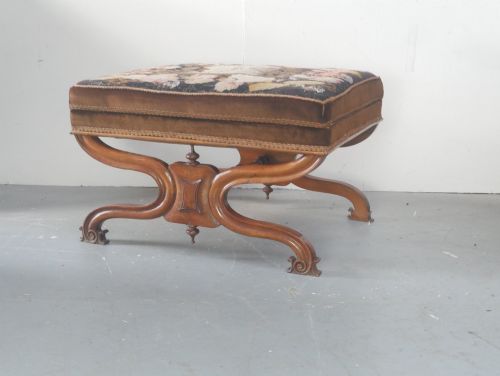
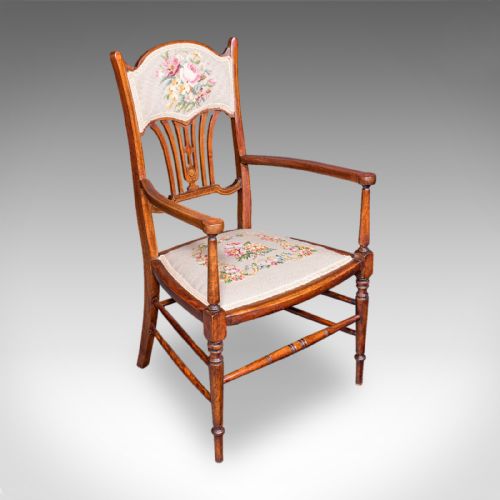
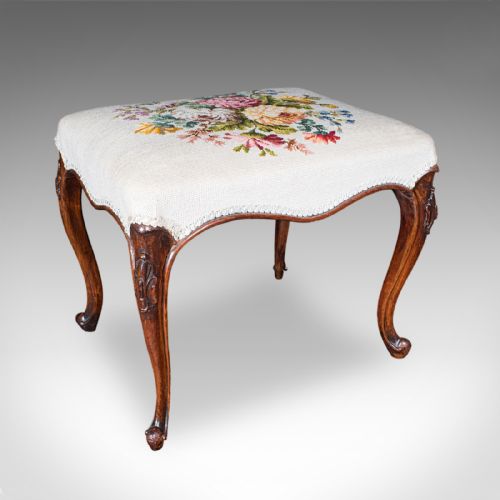
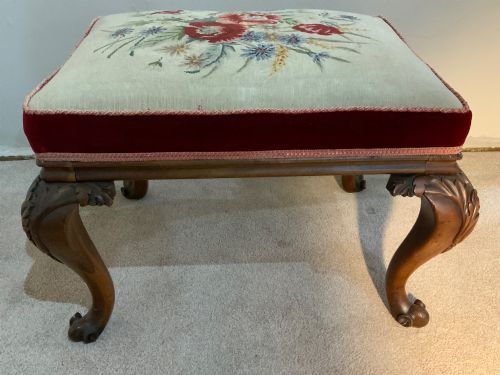
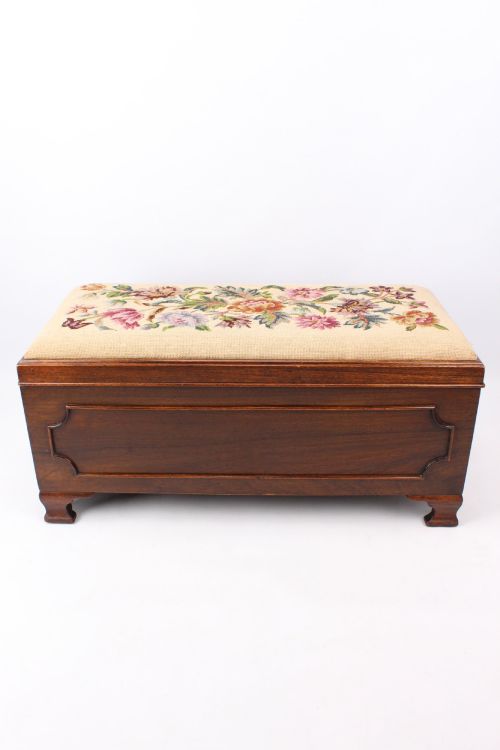
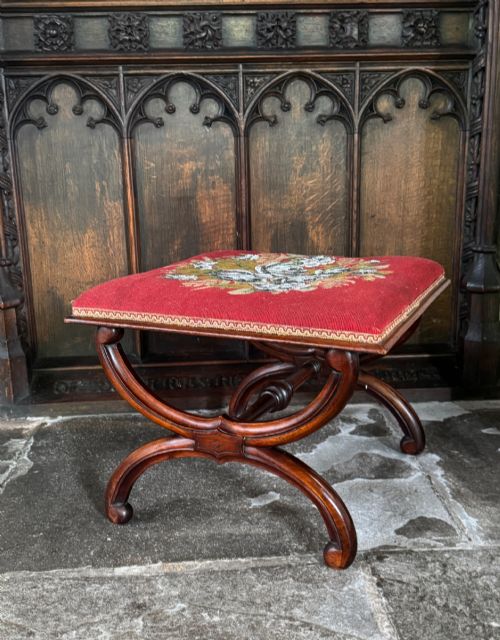
The most common forms on this page are low footstools, nursing chairs, and salon chairs framed in timber and finished with hand-worked needlepoint. These items served functional domestic roles in morning rooms and parlours, combining structural woodwork with textile arts.
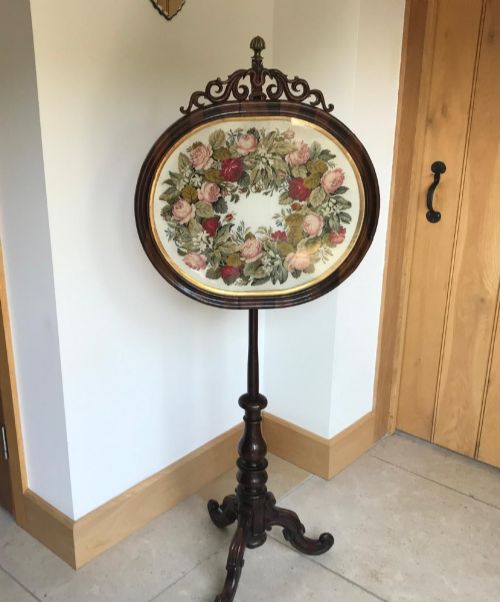
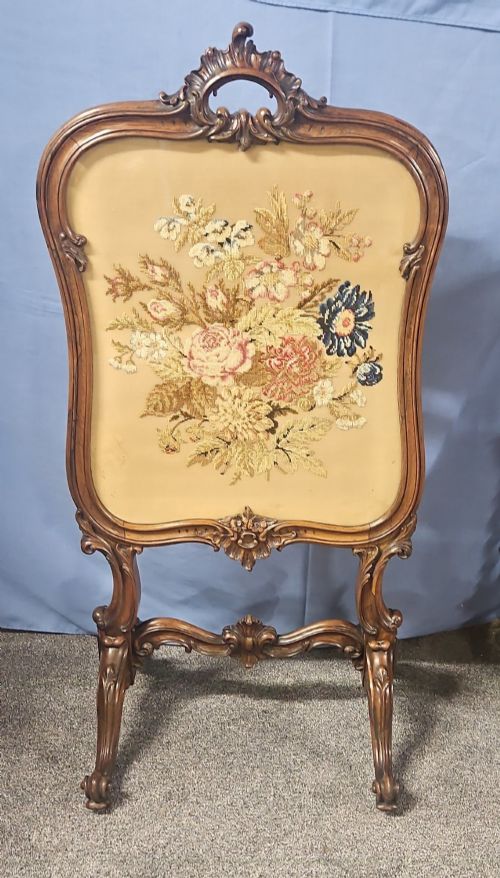
Beyond seating, the category encompasses pole fire screens and four-fold screens featuring woolwork panels and floral leaf embroidery. Such pieces demonstrate how textile decoration was integrated into domestic architecture and heating management during the nineteenth century.
Materials and construction
Makers built the structural frames using dense timbers including walnut, mahogany, rosewood, oak, beech, and padouk, often shaping them with carved details or gilding. These woods provided the necessary rigidity for armchairs, X-frame stools, and revolving piano seats.
Upholstery and decorative panels rely on wool, textile, fabric, and needlework, incorporating beadwork and Berlin tapestry techniques to render floral and leaf designs. The textiles are secured to frames of brass, wood, and gesso, completing pieces designed for heavy daily use.
Listings feature structural frames in walnut, rosewood, and mahogany alongside auxiliary supports in brass and beech.
Quality differences
The distinction between ordinary and superior pieces rests on the crispness of the timber carving and the density of the woolwork panel. Master cabinetmakers employed finely grained walnut and rosewood with deeply articulated foliage, whereas simpler examples utilised beech or plain mahogany.
Preservation of the original fabric or needlework significantly affects the character of a piece. Fine execution shows tight, even stitches with well-defined botanical colour gradations, while secondary work displays looser tension and simpler geometric integration.
R Whytock of Edinburgh·Howard and Sons
The Victorian Floral Tapestry Glossary
- Needlepoint
- A type of canvas work embroidery stitched with wool yarn to create dense pictorial or floral patterns. It forms the primary decorative surface on Victorian stools and firescreens.
- Prie Dieu
- A low devotional chair featuring an elevated backrest designed for kneeling or leaning during prayer. Nineteenth-century examples frequently showcase ornate wood carving and tapestry upholstery.
- Pole Screen
- A vertical firescreen mounted on a slender tripod base with an adjustable needlework panel that shielded faces from hearth flames. They combine turned wood standards with embroidered textile inserts.
- X Frame
- A folding or fixed chair base constructed from intersecting diagonal stretchers forming an X shape. This structural form provides stability and references medieval revival styles.
- Berlin Tapestry
- A charted form of needlework popular in the nineteenth century that enabled stitchers to reproduce complex floral pictures using coloured wools on canvas. It produced vibrant botanical designs on chairs and framed pictures.
Victorian Floral Tapestry: Frequently Asked Questions
What is a Victorian floral tapestry?
It is a nineteenth-century furnishing featuring hand-worked wool needlepoint depicting botanical motifs, applied to seating or fire screens.
These textiles capture the period interest in natural history and domestic comfort, mounted on frames of walnut, rosewood, or mahogany.
How were fire screens used?
They were positioned near fireplaces to protect the occupant's face from the intense radiant heat of open coal fires.
The adjustable woolwork panels allowed users to raise or lower the textile shield as needed.
Where did these pieces sit?
They occupied principal reception spaces such as morning rooms, parlours, and drawing rooms in nineteenth-century homes.
Stools and low chairs were arranged around hearths, while screens managed light and heat distribution.
How do I identify Early Victorian pieces?
Early Victorian items typically exhibit transitional furniture forms that retain late Georgian proportions while introducing heavier scrollwork and richer timbers.
The needlework often employs Berlin wool work charts with shaded naturalistic floral palettes.