



Victorian Floral Pendant
These delicate victorian floral pendant designs translate natural forms into precious gold, silver, pearl and diamond ornaments to wear close to the heart.
Victorian Floral Pendant
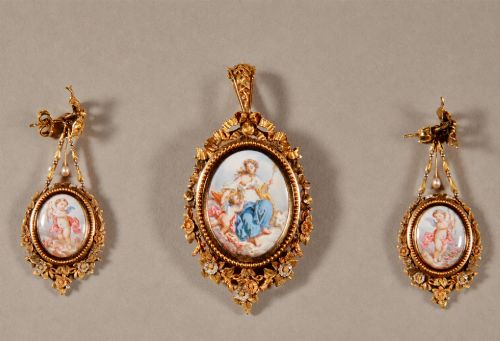
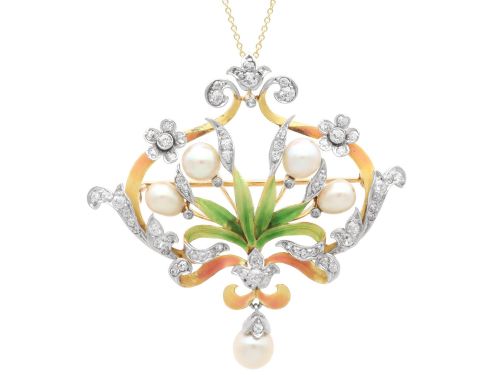
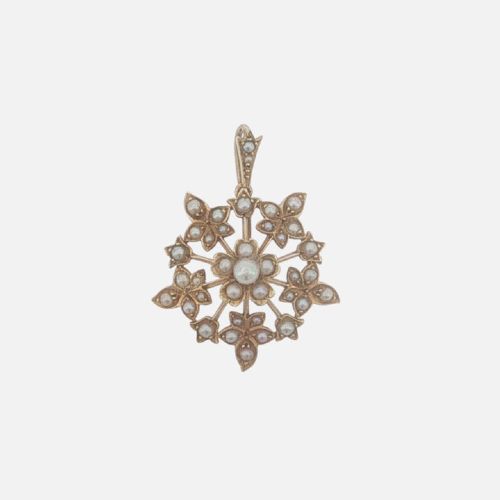
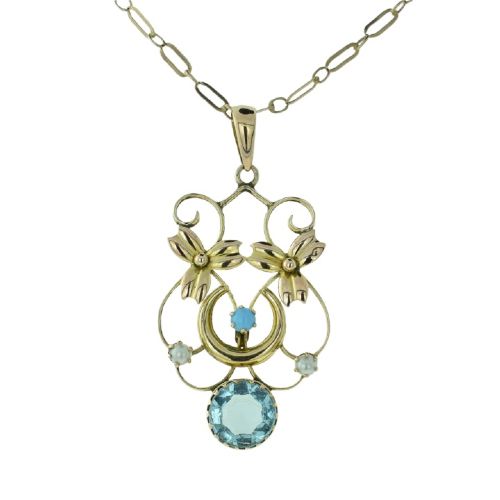
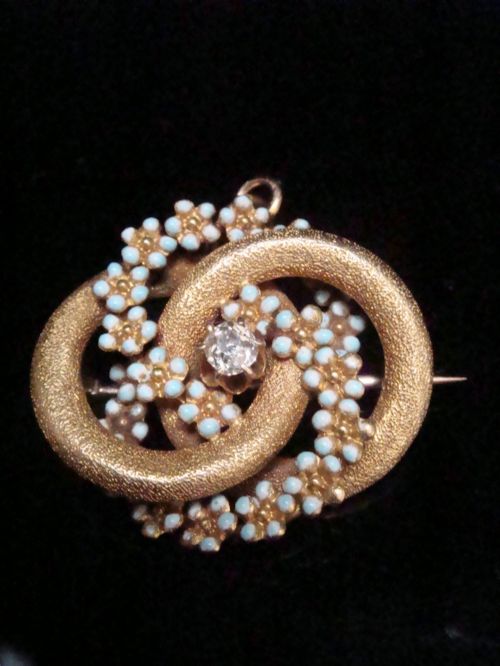
A victorian floral pendant takes the form of blossoms, forget-me-nots, flower baskets, and foliate scrolls rendered in precious metals. The most common examples combine gold settings with seed pearls, turquoise, and diamonds to depict natural motifs.
Many items function as convertible brooches and pendants, offering multiple ways to wear the jewellery. Lockets and heart charms frequently incorporate chased or engraved floral panels and botanical details.
Origins span British and French workshops, encompassing styles from the Victorian period through to Edwardian interpretations. Pieces range from delicate seed pearl clusters to substantial diamond-set floral sprays.
Materials and construction
Goldsmiths utilised 9ct, 15ct, and 18ct yellow and rose gold alongside silver settings, the latter often used to back diamonds and enhance their brilliance. Tortoiseshell piqué work incorporates fine gold and silver inlay to create contrasting floral patterns.
Gemstones including rubies, sapphires, garnets, and opals are hand-set alongside graduated seed pearls and turquoise beads. Enamel work, including guilloche techniques, introduces vibrant colour to petals and foliage.
Engraving and chasing bring depth to gold and silver lockets, delineating stems, petals, and swallows by hand. Convertible mounts incorporate secure hinged pins and loop attachments for versatile placement.
Victorian Floral Pendant Retail Price Guide 2026
Typical asking prices for victorian floral pendant among the pieces listed under this phrase on Sellingantiques today, from the lower quarter to the upper quarter. They describe what is for sale here now, not the wider market.
Listings feature yellow gold, rose gold, and silver paired with diamonds, seed pearls, and turquoise across Victorian and Edwardian periods.
Assessing craftsmanship
The fineness of hand-engraving and the precision of stone setting dictate the distinction between standard production and superior work. Tightly clustered seed pearls secured with delicate wirework demonstrate meticulous assembly.
The integration of mixed metals, such as contrasting yellow and rose gold with silver-topped gold, reveals advanced lapidary and metallurgical skill. Enamel preservation and the depth of repousse relief work further separate exceptional items from simpler examples.
J W Benson
The Victorian Floral Pendant Glossary
- Piqué
- A method of decorating tortoiseshell or ivory with tiny gold or silver pins and inlay to form geometric or floral motifs.
- Seed pearl
- A very small natural or saltwater pearl, often pierced and threaded onto silk or wire to create dense clusters of flower petals.
- Guilloche
- An ornamental technique in which a precise, intricate repetitive pattern is mechanically engraved into a metal surface beneath translucent enamel.
- Repousse
- A metalworking technique where the metal is hammered from the reverse side to form a raised design in relief on the front.
- Pietra dura
- An artistic technique using cut and fitted polished coloured stones to create pictorial mosaic images of flora and fauna.
Victorian Floral Pendant: Frequently Asked Questions
What periods do these pendants come from?
The available pieces originate primarily from the Victorian era, spanning the mid to late nineteenth century, with occasional examples extending into the Edwardian and later periods.
Craftsmanship reflects the prevailing stylistic shifts of these decades, moving from romantic floral symbolism towards structured naturalism.
How were these pendants worn historically?
Owners suspended these ornaments from chains around the neck or pinned them directly to garments as combined brooches and pendants. Many designs also served to house miniature portraits, locks of hair, or photographs inside integrated locket compartments.
Their dual functionality allowed the wearer to adapt the piece for daywear or evening attire depending on the occasion.
What gemstones appear in floral designs?
Diamonds, seed pearls, turquoise, rubies, and sapphires frequently accent the gold and silver floral motifs. Garnets, opals, and amethyst also provide rich colour to petals and leaves.
Enamel and tortoiseshell appear alongside these stones to depict natural foliage and coloured blossoms.
Are these items convertible?
Many examples feature both a hidden or folding loop for a chain and a secure pin mechanism on the reverse. This dual construction allowed owners to pin the flower directly to fabric or hang it as a necklace pendant.
Such versatility was standard practice for nineteenth-century jewellers creating multi-functional ornaments.