


Victorian Fishing Boat Artwork
Victorian fishing boat artwork brings coastal commerce and maritime atmosphere into rooms through period paintings and watercolours.
Victorian Fishing Boat Artwork
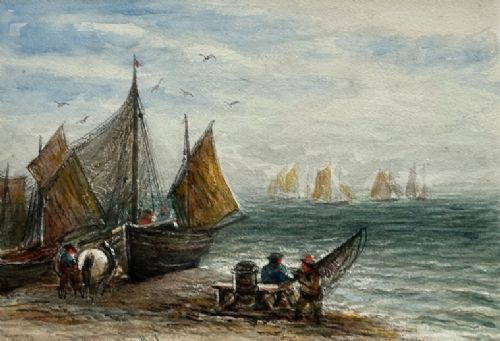
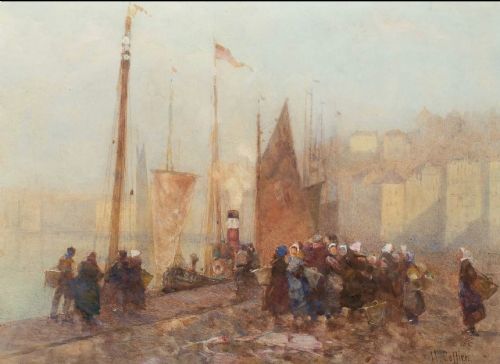
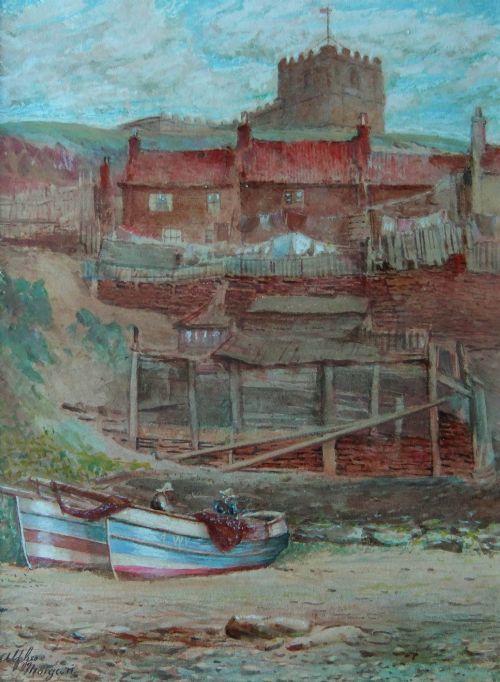
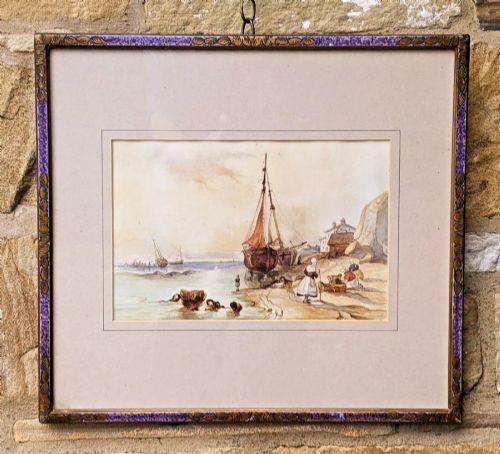
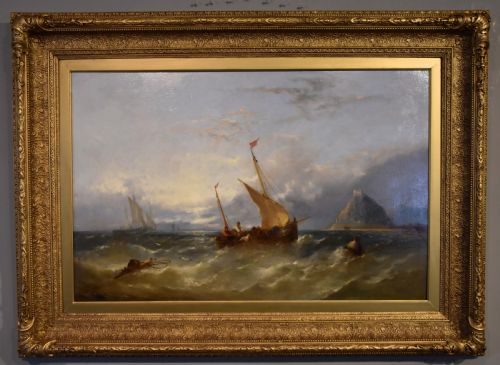
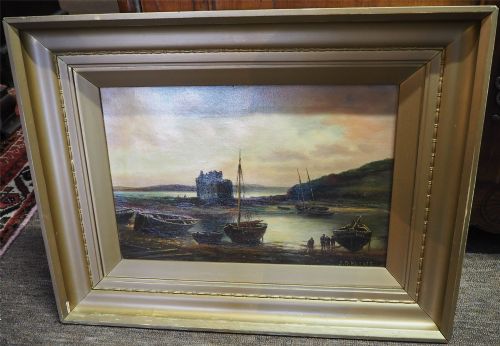
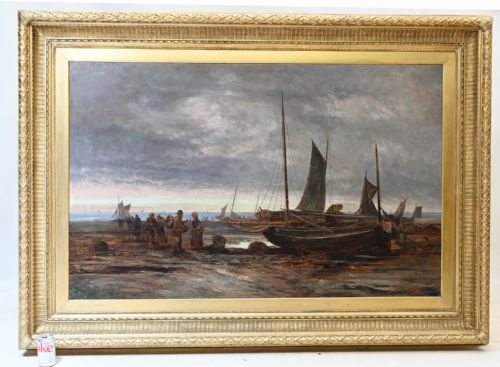
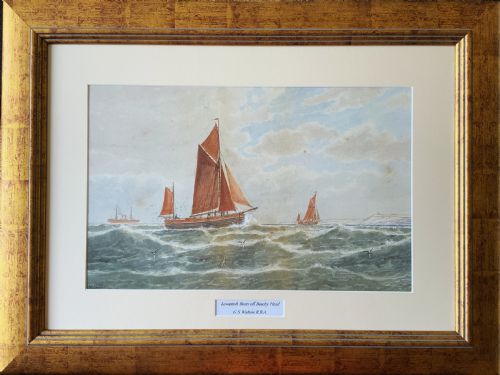
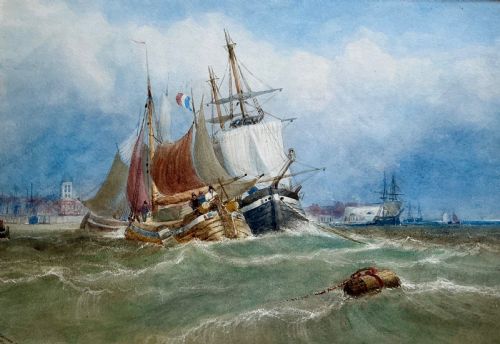
Victorian fishing boat artwork comprises marine paintings and watercolours depicting coastal vessels, harbours, and stormy seas from the nineteenth century. Buyers seek these pieces to capture historical maritime life and coastal scenery.
The selection on this page centres on works from the Victorian era and the broader nineteenth century, including specific regional scenes from British and Dutch coastal locations.
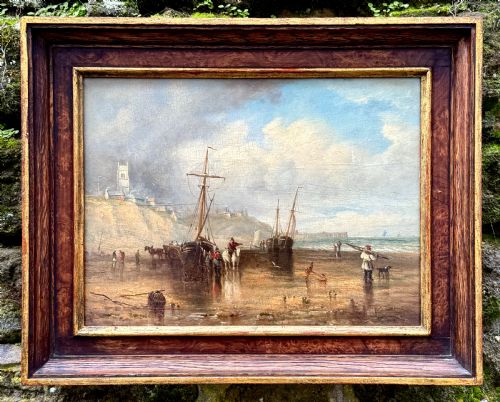
Common formats include framed watercolours on paper and oil paintings on canvas or wood panel, ranging from intimate watercolours to large scale maritime canvases.
Materials and technique
Artists utilised oil paint on stretched canvas, wooden panel, or card to build rich maritime scenes with textured water and skies. Others applied watercolour pigments onto paper, often finished with gilt framing.
Brushwork varied from precise draughtsmanship in harbour watercolours to robust impasto in oil paintings depicting rough coastal waters and stormy weather.
Materials recorded across the selection include paper, oil on canvas, wood panels, watercolour pigments, gilt, and card.
Judging quality
Quality rests on the artist's ability to render maritime movement, atmospheric light, and accurate vessel rigging rather than sheer canvas size. Works by established named painters demonstrate superior handling of water and coastal architecture.
Condition of the support material, preservation of pigment vibrancy, and the presence of original framing contribute significantly to the standing of an individual piece.
James Orrock·Hector Caffieri·Thomas Creswick·Alfred G Morgan·William Henry Williamson·George Stanfield Walters·Henry Barlow Carter·Thomas Bush Hardy·Gustave De Bréanski·George Gregory·Frederick William Hattersley·George Henry Knight·Sam Bough·Paul H Ellis·Frank Rousse·William Edward Webb·Hubert Thornley·George Marks
The Victorian Fishing Boat Artwork Glossary
- Watercolour
- A painting method where fine pigment is suspended in water soluble binder applied to paper. This medium allows for luminous washes of light and colour particularly favoured for coastal views.
- Oil on Canvas
- Pigment mixed with drying oil applied to a woven fabric support stretched over a wooden frame. This combination permits deep tonal layering and robust surface texture.
- Seascape
- A work of art depicting the sea, coastal shores, and maritime activity. These compositions focus heavily on atmospheric conditions and nautical subjects.
- Impasto
- Paint applied thickly to a canvas so that it stands out from the surface. This technique adds tactile dimension to crashing waves and turbulent skies.
Victorian Fishing Boat Artwork: Frequently Asked Questions
What periods do these artworks cover?
The listings span the nineteenth century, with a strong concentration of pieces created during the Victorian era.
Dates extend from the mid nineteenth century into the early twentieth century, reflecting standard nineteenth century marine art traditions.
How should I display a marine oil painting?
Hang these canvases on walls away from direct sunlight to protect sensitive oil pigments and historical paper supports.
Ensure the room maintains stable humidity levels to preserve the integrity of the original wooden stretchers and gilt frames.
Are watercolours and oil paintings framed?
Most works arrive within period or complementary frames that suit nineteenth century aesthetics.
Watercolours typically feature protective glass glazing alongside paper mounts, while oil paintings remain open to the air on canvas.
Where do these coastal scenes originate?
Artists painted locations around the British coastline, including Whitby, Scarborough, and various Scottish and Norfolk fishing ports.
Other works document continental European subjects, notably Dutch coastal waters and French harbours.