



Victorian Fishing Boat Art
Victorian fishing boat art captures maritime coastal life through 19th-century watercolours and oil paintings depicting working vessels.
Victorian Fishing Boat Art
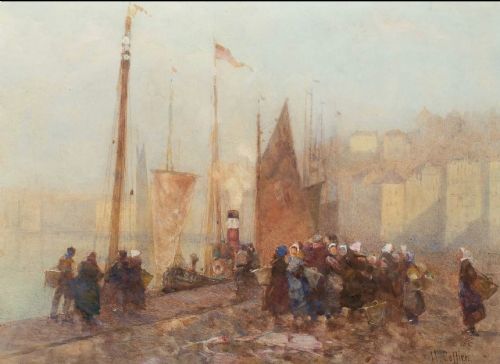
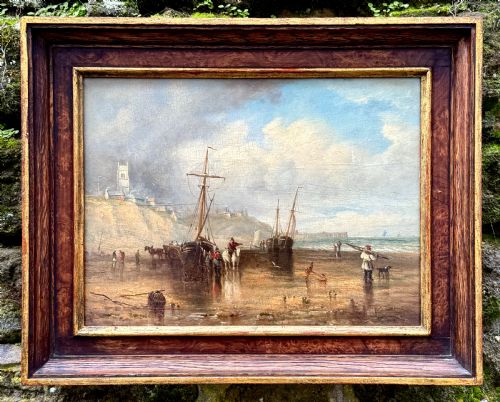
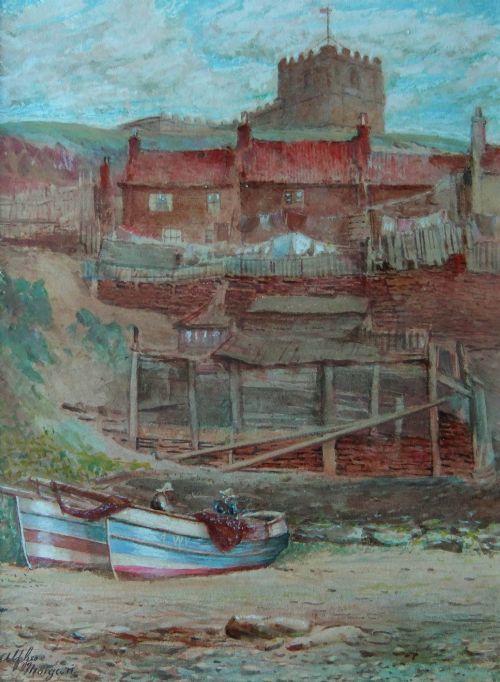
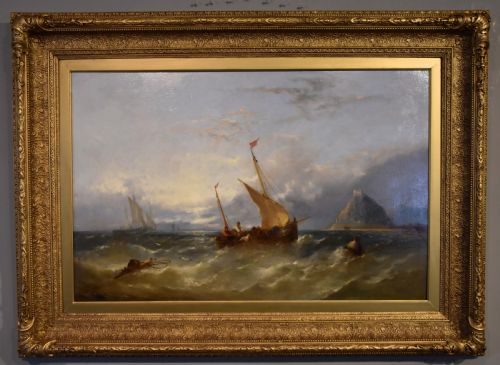
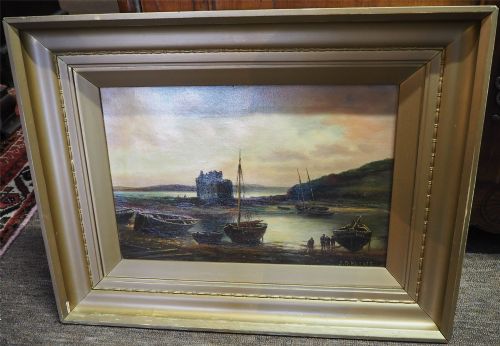
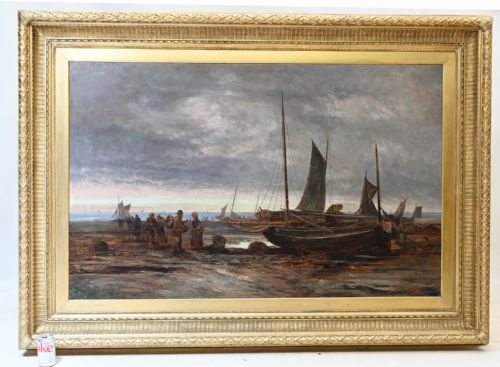
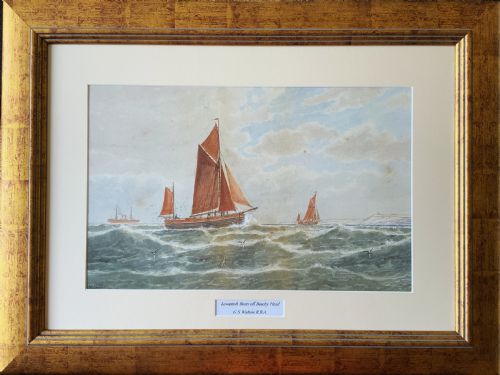
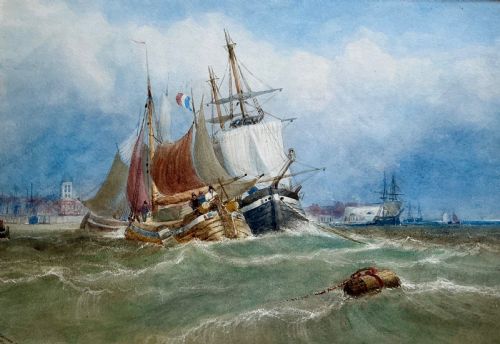
Victorian fishing boat art encompasses framed oil paintings and watercolours portraying maritime scenes from the nineteenth century. These works depict coastal harbours, beaches, and working vessels around British, Dutch, and European shores.
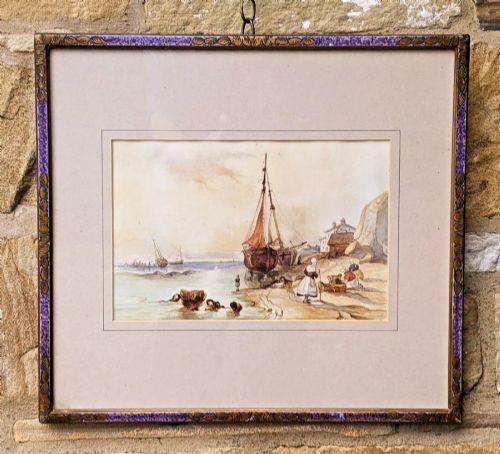
The pieces on this page are most frequently nineteenth-century works created in oil on canvas, wood panel, or card, alongside delicate watercolours on paper. Subjects range from tranquil estuary scenes to dramatic stormy seas with vessels off cliffs and castles.
Materials and construction
Artists of this period utilised oil paint on stretched canvas or wooden panels, as well as watercolour pigment applied to paper. Frames frequently incorporated gilt mouldings surrounding the canvas or watercolour under glass.
Techniques combined fine brushwork for rigging and hull details with looser applications of paint for breaking waves, stormy skies, and sandy beaches.
Several artists captured boats battling stormy tides while unsuspecting families strolled peacefully along the pebbled shore nearby.
Factors influencing quality
Quality rests upon the artist's command of maritime atmosphere, light, and perspective in depicting the vessels and coastal topography. Works by accomplished named painters demonstrate greater precision in rigging and lively movement in water.
The preservation of the paper or canvas, the stability of the original wood panel or stretcher, and the condition of the pigments contribute significantly to the visual impact of the painting.
James Orrock·Thomas Creswick·William Henry Williamson·George Stanfield Walters·Henry Barlow Carter·Thomas Bush Hardy·George Gregory·Gustave De Bréanski·Pieter Cornelis Dommersen
The Victorian Fishing Boat Art Glossary
- Watercolour
- A paint consisting of colour pigments suspended in a water-soluble binder, applied to paper to create translucent washes.
- Oil on canvas
- Pigments bound in a drying oil applied to a woven fabric stretched across a wooden frame.
- Seascape
- A work of art depicting the sea, coastal views, beaches, or maritime vessels.
- Wood panel
- A flat wooden board utilised as a rigid support for oil painting prior to stretching canvases.
Victorian Fishing Boat Art: Frequently Asked Questions
What subjects appear in this art?
These artworks typically show working vessels, coastal harbours, and sandy beaches alongside cliffs and historic ruins.
Scenes often feature specific locations such as Whitby, Scarborough, Boulogne, or Dutch shores with local fishermen.
How do watercolours differ from oils?
Watercolours utilise pigment on paper under glass, offering lighter and more translucent tones suited to coastal skies.
Oil paintings employ thick pigments on canvas or wood panels, providing richer textures and deeper tones for stormy seas.
Where should these paintings hang?
These framed works suit traditional reception rooms, studies, or hallways where maritime heritage matches the interior decor.
Direct sunlight and damp environments should be avoided to protect both the paper watercolours and the oil canvases.
How are periods identified?
Nineteenth-century works are identified through artist signatures, framing styles, and the specific attire or vessel designs depicted.
Period labels often reference the Victorian era, the 1850s through to the early 1900s, and the Dutch school influence.