




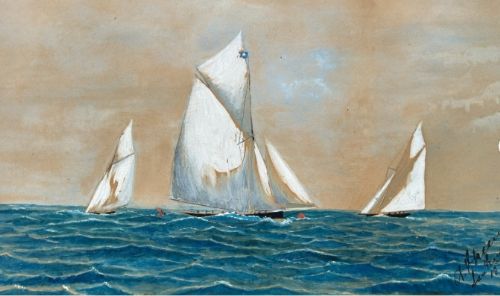


19th Century Sea Landscape
When you search for a 19th century sea landscape, you enter a visual world of coastal vistas, harbour scenes, and stormy waters captured on canvas and paper.
19th Century Sea Landscape
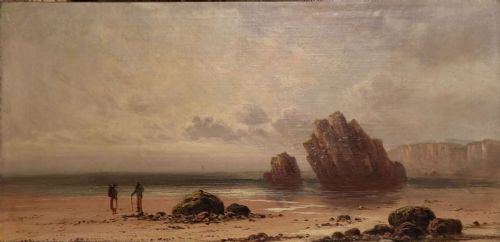
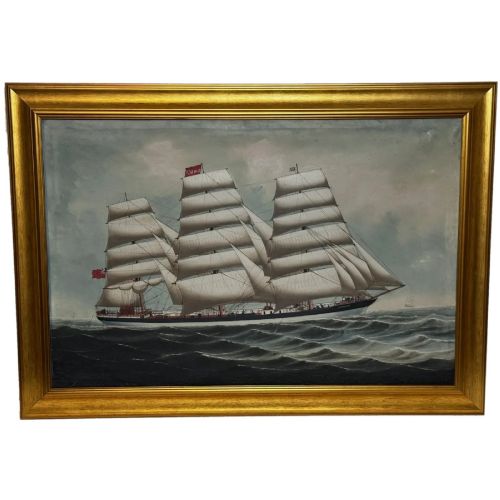
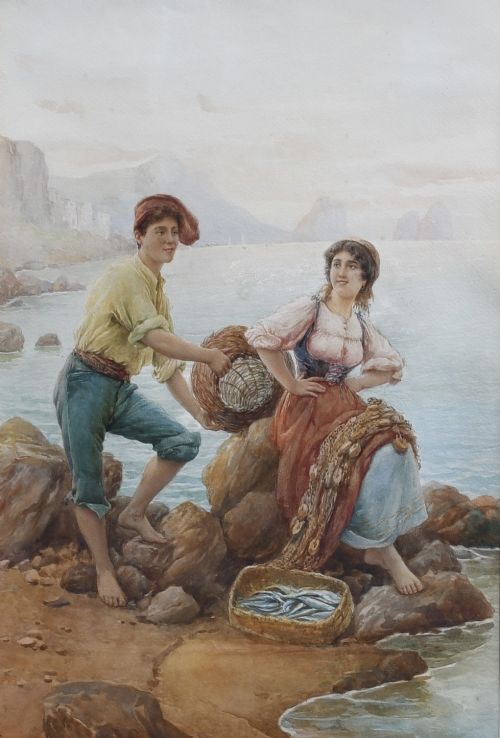
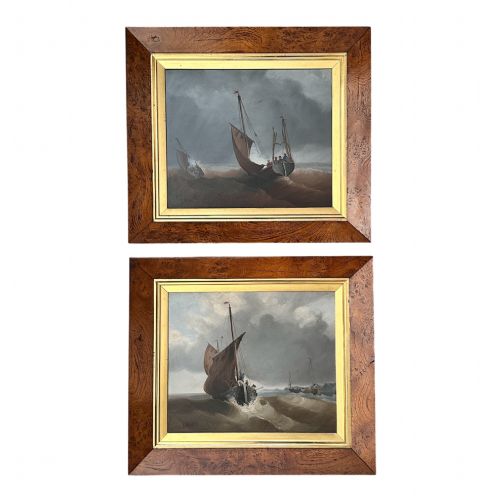
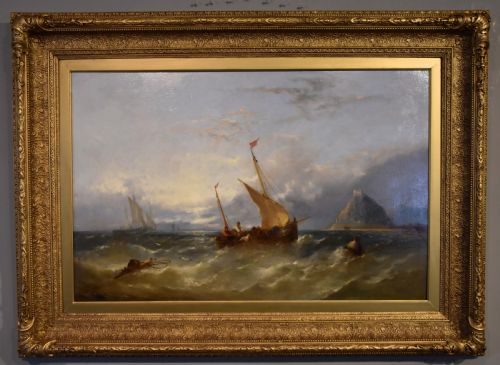
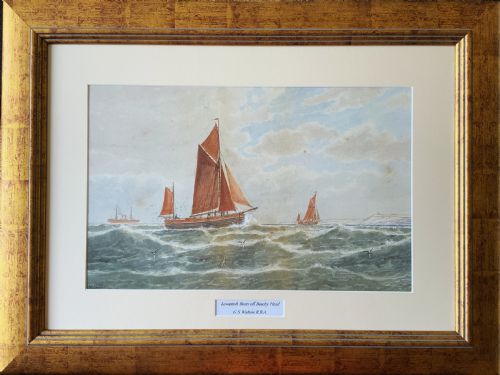
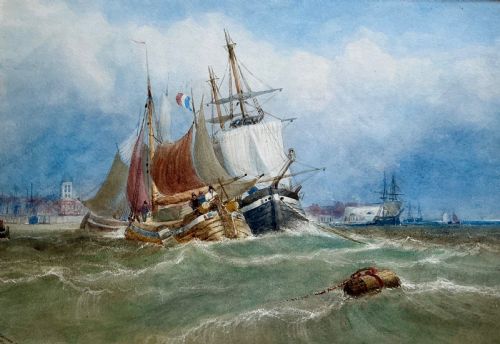
A 19th century sea landscape encompasses maritime paintings, coastal scenes, and harbour views created during the Victorian and Edwardian eras. The works on this page appear predominantly as oil paintings on canvas, board, or wood panel, alongside watercolours on paper.
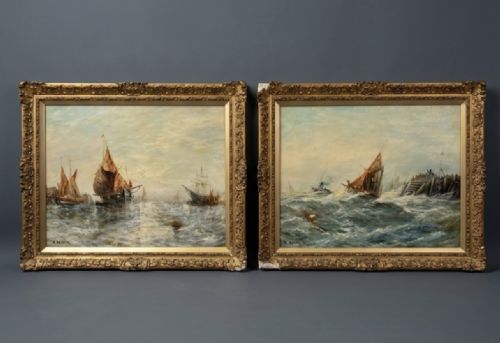
Subjects range widely from calm coastal shores and fishing boats at rest to dramatic shipwrecks, lighthouses, and racing yachts. These pieces originate from British and continental European locations, reflecting an era deeply connected to maritime trade, exploration, and coastal life.
How They Were Made
Artists utilised oil paints on stretched canvas or wooden boards to build rich textures and deep tones for dramatic maritime scenes and stormy coastal waters. Watercolours on paper allowed painters to capture the transient effects of light, mist, and sea spray with rapid precision.
Many works retain their original frames, often constructed from wood and finished in gilt, which complement the visual depth of the paintings.
Listings feature works spanning the nineteenth century, the Victorian era, and the Edwardian period.
What Varies in Quality
Quality rests upon the artist's ability to render light, atmosphere, and movement in water and sky, distinguishing accomplished academic or professional works from simpler amateur records. The handling of medium matters greatly, whether through the confident brushwork of an oil painting or the delicate transparency of a watercolour.
Condition also plays a vital role, encompassing the preservation of the painted surface, the stability of the canvas or paper support, and the integrity of any period frame.
James Orrock·William Banks Fortescue·Bernard Benedict Hemy·Carlo Ferranti·John Moore of Ipswich·William Henry Williamson·George Stanfield Walters·Henry Barlow Carter·Claude Thomas Stanfield Moore·Thomas Bush Hardy·Gustave de Breanski·James George Bingley·William Langley·Eugene Boudin·Joseph Newington Carter·Robert Farren·Peter Ghent·Walter Meegan·Charles Martin Powell·John William Gilroy·Anthony Graham·Thomas Ditmas·Charles Williams·Thomas Sidney·David Roberts
The 19th Century Sea Landscape Glossary
- Seascape
- A work of art depicting the sea, coastal views, ships, or marine subjects. This term serves as the primary descriptor for maritime art across the era.
- Watercolour
- A painting method where fine pigment is suspended in a water-soluble vehicle on paper. Artists favoured this technique for its immediacy and portability when working outdoors.
- Gilt wood
- Wood coated with a thin layer of gold leaf or metallic paint. Frames of this description frequently house 19th-century paintings.
- Oil on canvas
- Pigment bound in an oil medium and applied to a woven fabric stretched over a wooden frame. This combination provided durability and a rich surface for artists.
- Sea stack
- An isolated and often vertical column of rock in the sea near a coast, frequently featured as a dramatic element in coastal landscapes.
19th Century Sea Landscape: Frequently Asked Questions
What subjects appear in these paintings?
These works depict a wide variety of maritime and coastal subjects, including fishing fleets in harbour, lone lighthouses, stormy seas, and quiet beaches with figures.
Artists frequently recorded specific locations across Britain and Europe, ranging from Cornish harbours and Yorkshire cliffs to Dutch coasts and Mediterranean ports.
How do oil and watercolour pieces differ?
Oil paintings utilise thick pigments on canvas, board, or wood panel, allowing for textured brushwork and deep, luminous tones suited to dramatic weather and open water.
Watercolours rely on transparent washes on paper, capturing bright light, sea mist, and atmospheric coastal conditions with swift precision.
Were these works painted outdoors?
Many 19th-century artists began their process outdoors by sketching and painting watercolours directly from nature to capture accurate light and weather conditions.
Finished oil paintings were frequently completed in the studio using these field studies and preliminary sketches as primary reference material.
How should I frame a 19th-century painting?
Period frames, particularly those made of wood with original gilt finishes, provide the most historically appropriate housing for these artworks and complement their aesthetic.
When replacing a frame, select a style and period that matches the painting's origin to maintain its overall visual and historical integrity.