

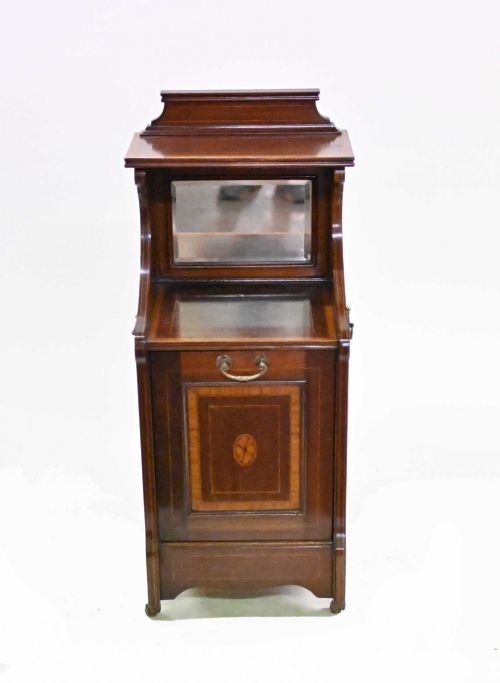


Victorian Fireside Cabinet
These Victorian fireside cabinet items are practical hearthside storage pieces that keep fuel contained and tidy while elevating a room's character.
Victorian Fireside Cabinet
A victorian fireside cabinet encompasses a range of hearthside storage vessels designed to hold coal, logs and fuel in an orderly fashion. These pieces include purdoniums, coal boxes, bins and depots from the Victorian and Edwardian eras.
The most common formats you will encounter on this page are hinged coal boxes and sloping-front purdoniums designed to sit neatly beside a fireplace. They bridge the gap between utilitarian coal storage and refined parlor furniture.
Originating largely from the nineteenth century and the turn of the twentieth century, these items reflect the domestic routines of period homes. They offer a tangible connection to historical interior design while remaining entirely functional today.
Materials and Construction
Cabinet makers utilised dense hardwoods such as mahogany, oak, walnut and exotic rosewood to build the structural shells of these fuel holders. Timber selection dictated the weight and presence of the piece within the fireside setting.
Metal components, including brass hinges, handles, shovels, liners and ormolu mounts, were integrated to withstand daily heavy usage. Marquetry inlay and carved details frequently adorned the exterior surfaces to enhance visual appeal.
Victorian Fireside Cabinet Retail Price Guide 2026
Typical asking prices for victorian fireside cabinet among the pieces listed under this phrase on Sellingantiques today, from the lower quarter to the upper quarter. They describe what is for sale here now, not the wider market.
Many surviving coal boxes still retain their original miniature shovels, tucked neatly into bespoke side slots like tiny metallic swords.
Judging Quality
The distinction between standard utility items and superior examples lies in the refinement of the timber and the crispness of the carving or marquetry inlay. Richly figured rosewood and pollard oak denote a higher tier of manufacture.
Hardware integrity and the presence of original brass liners and matching shovels elevate an example significantly. Finer pieces demonstrate careful joinery and cohesive stylistic revivals, such as Gothic or Louis XV influences.
The Victorian Fireside Cabinet Glossary
- Purdonium
- A sloping-front coal box or cabinet designed to dispense fuel from the bottom via a tilt-forward hopper. This form kept coal dust contained whilst presenting a tidy wooden exterior.
- Ormolu
- Gilt bronze mounted onto furniture or metalwork for decorative accent. It provides a bright metallic contrast against dark woods like mahogany.
- Marquetry
- Decorative veneer work arranged in pictorial or geometric patterns using various coloured woods. It requires immense skill to fit the thin wood pieces seamlessly together.
- Pollard oak
- Oak timber taken from pollarded trees, yielding a highly figured, mottled grain pattern. Cabinet makers prized this wood for its decorative surface movement.
Victorian Fireside Cabinet: Frequently Asked Questions
What is a purdonium?
A purdonium is a specialised coal cabinet featuring a sloping front or an internal metal bin designed to hold solid fuel. It allowed households to store coal discreetly in a domestic reception room.
Unlike an open bucket, a purdonium kept dust contained and provided a flat top surface that could hold decorative items when not in active use.
How do I clean the brass?
Brass fittings and liners should be wiped gently with a soft cloth to remove dust and maintain the metal's natural appearance. Avoid harsh chemical polishes that strip away historical patination.
If the metal requires deeper cleaning, use a mild brass cleaner applied sparingly, taking care not to stain the surrounding wood or veneer.
Can I store logs inside?
Many of these cabinets were originally built with removable metal liners specifically intended to hold coal or smaller logs cleanly. You can store logs inside provided the interior dimensions accommodate the wood size.
Ensure the internal metal liner is clean and dry before placing logs inside to prevent any moisture transfer to the antique timber structure.
How do I date these pieces?
Dating relies on examining the timber species, construction methods, hardware style and overall design motifs such as revival influences. Pieces marked as Victorian typically display denser proportions and heavier carving.
Later Edwardian examples often feature lighter oak construction and simpler brass detailing, reflecting the shifting aesthetic tastes of the early twentieth century.