



Victorian Fire Dogs Andirons
Victorian fire dogs andirons support logs in an open hearth while adding heavy metal ornament to the Victorian fireplace.
Victorian Fire Dogs Andirons
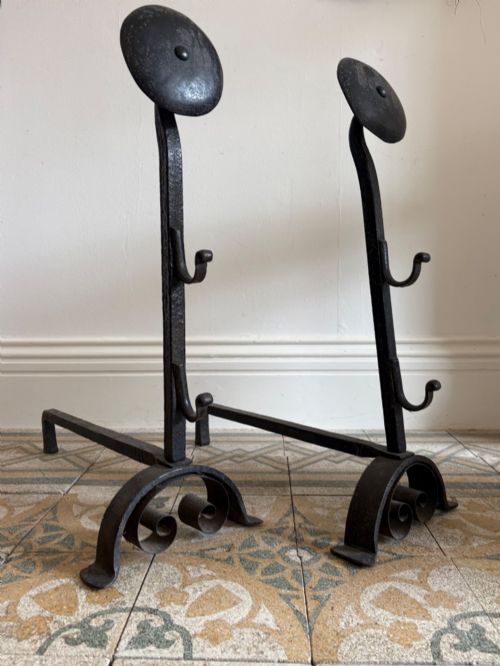
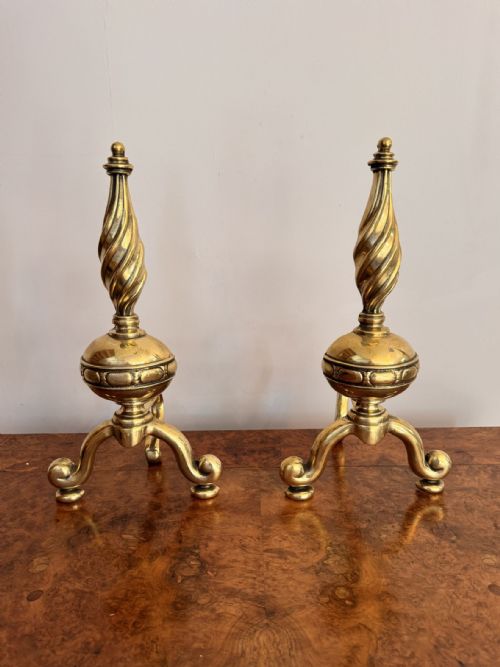
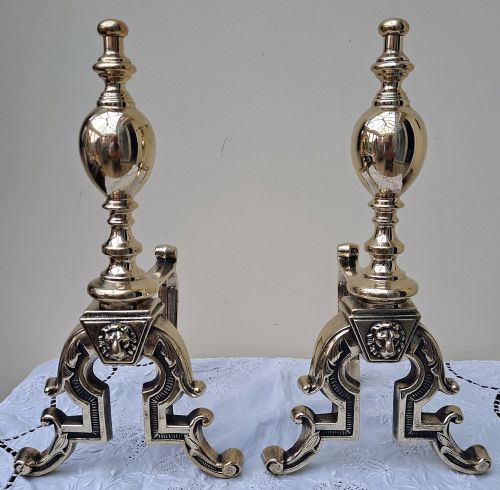
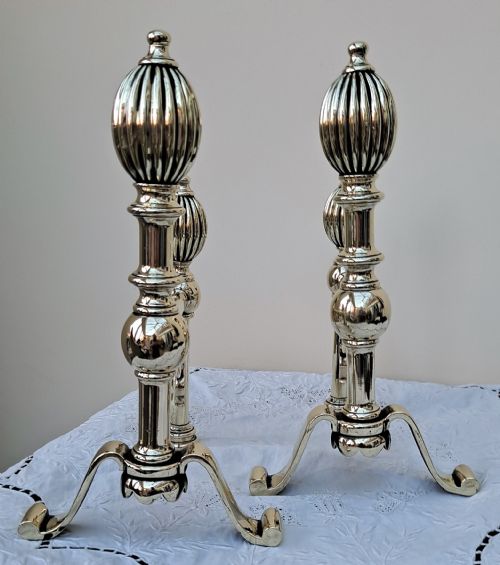
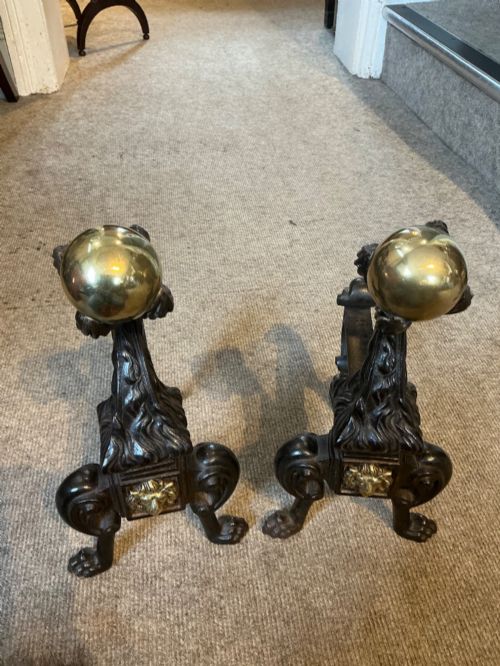
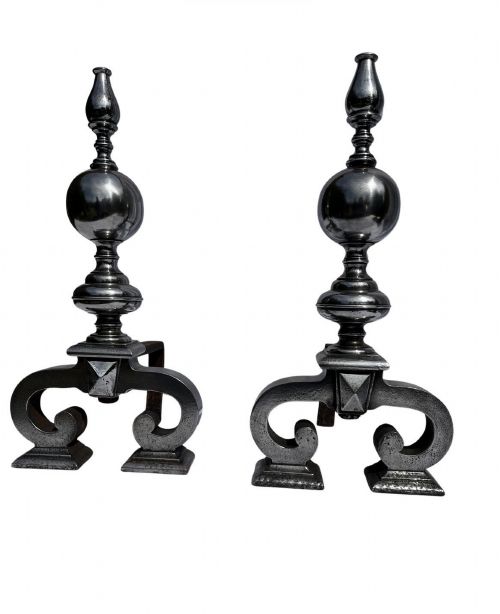
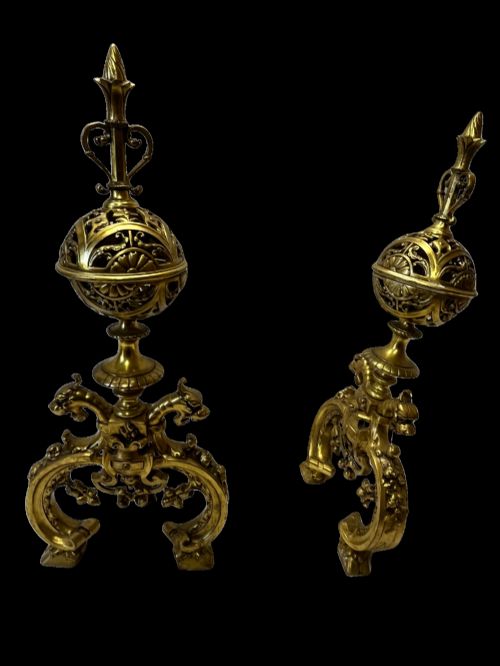
Victorian fire dogs andirons are functional hearth furnishings designed to elevate firewood above the base of the grate for better air circulation. You will frequently encounter substantial pairs cast in solid brass, alongside heavy wrought iron and polished steel variants from the nineteenth century.
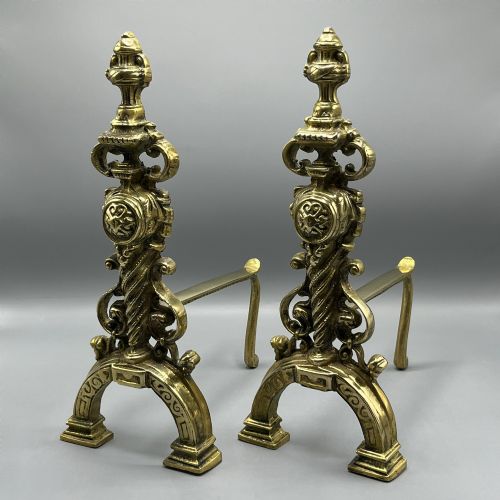
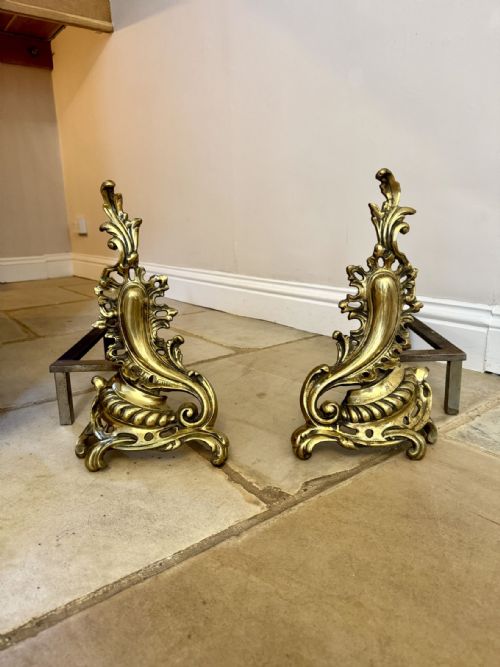
The pieces often arrive paired with matching fire irons, companion sets, or integrated fire baskets for an open hearth. Forms range from utilitarian iron supports to ornate cast brass showpieces reflecting Gothic Revival, Arts and Crafts, or French Rococo styling.
Materials and construction methods
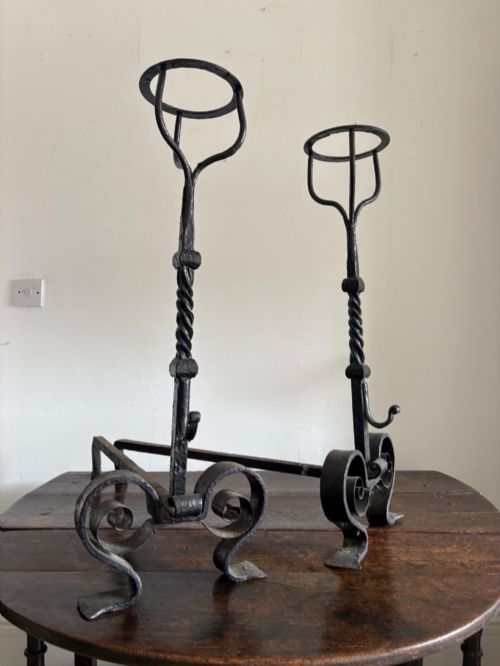
Foundry workers utilised sand casting to produce solid brass and cast iron bodies, often finishing details with hand chasing or polishing. Wrought iron and steel versions relied on manual blacksmithing techniques, including hand-forging and riveting to build rigid strength for supporting heavy logs.
Makers combined materials by mounting brass decorative fronts onto sturdy iron billets or integrating copper elements into companion sets. Surface finishes span from raw black iron and polished steel to bright cast brass and combinations featuring applied patination.
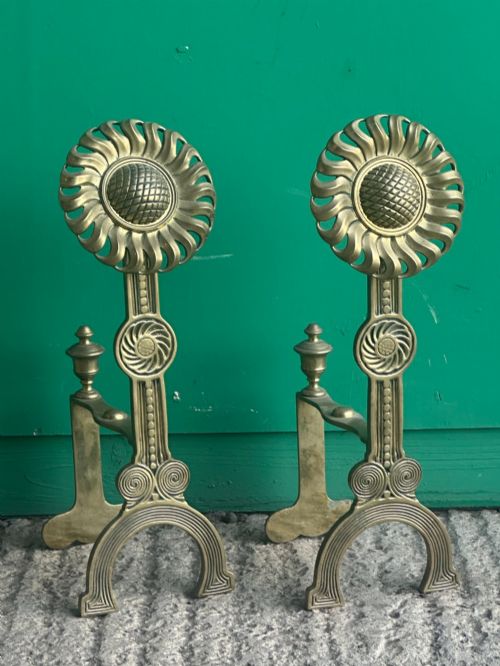
Nineteenth-century makers occasionally hid owl faces and sunflower motifs within the heavy brass uprights of working hearth furniture.
Assessing quality in hearth metalwork
Quality rests upon the weight of the metal and the crispness of the casting detail in ornamental motifs like sunflower patterns or animal faces. Heavier solid brass or thick hand-forged wrought iron indicates superior structural integrity compared to thin or hollow alternatives.
Refined pieces display careful assembly with secure joinery, clean filing on cast edges, and matching symmetry between the left and right uprights. Finer examples maintain original surface textures and integrated tool rests rather than excessive modern smoothing or replacement parts.
Thomas Jeckyll·William Tonks·James Cartland and Sons·Christopher Dresser
The Victorian Fire Dogs Andirons Glossary
- Andiron
- A horizontal metal support raised on legs used to hold logs in an open fireplace. They typically feature an upright decorative front pillar.
- Fire dog
- An alternative term for an andiron, originating from the resemblance of early forms to resting hounds. They serve the identical function of supporting firewood.
- Chenet
- The French term for an andiron or fire dog, frequently applied to decorative brass or bronze hearth pieces created in continental styles.
- Fire basket
- An integrated metal grate holding coal or wood, often flanked by attached andirons or designed to sit directly between them.
- Companion set
- A collection of matching fireplace tools such as pokers, tongs, and shovels, often sold alongside matching fire dogs.
Victorian Fire Dogs Andirons: Frequently Asked Questions
How do I use andirons?
Place the pair of andirons inside the open hearth with the horizontal bars pointing inward toward the back wall. Lay your logs across the iron bars to allow air to circulate underneath for a cleaner burn.
Ensure the heavy upright fronts remain visible on the hearth floor outside the fire basket or log stack. Many sets accompany a matching fire grate or tool rest to complete the arrangement.
Are brass andirons purely decorative?
Solid brass andirons serve both structural and aesthetic purposes by holding heavy fuel wood off the hearth floor while decorating the room. Nineteenth-century examples combined sturdy internal iron cores with heavy cast brass fronts to withstand intense heat.
Lighter pairs function primarily as decorative hearth accessories when paired with coal grates or ornamental fire baskets. Inspect the weight and rear billet bars to determine if a specific pair is meant for active wood fires.
How do I clean antique brass fire dogs?
Dust the metal regularly with a soft dry cloth to prevent soot and ash accumulation from pitting the surface. Avoid harsh commercial abrasive cleaners that strip away the aged historical patina built up over decades.
Cast iron and wrought iron components benefit from a light application of protective grate polish or oil to deter rust. Keep the metal away from damp environments to preserve the original finish.
What styles were popular in the Victorian period?
Hearth furniture reflected shifting Victorian tastes, ranging from Gothic Revival designs with pointed arches to ornate French Rococo scrolling. Later nineteenth-century pieces embraced Arts and Crafts simplicity and Aesthetic Movement motifs like sunflowers.
Art Nouveau examples introduced organic floral lines and animal faces into solid brass uprights. These stylistic shifts help date specific pieces alongside construction techniques.