


Iron Log Basket Fireplace
An iron log basket fireplace brings substantial hearth utility and period weight to a room.
Iron Log Basket Fireplace
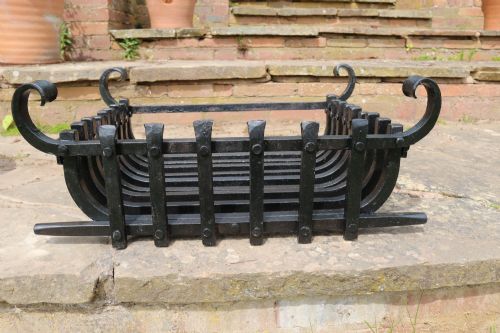
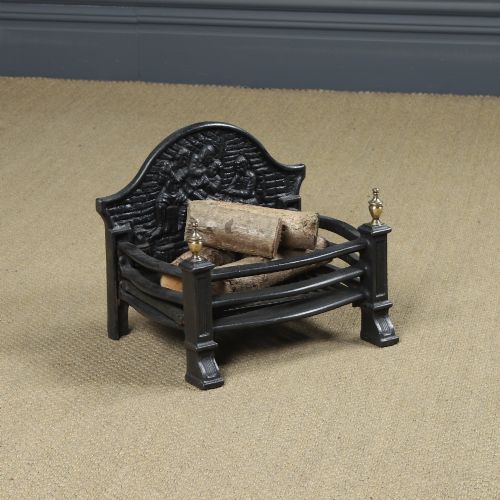
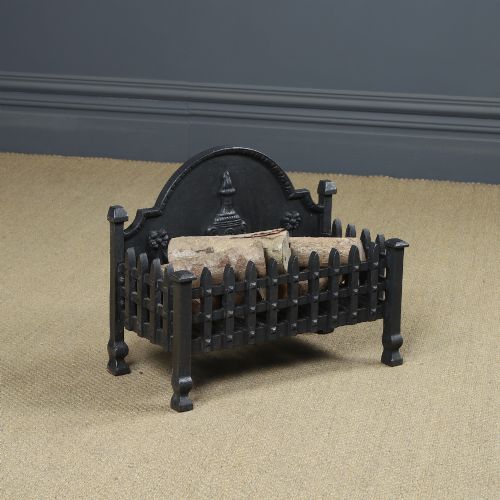
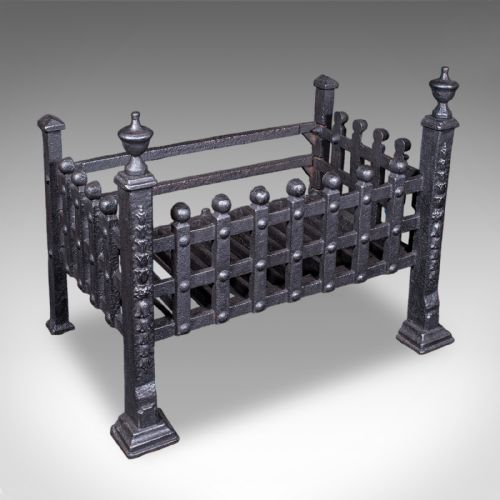
An iron log basket fireplace combines open grates, fuel keepers and hearth accessories designed to hold wood beside or within the hearth. You will find pieces spanning the Georgian, Victorian and Edwardian eras, alongside later interpretations from the 1920s and 1930s.
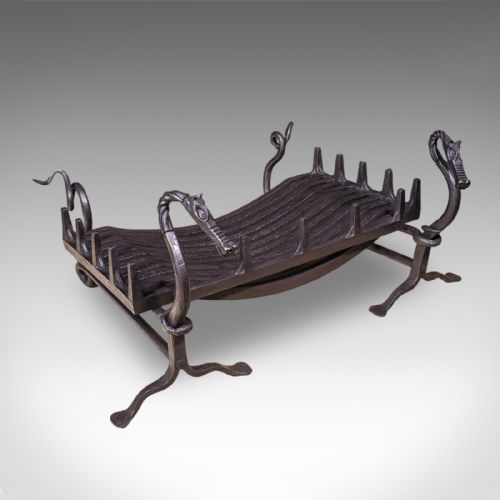
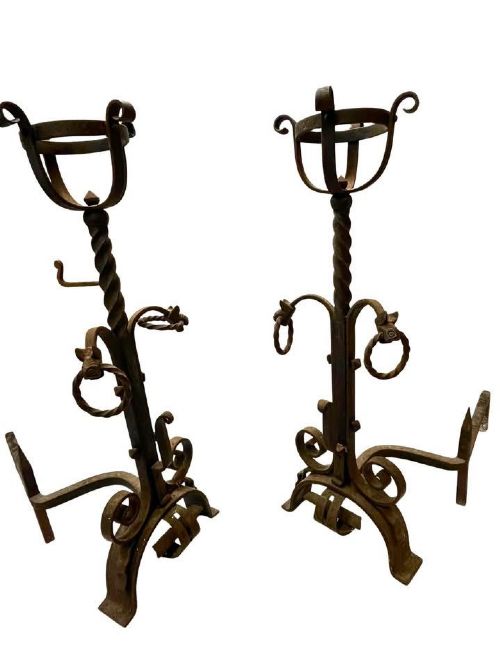
The most common formats on this page include open fire grates with integrated log baskets, inglenook grates paired with andirons, and dedicated log bins or carriers. These are built to handle solid fuel and heavy timber within active hearth settings.
Many items incorporate matching fire irons, fenders, fire backs or andirons to form a complete fireside arrangement. Styles range from plain country wrought iron to ornate Gothic Revival and neoclassical designs.
Materials and construction
Makers utilised wrought iron and cast iron for the structural baskets and grates, providing the necessary resilience against high heat. Heavier examples often relied on blacksmithing techniques, featuring hand-riveted joints and thick iron bars.
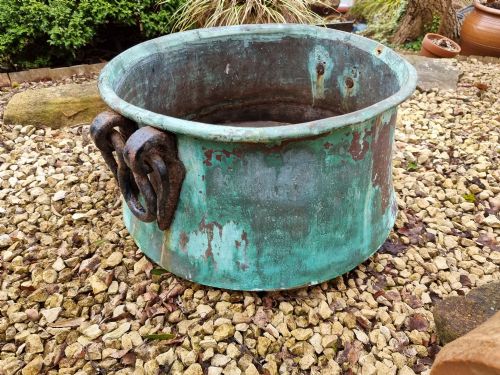
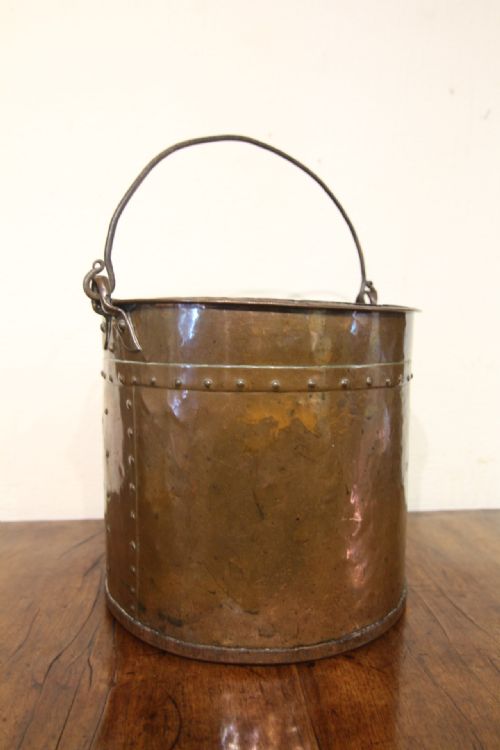
Copper and brass appear frequently alongside iron, particularly for log buckets and coal bins, sometimes complemented by applied dragon motifs or verdigris finishes. Oak and firebrick occasionally form part of the assemblies for insulation or structural support.
Materials across these listings span wrought iron, cast iron, copper, brass, oak and firebrick.
Assessing quality and build
The distinction between ordinary and superior pieces rests on the weight of the metal and the integrity of the blacksmith work. Thick cast iron and substantial wrought iron bars indicate a higher grade of manufacture intended for heavy domestic use.
Stylistic execution also dictates quality, with finely chased neoclassical details, balanced proportions, and integrated decorative motifs such as brass fittings or cast fire backs separating standard utilitarian grates from finer salon pieces.
The Iron Log Basket Fireplace Glossary
- Fire basket
- An open metal basket designed to hold logs or coal within a fireplace. These sit directly on the hearth or on supporting andirons.
- Andirons
- Horizontal metal bars supported on legs, placed in a hearth to hold burning logs. They often accompany fire baskets and grates.
- Fire back
- A heavy iron plate placed at the back of a fireplace to protect the masonry and reflect heat into the room. They frequently feature cast motifs.
- Inglenook grate
- A large, heavy fire grate built to heat deep inglenook fireplaces. These require substantial hearth space.
- Log bin
- A container for storing firewood near the hearth, commonly fashioned from copper, iron or oak.
Iron Log Basket Fireplace: Frequently Asked Questions
How do I choose the right size?
Measure the internal width, depth and height of your fireplace opening before selecting a basket or grate. Leave adequate clearance around the ironwork for proper ventilation and safe loading of fuel.
Larger inglenook grates require deep hearths and substantial flue capacity, whereas smaller cast iron grates suit shallower Victorian or Edwardian fireplace openings.
Can these be used for real fires?
Most of these pieces were constructed from durable cast iron, wrought iron and firebrick specifically to contain solid fuel fires. Inspect the metal thickness and any historical repairs to ensure structural soundness before lighting.
Some decorative or refurbished grates may require professional clearance or minor restoration to handle active burning safely.
How do I clean iron and copper?
Remove ash and soot regularly using a soft brush to prevent moisture accumulation and subsequent corrosion on the iron surfaces. Light oiling helps maintain wrought iron components.
Copper log bins and buckets respond well to gentle dusting, preserving any historic verdigris finish rather than aggressive polishing unless a bright metallic sheen is preferred.
What is the difference between gothic and neoclassical styles?
Gothic Revival pieces display medieval architectural influences, featuring pointed arches, heavy wrought iron work and motifs reminiscent of earlier centuries. These suit robust country settings.
Neoclassical designs draw on classical Greek and Roman proportions, often incorporating refined cast iron ornamentation, symmetrical urn details and Adams style elegance.