
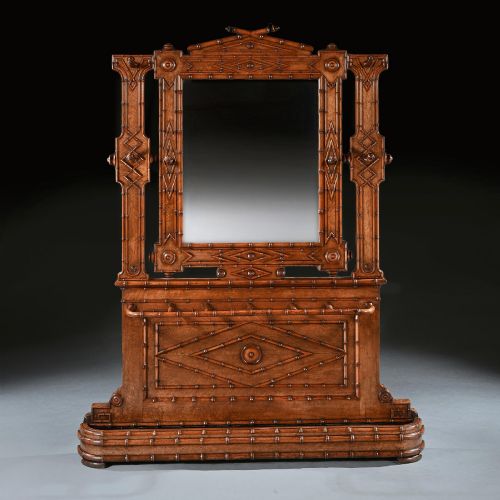
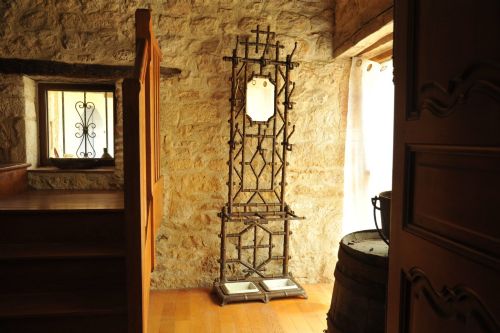


Victorian Faux Bamboo Stand
A victorian faux bamboo stand brings inventive nineteenth-century turned woodwork into a hallway or bedroom, offering both playful design and sturdy utility.
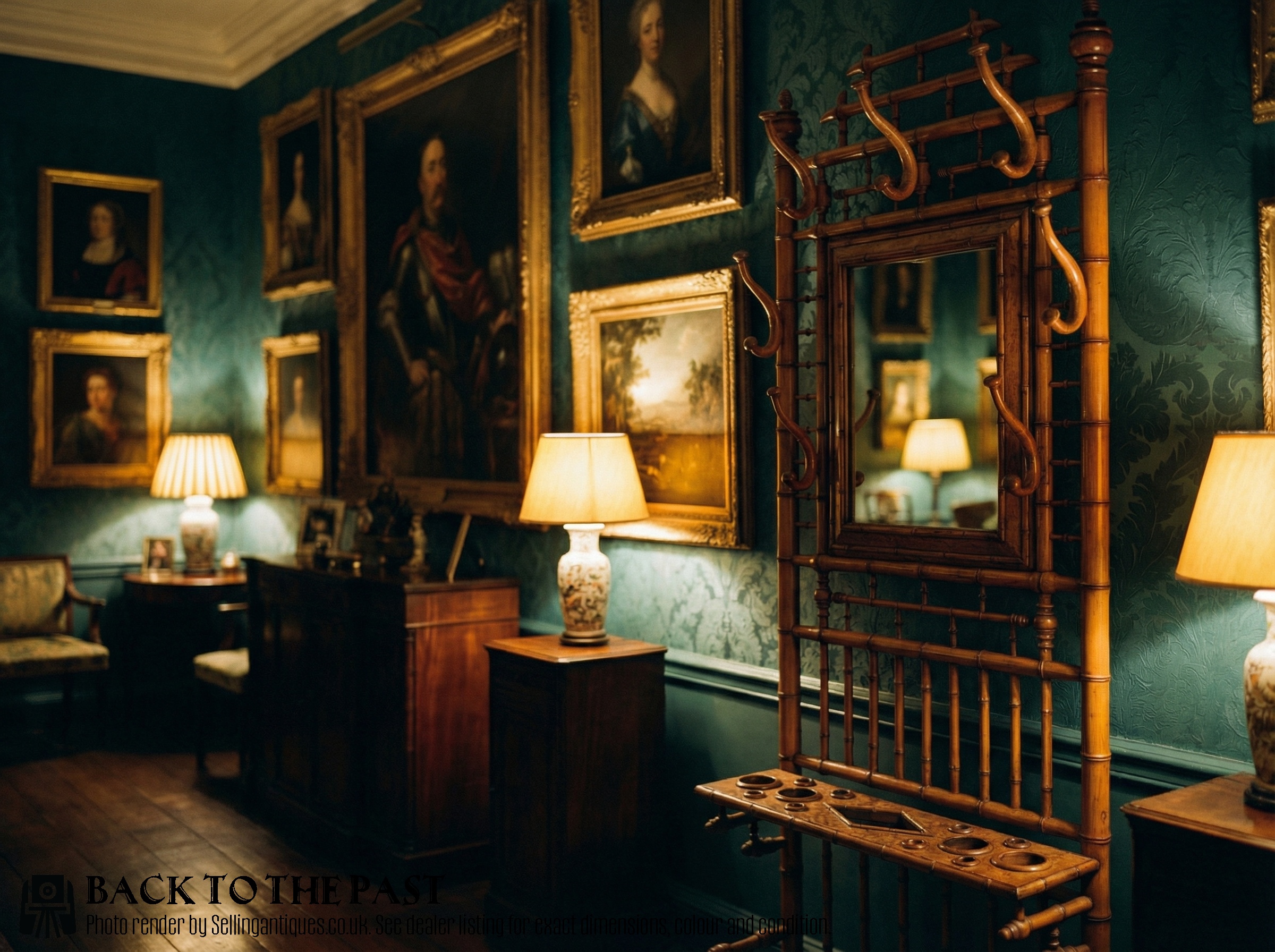
Victorian Faux Bamboo Stand
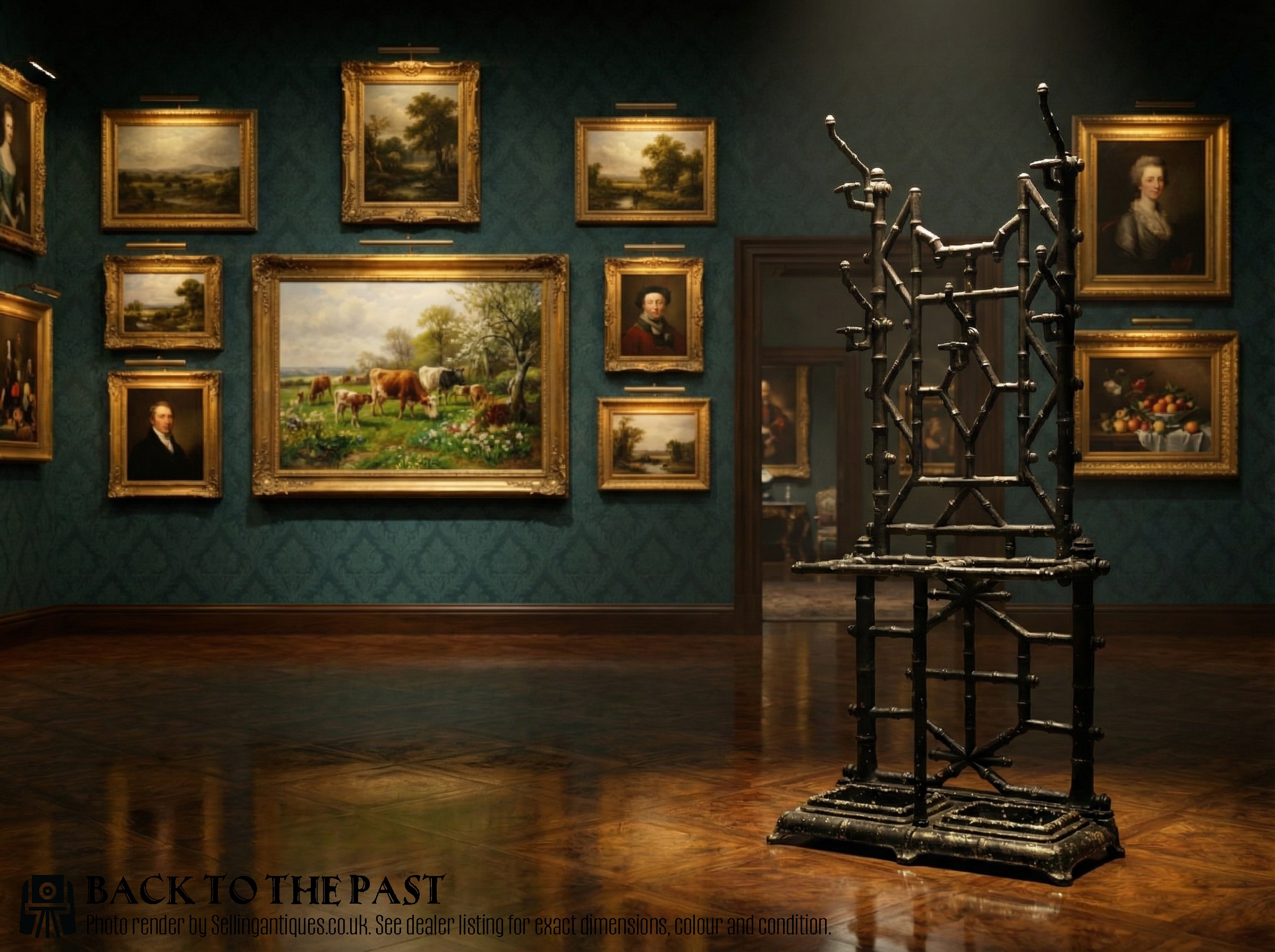
A victorian faux bamboo stand comprises a range of nineteenth-century furniture items shaped to resemble natural cane, appearing most frequently on this page as hall stands, umbrella stands, washstands, and occasional tray tables. These pieces emerge from the broader Victorian and Aesthetic Movement periods, spanning dates from the 1860s through to 1910.
The form adapts readily to domestic spaces, moving from heavy cast iron stick-stands designed for coats and umbrellas to lighter bedside cabinets and side tables. French and English workshops both produced these designs, incorporating Chinoiserie decoration or Japonisme influences into the turned wooden frames.
How they were made
Carpenters shaped solid woods like pine, cherry wood, and birdseye maple on lathes to mimic the segmented nodes of natural bamboo, often finishing the surfaces with ebonisation or paint. Metal versions relied on cast iron moulded directly into branching cane patterns to support heavy coats and dripping umbrellas.
Makers integrated papier-mâché and lacquered panels into table tops and tray supports, sometimes mounting decorative serving trays onto separate faux bamboo folding bases. Glass components and metal hardware completed the construction of washstands and hall stands.
Cherry wood gets turned into a faux bamboo fishing rod rest.
What varies in quality
The crispness of the turning on the wooden nodes determines the visual success of the piece, separating finely carved examples from simpler moulded versions. Detail in the hand-painted Chinoiserie decoration or the retention of original ebonised finishes also marks out finer execution.
Structural integrity depends upon the original medium, with cast iron examples offering heavy durability while delicate papier-mâché trays require careful preservation of their lacquered surfaces.
Jennens and Bettridge
The Victorian Faux Bamboo Stand Glossary
- Faux bamboo
- Furniture turned, carved, or cast to imitate natural cane. This decorative technique peaked during the Victorian and Aesthetic Movement periods.
- Japonisme
- The influence of Japanese arts on Western design during the late nineteenth century. It often appears alongside faux bamboo framing in French and English pieces.
- Chinoiserie
- European interpretation of Chinese artistic traditions, frequently applied to lacquered panels and papier-mâché trays. This style complements bamboo-turned furniture.
- Papier-mâché
- A composite material made from paper pulp or layers of paper bound with glue, then lacquered and painted. It forms durable trays used on folding stands.
- Ebonisation
- A finishing process that darkens light timber to resemble ebony. It provides a stark contrast against gilt decoration on Victorian furniture.
Victorian Faux Bamboo Stand: Frequently Asked Questions
What is a faux bamboo stand?
A faux bamboo stand is a nineteenth-century piece of furniture shaped to mimic natural cane. These items include hall stands, washstands, and tray tables produced during the Victorian period.
Craftsmen turned wood or cast iron into segmented bamboo rods to satisfy Victorian and Aesthetic Movement tastes for exotic design.
Where were these stands used?
These pieces served practical functions in various rooms of the nineteenth-century home. Hall stands and umbrella stands managed coats and walking sticks near the front door.
Smaller side tables and bedside cabinets placed next to furniture provided surfaces for washing equipment or serving drinks.
How do I care for papier-mâché trays?
Papier-mâché trays mounted on bamboo stands require protection from moisture and direct heat. Clean the lacquered surfaces gently with a dry or barely damp cloth.
Avoid placing wet items directly onto antique papier-mâché to preserve the delicate Chinoiserie painting underneath.
How can I tell the period?
Dating relies on materials, construction methods, and stylistic cues such as Aesthetic Movement Japonisme or Chinoiserie motifs. Pieces typically date from the 1860s through to the early twentieth century.
Cast iron versions and painted pine items reflect the manufacturing standards and design preferences of their specific decades.