

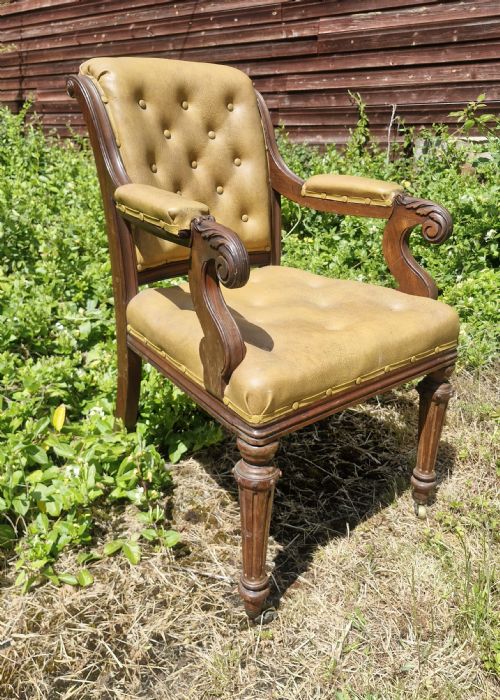


Victorian Executive Desk Chair
A victorian executive desk chair offers sturdy construction and generous proportions, making it a reliable seat for daily office work.
Victorian Executive Desk Chair
A victorian executive desk chair is a practical seating option designed for study and office use during the nineteenth century. These pieces combine substantial timber frames with upholstered seats intended for long hours at a workspace.
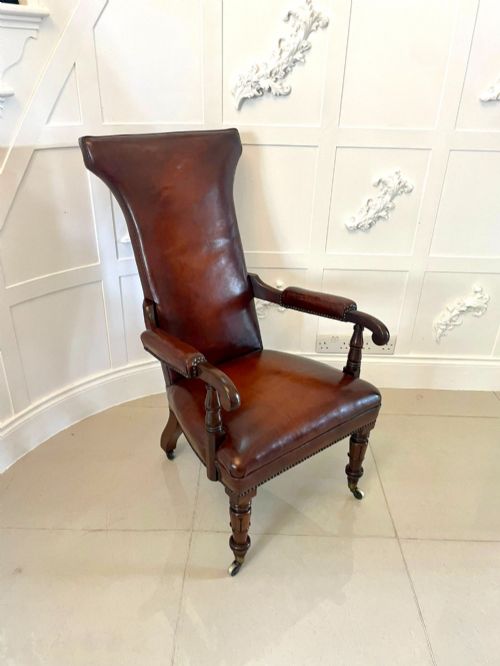
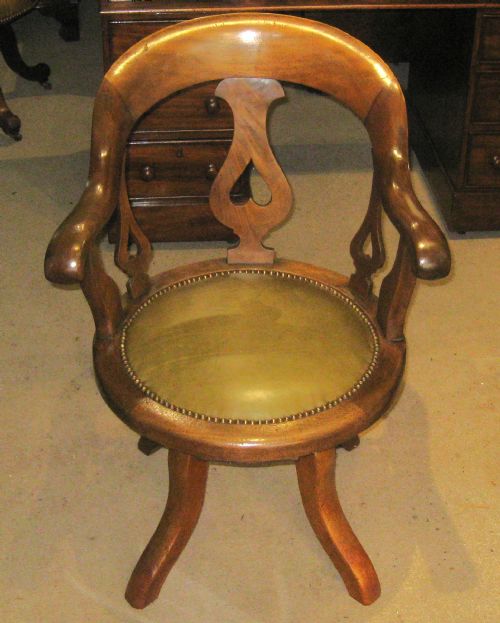
The selections available here primarily consist of mahogany, oak, and walnut desk armchairs featuring revolving mechanisms or swivel bases. Examples range from simple bentwood designs to substantial leather-upholstered library armchairs.
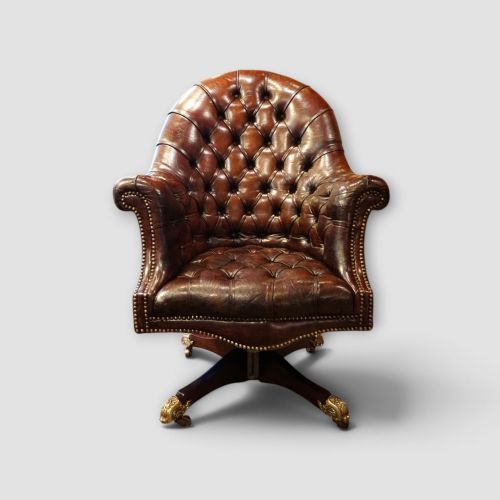
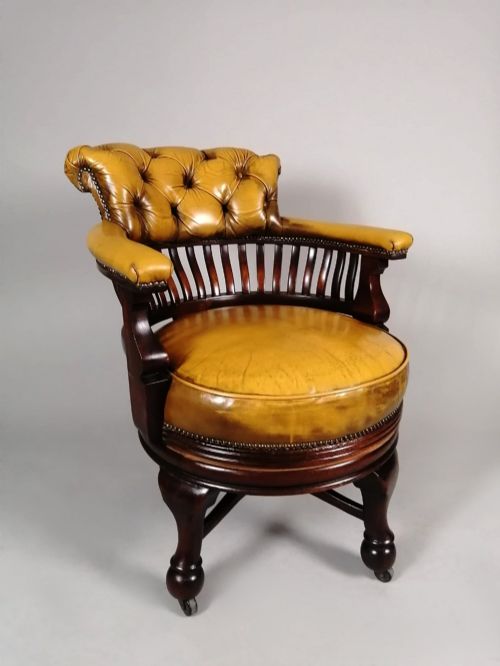
Buyers frequently encounter variations like the Victorian Chesterfield style alongside classical nineteenth-century revolving desk chairs. These items bridge domestic comfort and functional workspace utility.
How they were made
Makers constructed these chairs using dense hardwoods such as mahogany, oak, walnut, and rosewood to ensure stability under constant movement. Timber components were often turned, curved into bow backs, or formed into X-frames.
Upholstered elements typically utilise leather or fabric fixed over padded seats, complemented by brass tacks or studs. Swivel and revolving functions relied upon robust iron and brass mechanical hardware fitted beneath the seat.
Desk chairs on this page span several decades, encompassing late nineteenth-century styles alongside distinct Regency and Victorian Chesterfield influences.
What varies in quality
Quality in a victorian executive desk chair rests upon the choice of timber and the complexity of the timber turning. Dense golden mahogany and figured walnut denote finer construction than standard utility woods.
The durability of the revolving and swivel mechanism dictates the piece's functional merit. Original brass and iron hardware that moves smoothly separates superior examples from altered or replacement bases.
Boston Chair Company of Massachusetts
The Victorian Executive Desk Chair Glossary
- Revolving
- A seating mechanism allowing the top portion of the chair to turn full circle on a central spindle. This feature is common in nineteenth-century office and library seating.
- Bentwood
- Wood softened through steaming and then bent into curved structural forms. This technique created smooth, rounded backs on select office chairs.
- Bow Back
- A curved wooden backrest that sweeps around the sitter in a continuous arc. It provides supportive enclosure for the upper body during desk work.
- X-Framed
- A structural configuration where intersecting diagonal members form an X shape beneath the seat. This design offers robust lateral support.
- Chesterfield
- A traditional upholstery style characterised by deep buttoning and padded arms. It brings a plush, cushioned finish to leather desk chairs.
Victorian Executive Desk Chair: Frequently Asked Questions
Are these chairs comfortable for daily use?
Many examples feature wide armrests and padded leather seats designed to support extended periods of sitting at a desk. Their generous proportions accommodate modern working habits quite well.
However, seat heights and back angles reflect nineteenth-century ergonomics rather than contemporary adjustable office standards. Buyers often pair them with a supportive cushion if needed for all-day tasks.
What woods were commonly used?
Cabinet makers predominantly utilised dense hardwoods such as mahogany, oak, and walnut for strength and durability. Rosewood also appears on select regency-influenced pieces.
These timbers were chosen to withstand the strain of constant movement and weight shifts associated with busy office environments.
Can I use these with modern desks?
Most nineteenth-century desk chairs fit comfortably beneath standard modern desk heights, provided the under-desk clearance is sufficient. It is wise to measure the arm height relative to your desk drawer clearance.
Swivel and revolving functions make it easy to slide in and out of contemporary workspaces while maintaining a traditional aesthetic.
How should I care for the leather?
Leather upholstery benefits from occasional conditioning with a specialist balm to prevent drying and cracking over time. Regular dusting with a soft cloth keeps the surface clean.
Avoiding direct sunlight and excessive heat sources preserves the natural tone and suppleness of the original hide.