




Victorian Executive Armchair
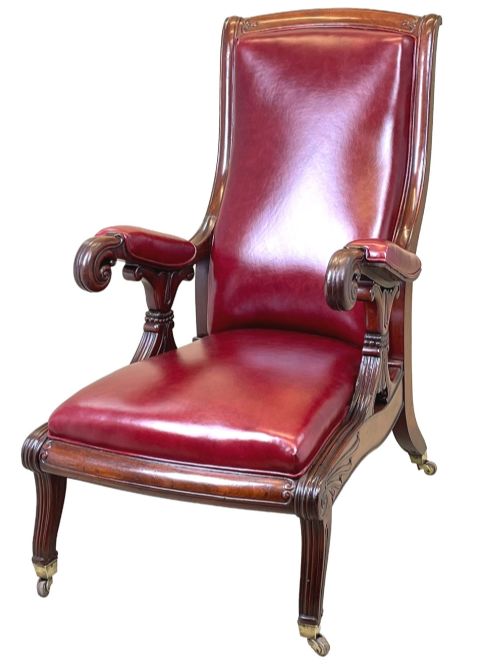
A victorian executive armchair is a sturdy seat built for the study or office, prized for lasting comfort and handsome timber work.
Victorian Executive Armchair
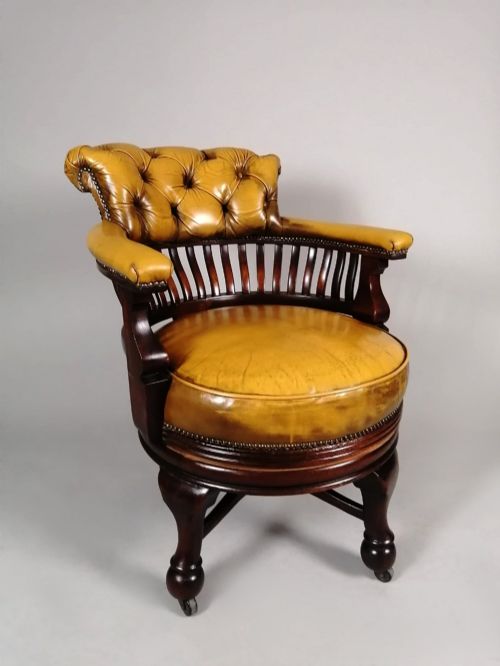
A victorian executive armchair is a functional seat built for long hours at a desk or library table. These pieces emerge primarily from the nineteenth century, spanning decades from the eighteen-fifties through the eighteen-nineties alongside related regency and later styles.
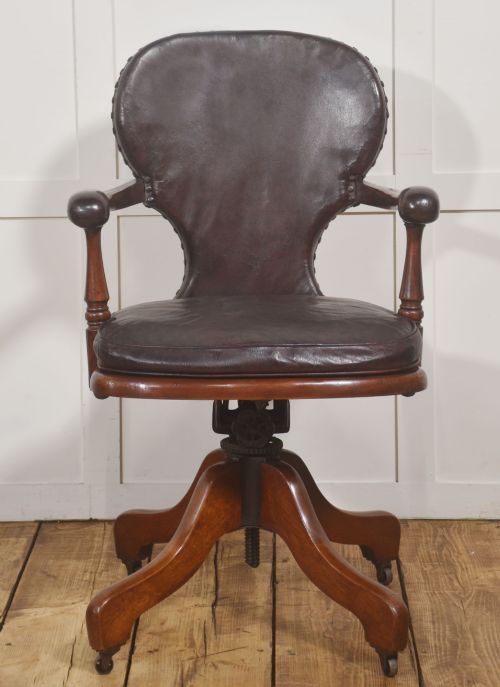
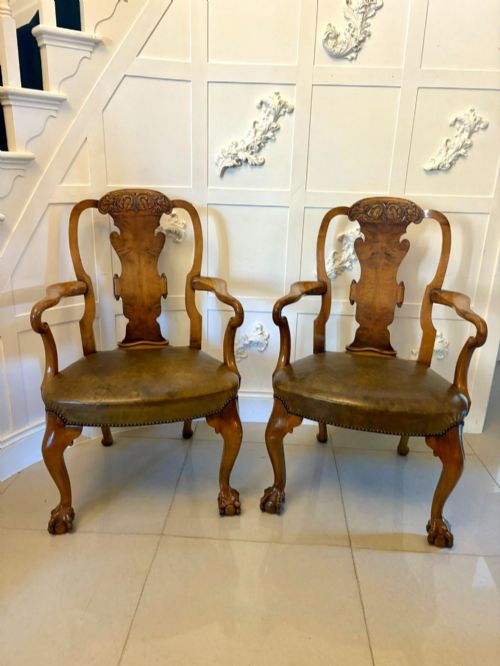
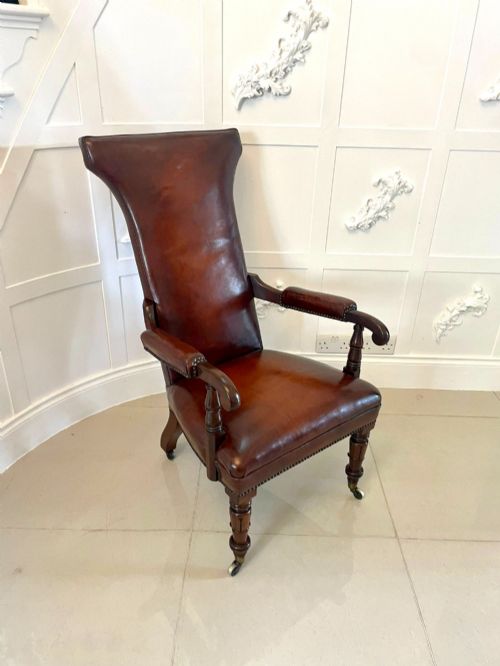
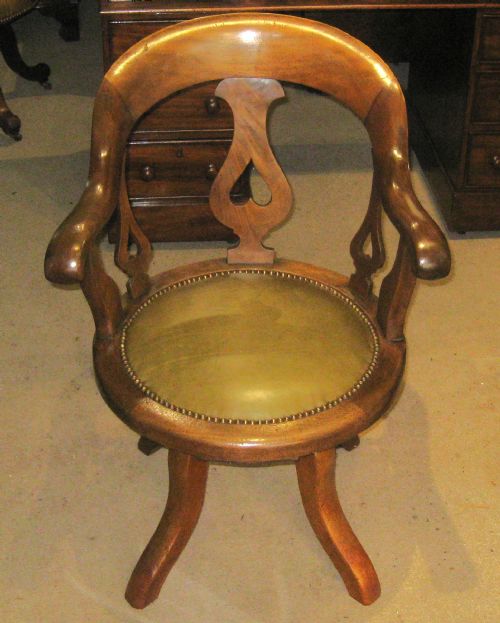
Buyers meet forms designed for movement and support, including swivel and revolving desk chairs, library armchairs, and wide bow-back examples. Mahogany, oak, and walnut predominate as the primary timbers shaping these robust frames.
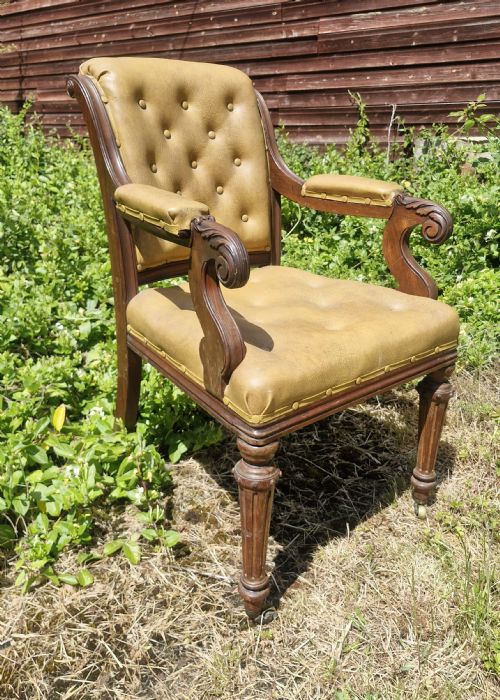
Many examples incorporate leather upholstery, brass details, and cast iron mechanisms that permit height adjustment or rotation. The selection ranges from straightforward solid oak desk chairs to upholstered gentleman's gaming chairs and porter's armchairs.
Materials and construction
Cabinet makers built these chairs using dense hardwoods like mahogany, oak, walnut, and rosewood, ensuring structural strength for daily office use. Timbers were turned, carved, and joined to form sturdy frames capable of bearing constant motion.
Upholstery involved genuine leather or heavy fabric stretched over padding and secured with brass tacks. Swivel mechanisms integrated cast iron and brass components to allow rotation and tilting.
Victorian Executive Armchair Retail Price Guide 2026
Typical asking prices for victorian executive armchair among the pieces listed under this phrase on Sellingantiques today, from the lower quarter to the upper quarter. They describe what is for sale here now, not the wider market.
Some gentlemen's chairs included hidden compartments for stashing secret correspondence during long card games.
Judging quality and character
Quality rests in the selection of timber grain, the depth of carving on the backrest, and the original integrity of the revolving mechanism. Heavier grades of mahogany and walnut distinguish superior cabinet work from simpler utility seating.
The condition of the leather and the retention of original brass hardware contribute significantly to a piece's standing. Finer examples display harmonious proportions and smooth mechanical action without modern replacement parts.
The Victorian Executive Armchair Glossary
- Revolving desk chair
- A seat fitted with an undercarriage allowing rotation through three hundred and sixty degrees. This mechanical addition suited busy office environments.
- Library armchair
- A comfortable seated furniture form designed for reading rooms and studies. These often feature generous padded arms and supportive backrests.
- Bow back
- A curved wooden backrest rail that wraps around the upper portion of the chair. It provides ergonomic support for the user's spine.
- Gentleman's gaming chair
- A specialised upholstered seat intended for card playing or leisure pastimes. They combine robust timber frames with soft leather surfaces.
- Regency
- A design period preceding the Victorian era characterised by classical influences and refined proportions. Pieces from this era often utilise rosewood or mahogany.
Victorian Executive Armchair: Frequently Asked Questions
What defines a victorian executive armchair?
A victorian executive armchair is a nineteenth-century office or library seat constructed from hardwoods like mahogany or oak, frequently featuring a swivel mechanism and leather upholstery.
These pieces were designed for administrative or scholarly work, combining practical mobility with traditional cabinet-making craftsmanship.
How do I care for the leather?
Leather upholstery benefits from regular dusting and occasional treatment with appropriate conditioning balms to prevent drying and cracking.
Keep these chairs away from direct sunlight and excessive heat sources to preserve the natural suppleness of the hide.
Are these chairs comfortable for daily work?
Many examples offer generous proportions and supportive padded backs that suit modern desk work.
Swivel and revolving functions provide the same practical utility found in contemporary office seating.
How do I identify the wood type?
Mahogany displays a reddish-brown tone with a fine grain, while oak exhibits a prominent textured grain pattern with visible medullary rays.
Walnut tends to show darker, richer colour variations with complex swirling patterns across the curved wooden components.