



Victorian Etched Wine Jug
A victorian etched wine jug brings functional elegance to the table, combining intricate surface decoration with practical pouring form.
Victorian Etched Wine Jug
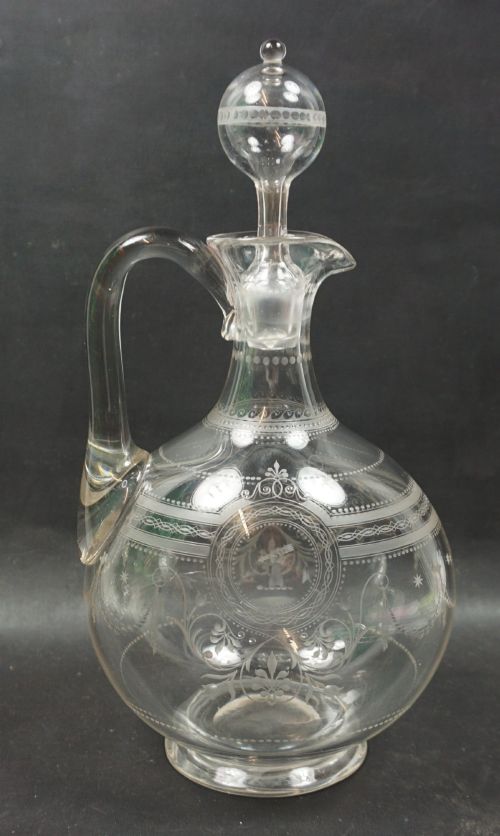
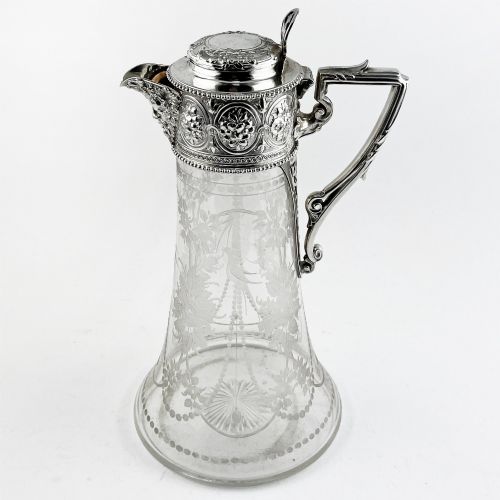
A victorian etched wine jug is a serving vessel designed for the dining table, combining glass bodies with metal mounts. These pieces appear primarily as claret jugs, ewers, and wine decanters originating from the nineteenth century.
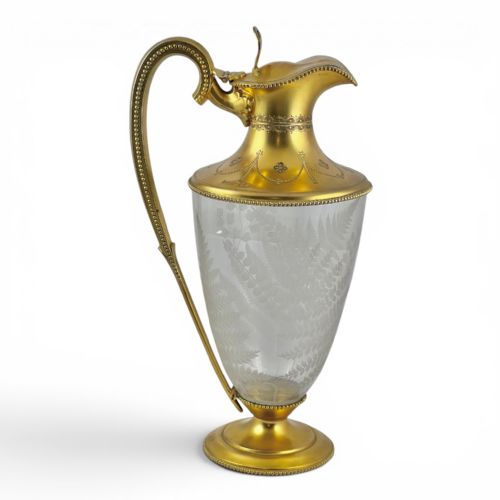
The objects take various forms including clear and coloured glass vessels decorated with floral, fern, ivy, and grape vine motifs. Makers mounted these glass bodies in silver plate, sterling silver, or silver gilt.
Examples on this page span the Victorian period alongside related pieces from the Edwardian era and the twentieth century. The primary version met here is the glass wine jug or claret jug featuring etched decoration and metal mounts.
What varies in quality
Quality rests in the crispness of the glass etching and the depth of the cut decoration. Superior pieces display finely detailed botanical motifs, such as ferns, ivy, and grape vines, executed with precision.
The standard of the metal mounting also distinguishes the pieces. Heavier silver plate, substantial sterling silver mounts, and well-cast handles demonstrate higher manufacturing standards than simpler, lighter fittings.
Victorian Etched Wine Jug Retail Price Guide 2026
Typical asking prices for victorian etched wine jug among the pieces listed under this phrase on Sellingantiques today, from the lower quarter to the upper quarter. They describe what is for sale here now, not the wider market.
Listings feature glass, silver plate, sterling silver, lead crystal, and clear glass across Victorian, Edwardian, and nineteenth-century periods.
Asprey and Co. Ltd·Elkington
The Victorian Etched Wine Jug Glossary
- Claret jug
- A specialised vessel designed for serving red wine at the table. These pieces typically feature a handle, a hinged metal lid, and a spout.
- Acid-etched
- A decoration technique where acid is applied to exposed glass areas to create frosted designs. This method produces detailed botanical and geometric patterns on the vessel body.
- Silver plate
- A manufacturing method where a thin layer of silver is fused to a base metal such as copper or Britannia metal. This technique provided the appearance of solid silver at a lower cost.
- Silver gilt
- Silver that has been coated with a thin layer of gold on its surface. This treatment protects the silver from tarnishing and adds a rich, warm tone to the mounts.
- Overlay glass
- Glass composed of two or more distinct layers of different colours. Craftsmen cut through the outer layer to expose the contrasting colour underneath.
Victorian Etched Wine Jug: Frequently Asked Questions
What is a victorian etched wine jug?
A victorian etched wine jug is a nineteenth-century serving vessel made from glass with etched botanical decoration and metal mounts. These objects were designed to hold and pour wine at the dining table.
They combine glass bodies with silver-plated or sterling silver handles, collars, and hinged lids. The category encompasses claret jugs, ewers, and decanters featuring engraved fern, ivy, or grape vine motifs.
How were these wine jugs used?
These vessels served to decant and pour wine, particularly claret, during formal Victorian dinners. The hinged lid kept the contents covered while allowing easy pouring at the table.
The decorative glass and silver mounts also served a display function, demonstrating the host's taste and wealth during social gatherings.
How do I care for a glass and silver jug?
Wash the glass body gently by hand using warm water and mild detergent. Avoid abrasive sponges that could scratch the etched surface or damage the glass.
Polish the silver mounts with a soft cloth designed for silver care. Keep polish away from the glass surface to prevent residue accumulation in the etched recesses.
How can I tell the period of a jug?
Examine the style of the metal mounts and the nature of the glass decoration. Victorian pieces often feature characteristic revival styles, floral engraving, or acid-etched botanical motifs.
Maker marks, hallmarks, and registration numbers stamped on the metal mounts provide definitive evidence of the manufacturing date and origin.