



Victorian Escritoire Bureau
A victorian escritoire bureau provides a private, enclosed writing space, combining handsome timber construction with clever fitted compartments for correspondence.
Victorian Escritoire Bureau
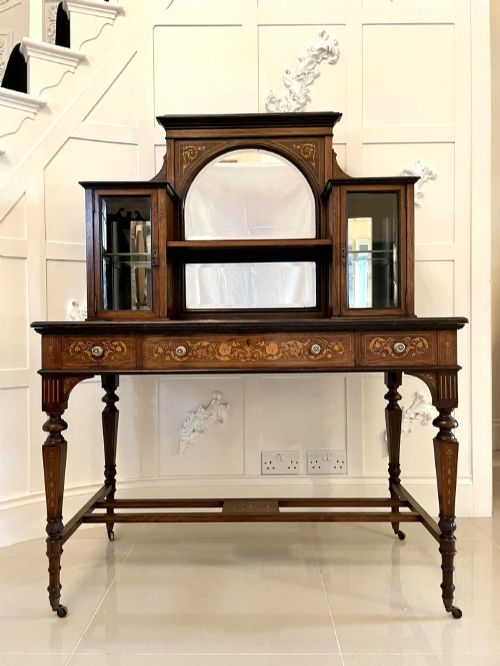
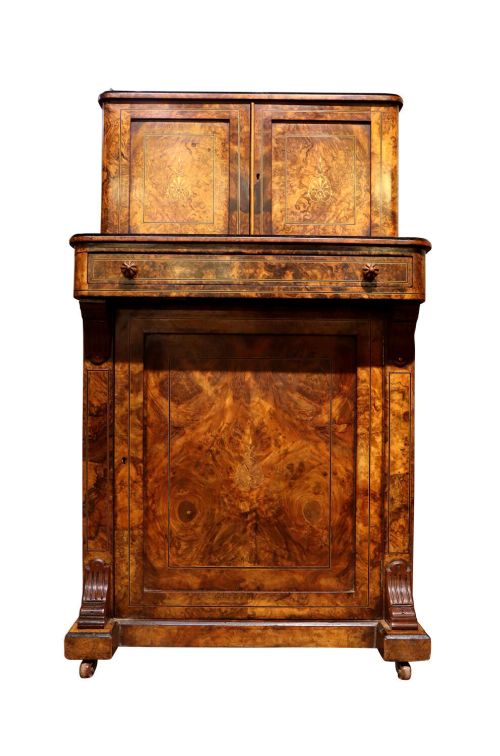
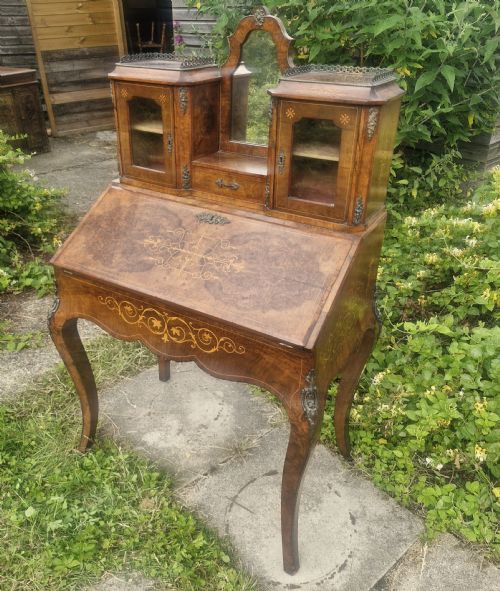
When searching for a victorian escritoire bureau, buyers encounter various forms of 19th-century writing furniture designed for domestic correspondence and record keeping. These pieces range from narrow upright cabinets to fall-front writing desks and elegant bonheur du jour variants.
The selections on this page span the 19th century, featuring styles from the Victorian era alongside French Revival, Sheraton Revival, and Arts & Crafts influences. Walnut, mahogany, and burr walnut dominate the material palette, often enhanced with intricate marquetry and inlay.
Cabinet desks and writing furniture from this period frequently incorporate fitted interiors with small drawers and pigeonholes behind a drop-down writing surface. Such organisation reflects the demands of personal correspondence in middle and upper-class Victorian households.
Materials and Construction Techniques
Cabinetmakers of the period utilised solid timbers like mahogany and oak for structural integrity while applying decorative veneers such as burr walnut, satinwood, and kingwood to visible surfaces. These figured veneers were carefully selected to create symmetrical patterns across the fall-fronts and desk lids.
Inlay and marquetry work added ornamental detail using contrasting woods, occasionally accented with brass fittings, ormolu mounts, and leather writing inserts. Structural joinery relied on traditional methods to ensure stability in upright escritoires and heavy bureau chests.
Specialised forms incorporated bamboo, lacquer, and ebonised finishes to reflect specific stylistic movements like the Aesthetic Period or Chinoiserie tastes. Each technique served to elevate standard writing furniture into a statement piece for the Victorian parlour or study.
Victorian writers hid love letters inside secret compartments so clever they required pressing specific hidden pins to open.
Markers of Superior Craftsmanship
The distinction between standard commercial pieces and exceptional examples rests in the choice of timber veneer and the precision of the marquetry. Superior pieces exhibit book-matched burr walnut or finely cut satinwood with seamless grain continuity across drawers and panels.
Internal arrangement and secondary woods also reveal the maker's dedication, with secondary timbers like mahogany used consistently throughout drawer linings rather than cheaper conifers. High-quality brass hardware, locks, and hinges indicate that no expense was spared during initial production.
Exhibition pieces and designs associated with notable makers demonstrate sculptural confidence in curved forms, kidney shapes, or sophisticated mechanical compartments. The depth of hand-finishing on polished wood surfaces ultimately separates everyday furniture from collector-grade examples.
George Faulkner Armitage·Morris & Co·George W Jack·Gregory & Co of London·Edwards & Roberts
The Victorian Escritoire Bureau Glossary
- Escritoire
- A small writing cabinet, typically featuring a fall-front flap that opens to reveal a fitted interior of small drawers and pigeonholes. This form provides a compact station for letter writing.
- Bureau
- A desk with a sloping hinged lid that covers compartments for papers, though the term also describes drawer units with writing compartments. They were central to Victorian home administration.
- Bonheur du jour
- A light ladies writing desk featuring a small cabinet or set of shelves superstructure upon the main writing surface. These pieces emerged as decorative items for fashionable drawing rooms.
- Marquetry
- The art of applying pieces of veneer to a structure to form decorative patterns and pictorial designs. Cabinetmakers used various tinted woods to achieve tonal contrast.
- Secretaire Abbatant
- An upright wall-mounting or freestanding bureau cabinet with a drop-front writing surface. It offers substantial vertical storage while occupying minimal floor space.
Victorian Escritoire Bureau: Frequently Asked Questions
What is an escritoire bureau?
An escritoire bureau is an enclosed writing cabinet designed for personal correspondence, typically featuring a drop-down flap or fall-front.
These pieces combine vertical storage or tabletop writing surfaces with internal compartments for storing letters, documents, and writing implements.
Where were these desks placed?
Victorian writing furniture usually resided in drawing rooms, private boudoirs, or dedicated home studies depending on the social status of the household.
Ladies writing desks like the bonheur du jour sat in public reception rooms, while larger cabinet desks belonged in private libraries.
Are these desks suitable for daily use?
Many collectors and homeowners utilise antique writing furniture for modern correspondence and laptop placement.
Careful consideration of writing surface heights and interior compartment dimensions ensures these historic items function practically in contemporary spaces.