




Victorian Era Landscape Art
Victorian era landscape art captures pastoral scenes, dramatic coastlines, and alpine views through oil and watercolour.
Victorian Era Landscape Art
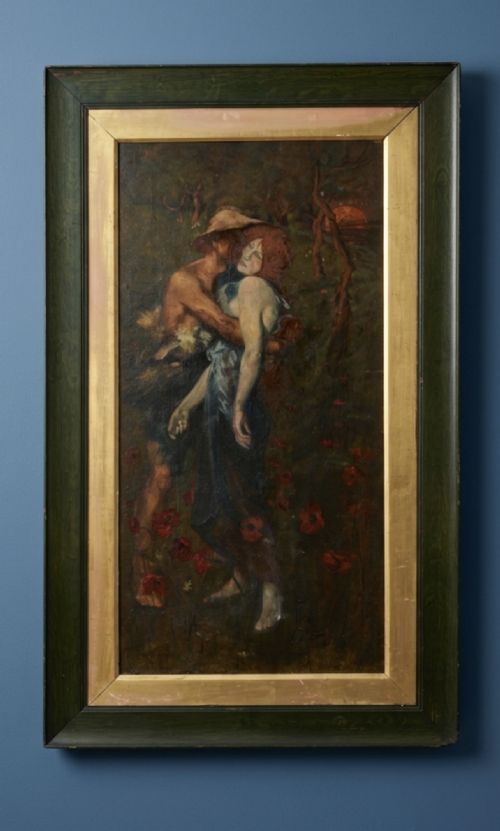
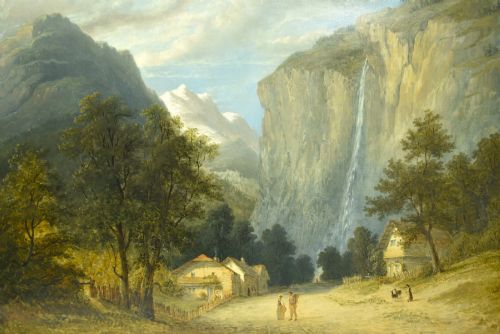
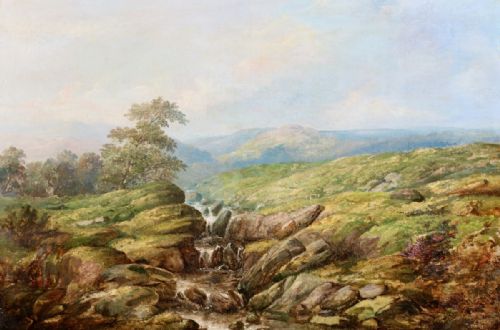
Victorian era landscape art comprises oil paintings, watercolours, and charcoal works produced across the nineteenth century and into the Edwardian period. Buyers examining this page encounter woodland scenes, alpine waterfalls, Dutch canals, and Italian lakesides created within romantic, realist, and Pre-Raphaelite traditions.
The selections span unsigned works and signed compositions by named continental and British painters. Subjects range from tranquil pastoral views with sheep and shepherds to dramatic seascapes and castle backdrops.
Materials and methods
These works rely primarily on oil paint applied to canvas or wood panels, alongside watercolours on paper. Canvases are frequently housed within ornate frames constructed from gesso, wood, and gold leaf giltwood.
Artists employed layered oil pigments to achieve atmospheric effects in woodland and marine scenes, whilst watercolours utilised fluid washes for lighter lake views.
Several sheep populate these nineteenth-century pastures, faithfully supervised by diligent painted shepherds.
Evaluating quality
Quality separates through the finesse of brushwork and the handling of natural light within the composition. Masterful depth in mountainous or pastoral backgrounds distinguishes accomplished academic hands from simpler unsigned efforts.
The preservation of the original canvas, oil pigment stability, and the integrity of the period giltwood frame contribute substantially to the standing of an individual piece.
Philip Richard Morris·Karl Herrle·Paul Viry·Frederick Richard Lee·Karel Frans Philippeau·Eugene Battaille·Anthonij Anton Mauve·Wilhelm Alexander Meyerheim·Eugene Verboeckhoven·Robert Thomas Buttery
The Victorian Era Landscape Art Glossary
- Oil on canvas
- Pigments bound in a drying oil applied to a stretched fabric support. This technique allowed artists to build rich textures and deep tonal ranges.
- Giltwood
- Wood carved and coated with gold leaf or metallic powder. It provides a reflective, ornate border often seen on nineteenth-century frames.
- Pre-Raphaelite Movement
- An artistic association focusing on detailed observation of nature and vibrant colour. Works from this circle display intense fidelity to botanical and outdoor elements.
- Watercolour
- A paint consisting of water-soluble pigments used on paper. It produces translucent washes suited to atmospheric lake and sky depictions.
- Gesso
- A plaster-like mixture applied to wood or canvas as a base for painting or gilding. It forms a smooth surface for intricate frame mouldings.
Victorian Era Landscape Art: Frequently Asked Questions
What subjects appear in these landscapes?
The compositions encompass woodland scenes, Swiss waterfalls, Dutch canals, Italian lakes, and pastoral views featuring sheep and shepherds.
Coastal views, castles, and dramatic shipwrecks also form part of the regional European subjects recorded across the period.
How do oils and watercolours differ?
Oils utilise slow-drying pigmented pastes on canvas or wood to build rich, opaque surface textures and deep atmospheric shadows.
Watercolours employ translucent pigment washes on paper supports, yielding lighter, luminous effects common in lake and river depictions.
How should these framed pieces be displayed?
Display them away from direct sunlight and excessive humidity to protect fragile watercolours, oil pigments, and nineteenth-century gesso frames.
Ensure adequate wall anchoring for heavy framed canvases, particularly large paired works or pieces housed in elaborate giltwood.
How are periods identified?
Periods are determined through artist signatures, dated inscriptions, costume details, and stylistic movements such as Romanticism and Pre-Raphaelite art.
Material indicators, including canvas types and the construction of original giltwood frames, further clarify the nineteenth-century timeline.