


Victorian Equestrian Art Print
A victorian equestrian art print brings the vigorous energy of nineteenth-century field sports directly into a room through hand-finished engraving, lithography and oils.
Victorian Equestrian Art Print
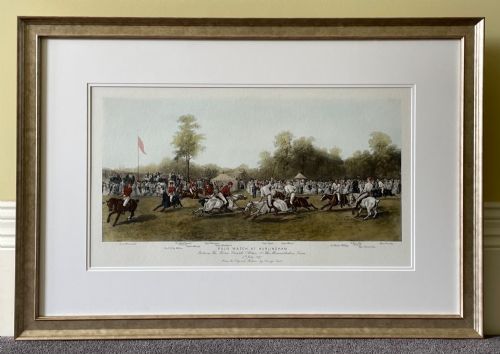
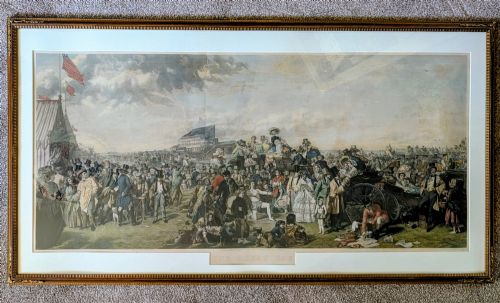
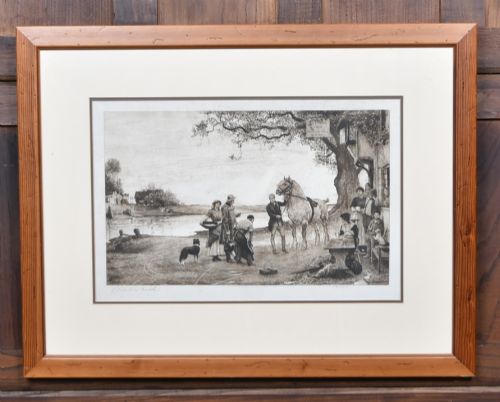
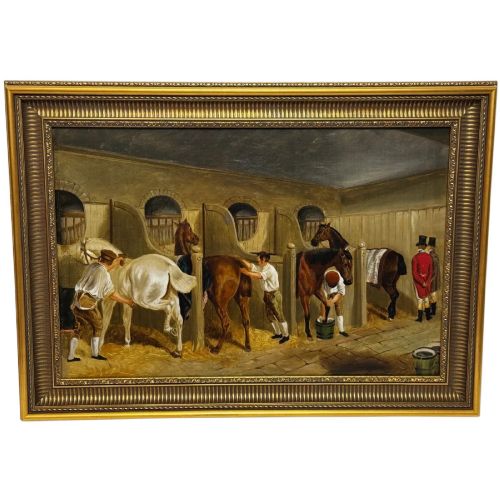
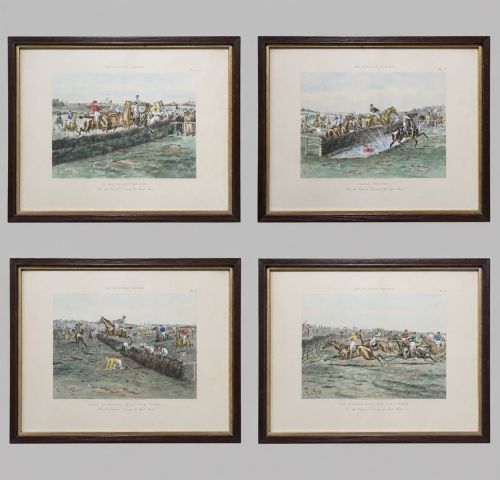
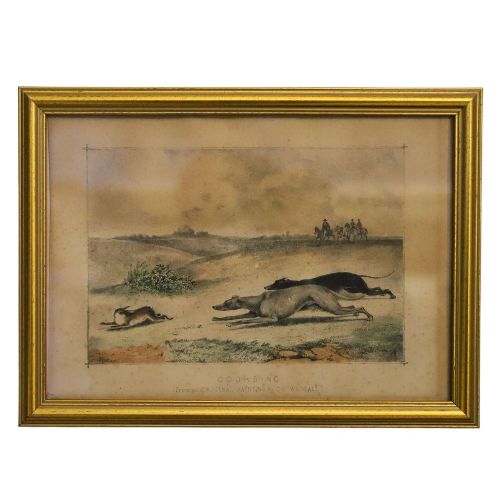
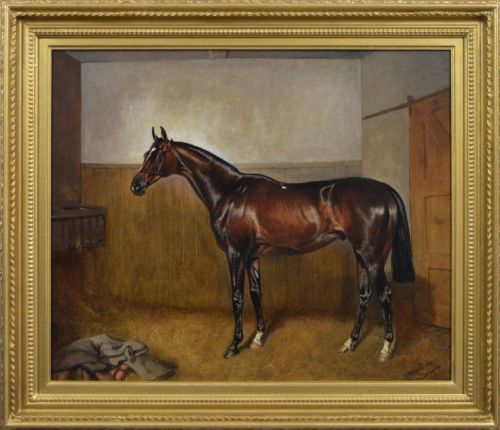
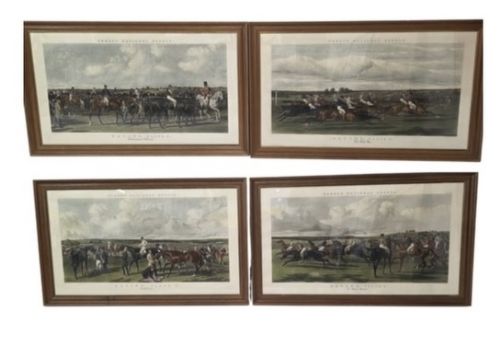
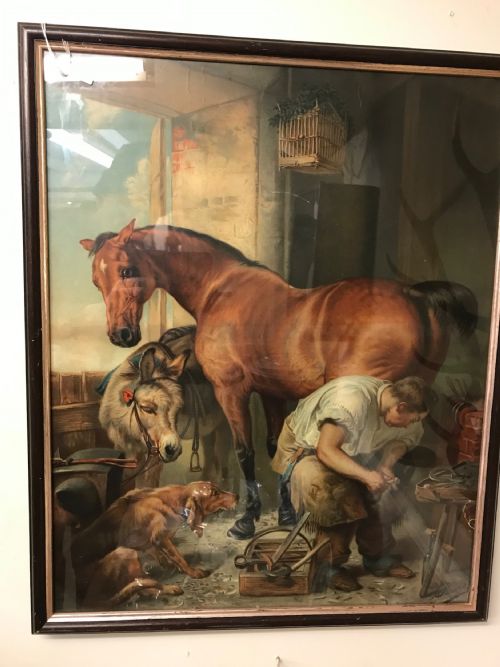
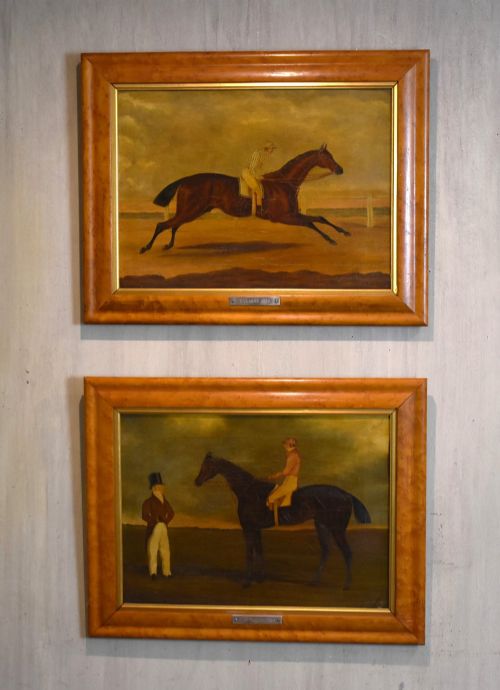
When searching for a victorian equestrian art print, collectors encounter a diverse selection of nineteenth-century works focusing on horses, racing, hunting and rural sporting life. These pieces range from framed engravings and lithographs to hand-coloured aquatints and oil paintings depicting iconic scenes like the Derby Day or local hunts. Most examples on this page reflect British sporting traditions from the 1850s to the early 1900s.
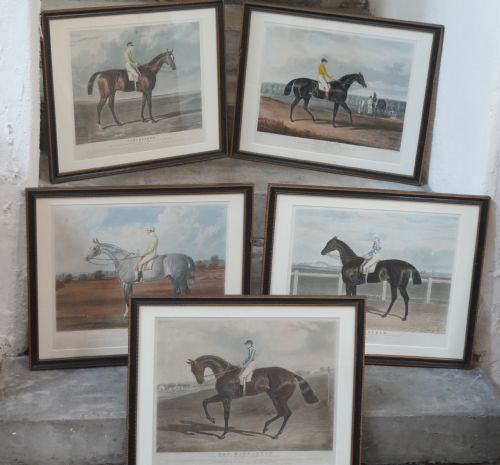
The material formats vary significantly, encompassing individual plates, complete sets of four or five framed prints, and intimate watercolours or pen and ink drawings. Subjects stretch from named racehorse portraits and polo matches to comedic Vanity Fair double pages and detailed coaching scenes. Each object captures a specific facet of nineteenth-century equine culture preserved behind glass in period timber frames.
How they were made
The physical construction relies heavily on paper sheets marked by ink through etching, engraving, lithography, chromolithography, or aquatint techniques, often finished with hand colouring. Artists also utilised oil paint on canvas and watercolour on paper to render detailed horse portraits and dramatic hunting engagements. These works are typically housed in wooden frames, frequently enhanced with gilt wood, gold leaf and protective glass.
Printmakers often reproduced famous paintings by artists like John Frederick Herring Snr or Alken, transferring composition lines onto metal plates or stones for multi-plate publishing. Photographs on paper and specialised forms like crystoleum also appear, demonstrating the breadth of nineteenth-century image replication. Framing methods of the period prioritized simple wooden mouldings and ornate gilded borders to complement the domestic interiors of country houses.
Listings feature works spanning the nineteenth century, including Victorian and Edwardian periods, utilising paper, oil on canvas, and giltwood materials.
What varies in quality
Quality rests primarily on the sharpness of the plate impression, the precision of the hand colouring, and the fidelity of the secondary medium to the original composition. Early impressions from copper or steel plates display crisp lines and fine detail that later or worn strikes inevitably lose. The vibrancy of original hand-applied pigment and the preservation of the paper sheet without heavy foxing or fading elevate the standing of a print.
The choice of framing contributes to the overall integrity of the piece, with original period gilt frames and glass holding distinct preference over modern replacements. Completeness also dictates desirability, as intact sets of four or five matching prints carry greater visual coherence than scattered single plates. Finally, the reputation of the original artist or engraver, alongside clear signatures or inscriptions, distinguishes standard commercial plates from masterworks.
William Powell Frith·Robert W. Macbeth·George Finch Mason·C. H. Weigall·John Alfred Wheeler·Edwin Henry Landseer·John Frederick Herring Snr·Herbert Dicksee·Charles Faulkner·Alfred Wheeler·Frank Dadd·Francis Calcroft Turner·Edward Lloyd
The Victorian Equestrian Art Print Glossary
- Aquatint
- An intaglio printmaking technique that produces tonal areas resembling watercolour washes. It was frequently used in sporting art to render soft skies and shaded ground.
- Chromolithography
- A planographic colour printing method utilising multiple stone plates for each hue. This technique allowed Victorian publishers to produce rich, multi-coloured hunting and racing prints.
- Crystoleum
- A Victorian method of applying a transparent print to the inside of concave glass, hand-tinting the reverse, and backing it with paint. This created a luminous, three-dimensional painted effect.
- Etching
- A process where lines are incised into a metal plate with acid before being inked and pressed onto paper. It yields fine, expressive linework characteristic of original artist prints.
- Lithography
- A flat-surface printing method based on the mutual repulsion of oil and water. It became the dominant medium for reproducing popular equestrian scenes and Vanity Fair supplements.
Victorian Equestrian Art Print: Frequently Asked Questions
How do I date a horse racing print?
Dating relies on publisher imprints, copyright dates printed in the lower margins, and the specific attire of the jockeys or spectators depicted.
Style clues such as the transition from early Victorian aquatints to late-century chromolithographs also help narrow the production window.
Are these prints original or modern reproductions?
The listings consist entirely of nineteenth and early twentieth-century works produced via period printing methods like engraving, lithography, and etching.
Examination under magnification reveals plate marks and dot patterns consistent with historical printing technology rather than modern digital reproduction.
How should I care for framed paper prints?
Paper works require protection from direct sunlight to prevent the fading of inks and watercolours.
Keeping them away from damp environments ensures the paper and historic wooden frames remain stable over time.
What is the difference between an engraving and a lithography print?
An engraving is pressed from lines physically cut into a metal plate, resulting in a distinct plate mark indentation in the paper.
Lithography uses a flat stone or metal surface treated chemically to hold ink, producing smoother tonal transitions without a depressed border.