



Victorian Entomology Drawers
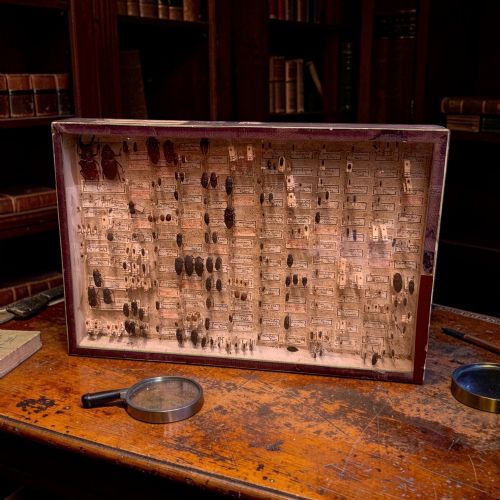
Victorian entomology drawers are purpose-built specimen housings designed to preserve delicate natural history collections.
Victorian Entomology Drawers
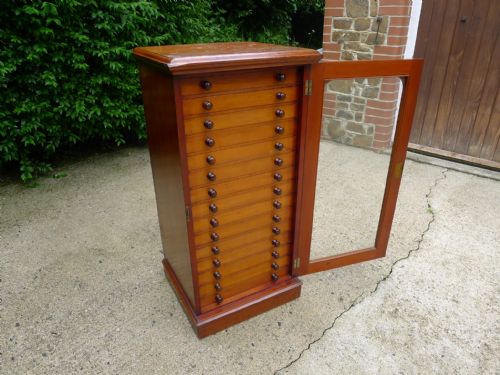
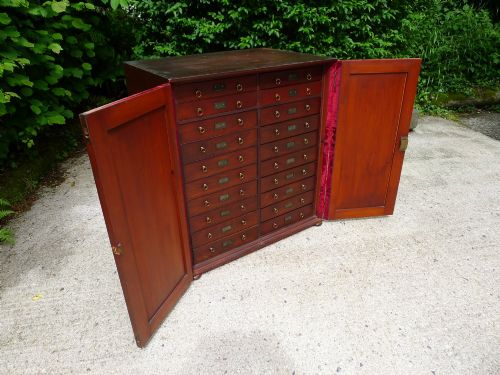
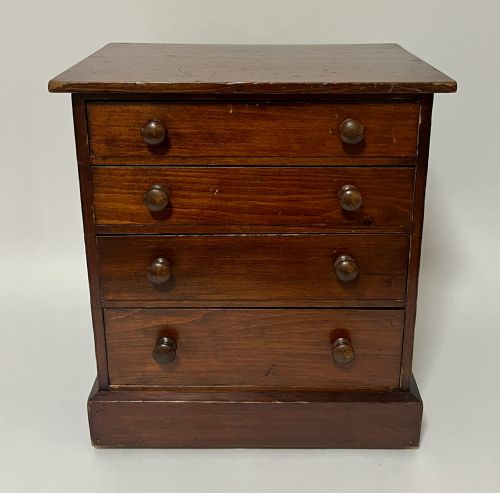
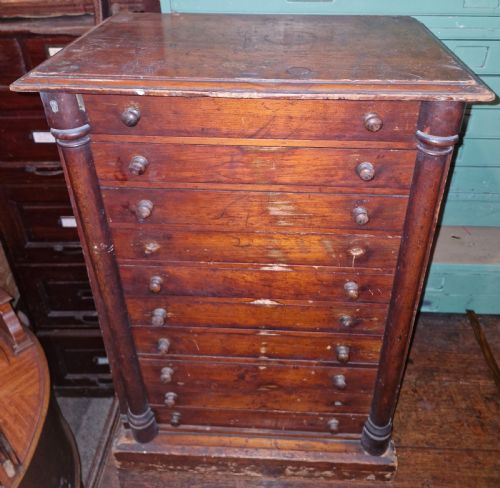
Victorian entomology drawers appear within multi-drawer collectors cabinets, specimen chests, and display cases housing insects, eggs, and slide collections.
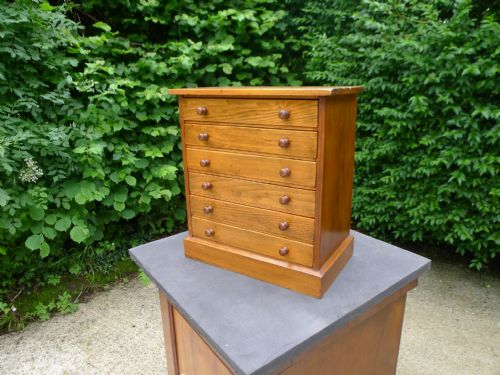
The configurations on this page range from compact five-drawer units to monumental cabinets containing forty drawers constructed for serious naturalists.
Pieces span the nineteenth century through the early twentieth century, taking the form of modular chests and glass-fronted display cabinets.
Materials and construction
Cabinet makers utilised dense hardwoods including solid mahogany, flame mahogany veneer, walnut, burr walnut, and satin walnut alongside softer structural timbers like deal and pine.
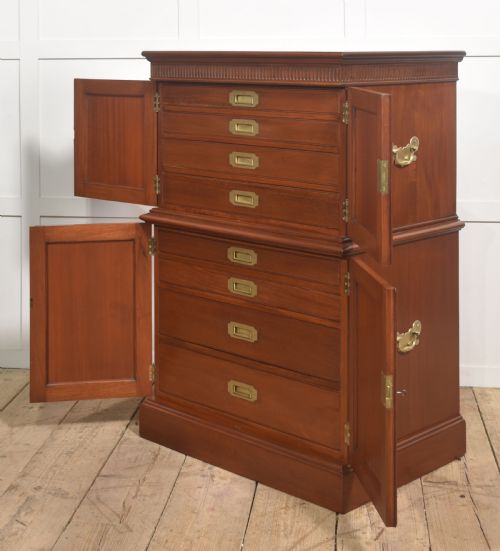
Internal drawer construction incorporated secondary woods, glass panels for viewing lids, and brass campaign-style hardware or recessed pulls.
Surfaces received careful polishing, staining, or paint finishes to protect the timber and highlight grain patterns across mahogany and walnut structures.
One extraordinary forty-drawer cabinet survived bearing the personal property provenance of entomologist J.C. Dale.
Assessing cabinet quality
Scale and capacity dictate significance, distinguishing modest five-drawer chests from twenty-eight or forty-drawer institutional cabinets.
Timber selection governs visual distinction, setting plain stained pine apart from figured pitch pine, satin birch, and burr walnut.
Attribution to documented makers such as Watkins & Doncaster, J.T. Crockett, or Standish elevates the standing of a piece.
Watkins & Doncaster·J.T. Crockett·Standish
The Victorian Entomology Drawers Glossary
- Collectors cabinet
- A multi-drawer piece of furniture designed to house and organise natural history specimens safely. These units feature dust-tight drawer construction.
- Specimen case
- A glazed enclosure used for displaying individual items or small groupings of natural history objects. They protect contents from environmental damage while allowing clear observation.
- Flame mahogany veneer
- A decorative wood slicing applied to cabinet carcases to produce a distinctive flickering flame pattern. It showcases the high skill of nineteenth-century cabinet makers.
- Deal
- A traditional British term for softwood timber, typically fir or pine, utilised in the construction of carcases and internal framing. Stained deal provides an affordable alternative to mahogany.
Victorian Entomology Drawers: Frequently Asked Questions
What were entomology drawers used for?
These shallow drawers served to organise and preserve pinned insect specimens, butterflies, and moths within dust-sealed cabinet environments.
Collectors utilised the uniform drawer depths to protect fragile specimens from light exposure and pest damage while facilitating academic study.
How do I date a collectors cabinet?
Dating relies on timber choices, construction methods, hardware styles, and any maker signatures stamped into the woodwork or drawers.
Nineteenth-century examples often exhibit hand-cut dovetailing, solid mahogany frames, and brass pulls characteristic of Victorian and Edwardian workshop practices.
Can I store modern items in these cabinets?
The shallow drawers suit the storage of small flat items, jewellery, mineral samples, or art prints rather than bulky modern possessions.
Interior depths remain restricted to accommodate thin specimen layers and glass-topped frames rather than deep household goods.
How should I care for antique wood?
Maintain polished mahogany and walnut surfaces by keeping cabinets away from direct heat sources and fluctuating humidity levels.
Apply gentle wax polish sparingly to nourish aged timber without damaging original patinas or delicate veneer surfaces.