

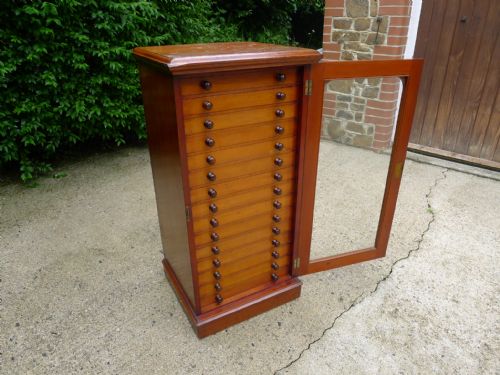
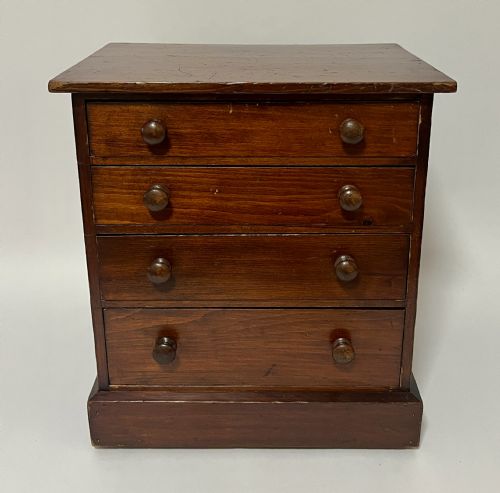

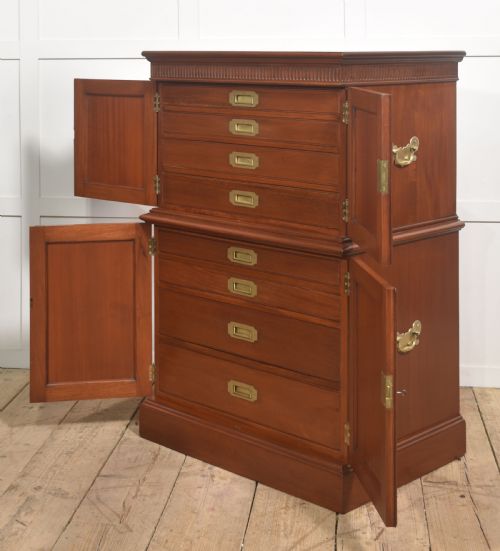

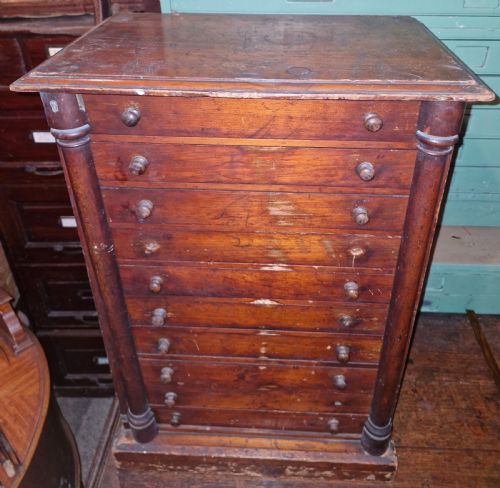


Entomology Chest of Drawers
An entomology chest of drawers is a specialised multi-drawer cabinet built to house natural history specimens safely.
Entomology Chest of Drawers
An entomology chest of drawers, also catalogued as a collector cabinet or specimen chest, is a purpose-built piece of furniture designed to store and display natural history collections. These pieces range from compact five-drawer bedside units to monumental multi-drawer cabinets housing dozens of shallow drawers.
The versions most commonly met on this page date from the Georgian and Victorian eras through to the Edwardian period. They utilise multiple shallow tiers specifically dimensioned to hold insect pins, glass-topped display boxes, or slide trays while keeping dust and light away from delicate specimens.
How they were made
Cabinet makers constructed the primary carcases of these pieces using dense hardwoods such as mahogany, oak, and walnut, alongside utilitarian softwood frames in pine and deal. Flame mahogany veneer and burr walnut added decorative surface figure to high-status examples.
Internal drawer construction relied on precise joinery to ensure smooth movement within tight tolerances, often incorporating glass panels and brass fittings. Many drawers feature glazed lids and internal paper linings designed to protect fragile scientific contents.
Entomology Chest of Drawers Retail Price Guide 2026
Typical asking prices for entomology chest of drawers among the pieces listed under this phrase on Sellingantiques today, from the lower quarter to the upper quarter. They describe what is for sale here now, not the wider market.
Some Victorian naturalists kept dedicated twenty-four drawer cabinets solely for housing collected bird eggs rather than insects.
What varies in quality
The distinction between standard utility storage and top-tier workshop production lies in the selection of timbers and the precision of the drawer fit. Master makers utilised dense Cuban mahogany and figured veneers matched across multiple tiers.
Hardware choice and internal engineering separate workshop-produced pieces from lesser commercial examples. Robust brass drop handles, secure locking mechanisms, and meticulously glazed frames indicate high-grade construction.
Watkins And Doncaster·Brady Of Edmonton·Standish·Charles William Schofield·J T Crockett
The Entomology Chest of Drawers Glossary
- Specimen cabinet
- A multi-drawer piece of furniture designed for the housing and classification of natural history items.
- Flame mahogany veneer
- A figured wood veneer sliced from timber where the grain pattern resembles flickering flames.
- Glazed lid
- A glass-inset frame fitted to the top of an individual drawer to allow inspection without opening the compartment.
- Deal
- An older British term for softwood timber cut from pine or fir trees.
Entomology Chest of Drawers: Frequently Asked Questions
What are entomology chests used for?
These cabinets served naturalists and collectors as secure storage systems for organised insect populations and botanical specimens. The numerous shallow drawers prevented damage while allowing orderly classification.
Today, modern owners repurpose these multi-drawer units to store jewellery, art supplies, or small collections while appreciating the traditional craftsmanship.
How do I date an antique cabinet?
Dating relies on observing timber choices, construction techniques, and hardware styles across the carcase and drawers. Georgian and early Victorian pieces often feature solid native hardwoods and hand-cut dovetails.
Later Victorian and Edwardian examples introduce standardised brass hardware, veneered surfaces, and maker stamps or labels inside the door frames.
Are the drawers glass-fronted?
Many individual drawers within these cabinets incorporate glazed panels set into removable frames. This design allowed researchers to view delicate contents without exposing them to air or handling.
Some cabinets also feature an external glazed glass door that locks over the entire stack of internal drawers.
What woods were commonly used?
Makers favoured dense timbers like mahogany and walnut for their stability and resistance to warping over time. Oak and pitch pine also appeared frequently in utilitarian and regional workshop builds.
Secondary woods such as pine and satin birch were typically reserved for hidden drawer linings and internal carcase dividers.