



Victorian Engraved Claret Jug
A Victorian engraved claret jug brings nineteenth-century dining tables to life with its combination of sparkling glass and detailed metalwork.
Victorian Engraved Claret Jug
A Victorian engraved claret jug is a serving vessel designed for pouring red wine at the formal dining tables of the nineteenth and early twentieth centuries.
The pieces on this page span the Victorian and Edwardian eras, with occasional examples stretching into the mid-twentieth century.
Materials and Techniques
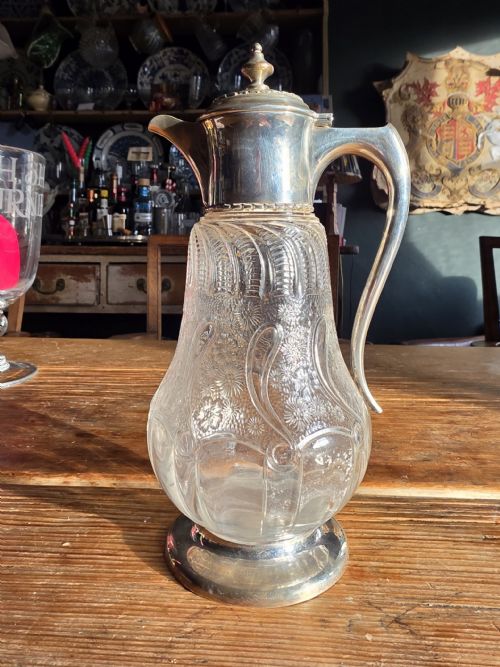
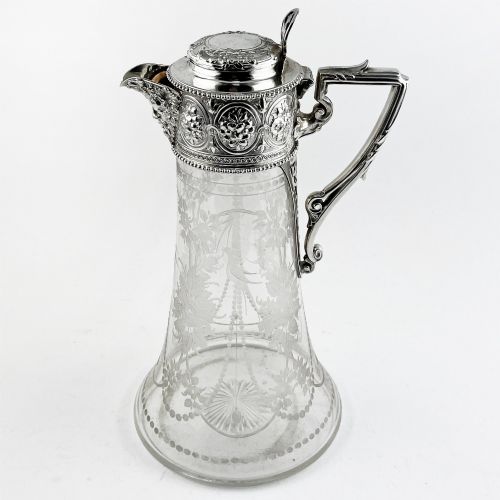
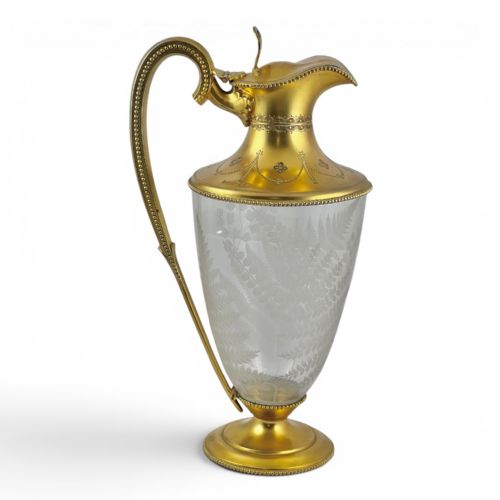
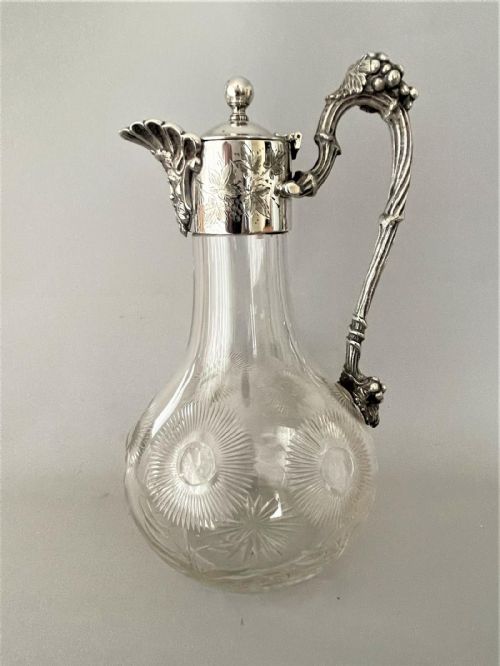
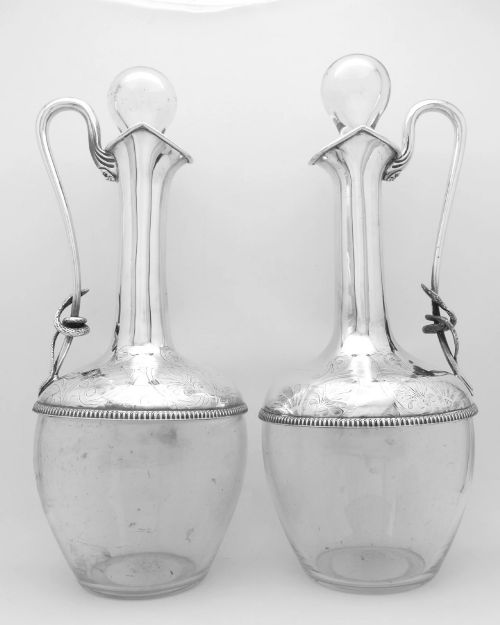
Makers utilised heavy lead crystal and cut glass bodies, often finished with wheel-engraved botanical or aquatic motifs such as fruiting vines, flowers, and dolphins.
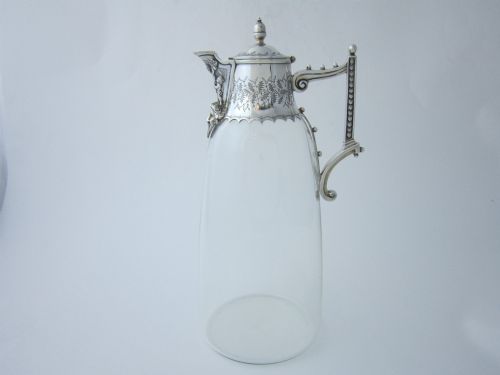
The glass bodies are paired with mounts of sterling silver or silver plate, sometimes shaped into naturalistic handles resembling serpents or grapevines.
Listings feature pieces from the Victorian, Edwardian, and Georgian periods, utilising cut glass, lead crystal, sterling silver, and silver plate.
Defining Quality
Quality rests in the crispness of the glass cutting and the depth of the wheel engraving, alongside the weight and detail of the silver mounts.
Examples featuring figural elements like Bacchus masks or cast animal handles typically represent the more ambitious end of nineteenth-century production.
William Comyns·Asprey and Co. Ltd·Richardsons
The Victorian Engraved Claret Jug Glossary
- Claret jug
- A specialised pouring vessel created specifically for serving claret and other red wines during formal meals. These pieces combine a glass body with a hinged metal lid and handle.
- Silver plate
- A method of fusing a thin layer of silver onto a base metal, commonly utilised for Victorian mounts and handles to achieve the appearance of solid silver at a different cost.
- Lead crystal
- A heavy, brilliant form of glass containing lead oxide, which permits deep cutting and clear engraving. It forms the translucent body of many nineteenth-century wine ewers.
- Silver gilt
- Silver that has been coated with a thin layer of gold on its surface. This technique provides a warm, rich interior or exterior contrast on the metal mounts.
Victorian Engraved Claret Jug: Frequently Asked Questions
What is a claret jug used for?
These vessels were utilised at nineteenth-century dining tables for serving claret, a dry French red wine, directly from the bottle to the glass.
They allowed the wine to breathe while providing an ornate centrepiece for the table during formal dinner parties.
How do I clean a glass claret jug?
Careful hand washing in lukewarm water with mild soap preserves both the glass body and the delicate metal mounts.
Harsh detergents and sudden temperature changes should be avoided to protect antique silver plate and nineteenth-century crystal.
How do I date a silver mounted jug?
Hallmarks stamped on the silver components provide the exact assay office, standard of metal, and year of manufacture for pieces made in Britain.
Stylistic indicators such as Art Nouveau curves or Victorian floral engraving help narrow down the period when hallmarks are absent.
Were these vessels only used for wine?
While primarily designed for red wine, households also utilised them for serving champagne, iced water, or fruit cordials during warm weather.
Larger examples often functioned as general serving ewers across the nineteenth century.