

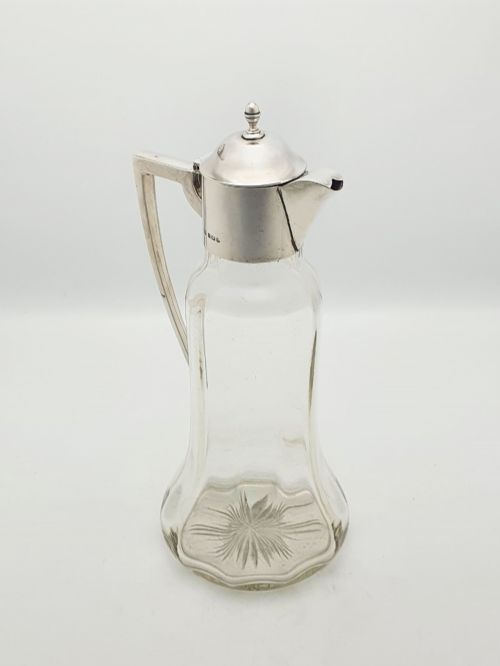
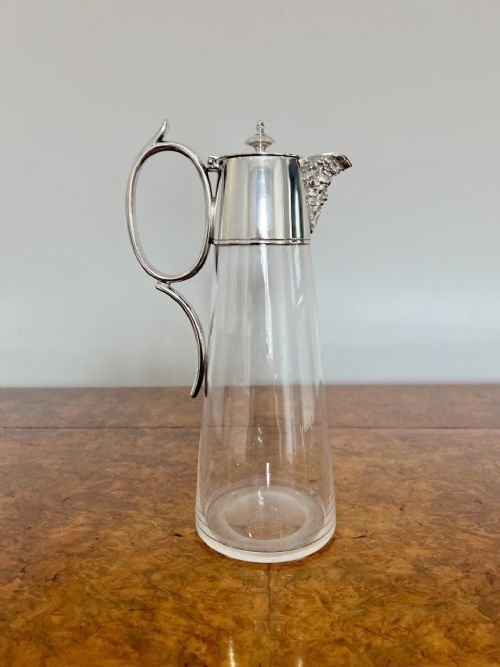


Silver Wine Server
These silver wine server pieces combine glass vessels with mounted metal work to pour claret, wine, and champagne with formal dining elegance.
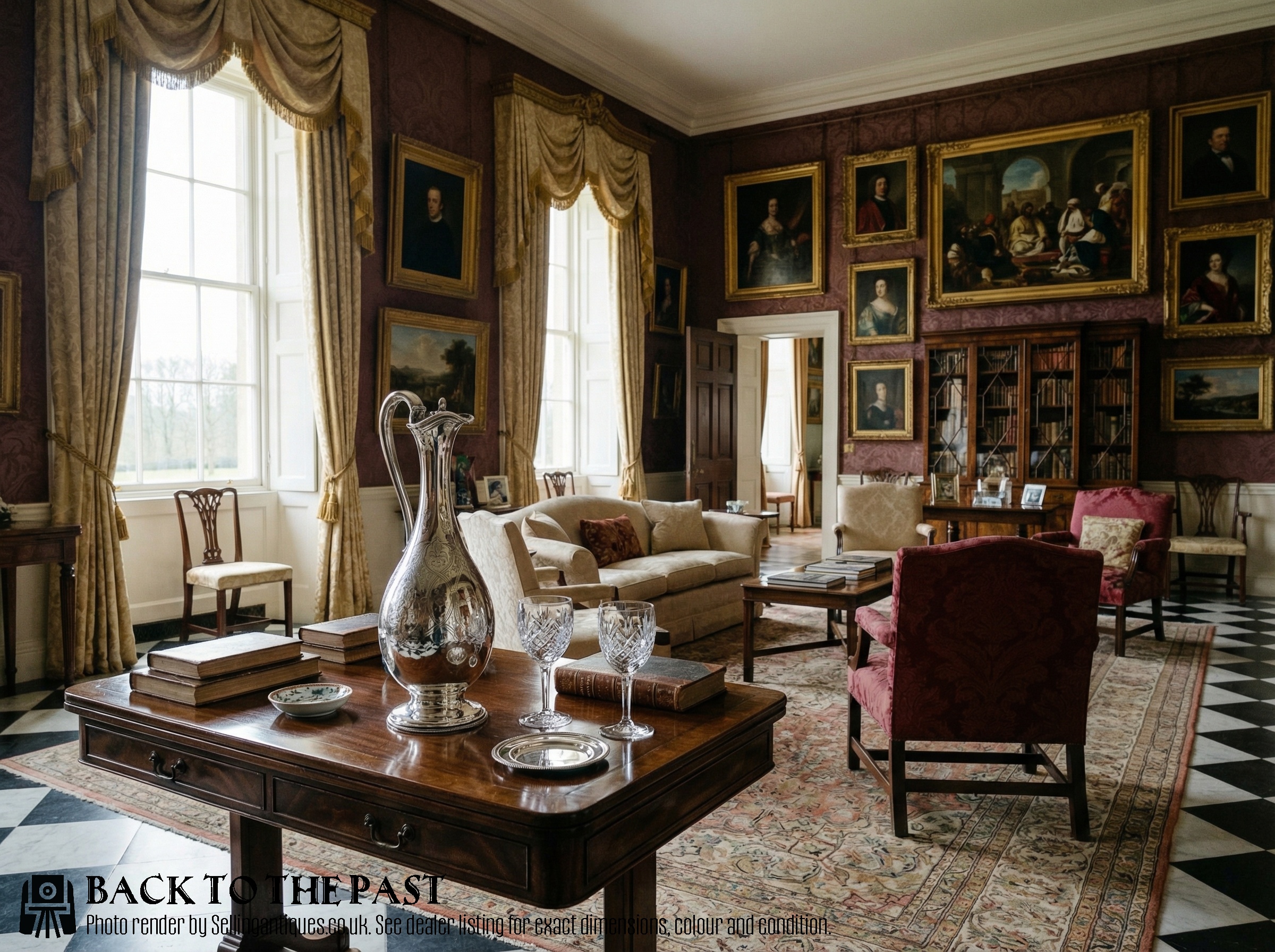
Silver Wine Server
A silver wine server typically takes the form of a claret jug, wine flagon, ewer, or bottle caddy designed for nineteenth and twentieth-century dining tables. The pieces on this page span the Victorian, Edwardian, Art Nouveau, and Art Deco periods, ranging from eighteen eighty to nineteen thirty.
Most examples pair a glass or cut glass body with silver plate or sterling silver mounts, handles, and hinged lids. Buyers frequently encounter glass and silver plated claret jugs alongside occasional wine flagons, ewers, and bottle caddies.
Originating in periods of elaborate hospitality, these vessels served chilled claret, champagne, and other wines directly at the table. Their forms vary from tall glass ewers with decorative metal mounts to silver plated bottle cradles.
Materials and construction methods
Makers combined blown or moulded glass bodies with mounted metal work in silver plate or sterling silver. Cut glass and cut crystal glass provide heavy faceted surfaces that reflect candle and gas light during formal meals.
Silver plating techniques applied thin layers of silver over base metals, while sterling silver items utilised solid precious metal for mounts and collars. Hinged lids, spouts, and scrolling handles were cast or stamped separately before being securely fitted to the glass necks.
Silver Wine Server Retail Price Guide 2026
Typical asking prices for silver wine server among the pieces listed under this phrase on Sellingantiques today, from the lower quarter to the upper quarter. They describe what is for sale here now, not the wider market.
Listings feature items spanning the Victorian, Edwardian, Art Nouveau, and Art Deco periods, alongside nineteenth century wine flagons.
Factors determining quality
The weight and depth of the glass cutting distinguish standard utility vessels from more ambitious dining table items. Crisp facet cutting and heavy crystal bodies indicate higher manufacturing standards.
The quality of the metal mounts, including the weight of the silver plate or sterling silver and the crispness of decorative chasing or plain finishes, dictates the overall grade of the piece. Well-balanced handles and smooth hinge action on the lid reflect superior silversmithing.
The Silver Wine Server Glossary
- Claret Jug
- A specialised vessel designed specifically for holding and pouring red claret wine at the dining table. They typically feature a glass body with a metal handle, hinged lid, and pouring spout.
- Silver Plate
- A manufacturing method where a thin layer of silver is bonded to a base metal substrate. This technique allowed makers to produce large decorative dining wares at a lower cost than solid sterling silver.
- Cut Glass
- Glass decorated by grinding facets and patterns into the surface using rotating wheels. The resulting cuts catch and refract light, adding visual texture to the vessel body.
- Flagon
- A large drinking vessel with a handle and a lid, used historically for serving wine or other beverages. In nineteenth-century dining, metal mounted flagons functioned as formal wine servers.
- Ewer
- A large pitcher with a wide spout and a sweeping handle, originating from classical vessel forms. Victorian silversmiths adapted the ewer shape for serving wine and claret.
Silver Wine Server: Frequently Asked Questions
What is a silver wine server used for?
These vessels were utilised during formal nineteenth and twentieth-century meals for decanting and serving red wine, claret, or champagne at the dining table. The glass body held the vintage while the metal spout and hinged lid allowed clean pouring into glasses.
Bottle caddy versions held existing wine bottles securely in a silver plated frame for easy movement across the table surface during dinner parties.
How do I identify Victorian pieces?
Victorian examples often display heavier ornamentation, deeply cut glass patterns, and elaborate silver plated mounts reflecting the decorative tastes of the nineteenth century. Makers during this era embraced floral motifs, scrolling handles, and prominent hinged spouts.
Looking at the overall weight, mounting style, and glass thickness helps distinguish mid-nineteenth-century wine flagons from later twentieth-century designs.
What is the difference between silver plate and sterling silver?
Sterling silver denotes items constructed from solid silver conforming to a strict purity standard, whereas silver plate consists of a base metal coated with a thin layer of silver. Many nineteenth and twentieth-century claret jugs utilised silver plate to achieve substantial decorative mounts affordably.
Examining the metal surfaces and mounts helps determine whether a piece is solid sterling silver or silver plated over a base metal.
How should I clean glass and silver servers?
Maintaining these pieces involves gentle washing of the glass body with warm water and mild detergent while protecting the metal mounts from harsh chemical exposure. Silver plated and sterling silver parts benefit from occasional application of specialised silver polish applied with a soft cloth.
Care must be taken around hinged lids and antique glass necks to avoid straining delicate joints during cleaning.
How do Art Nouveau and Art Deco styles differ?
Art Nouveau servers feature flowing, organic lines inspired by natural plant forms, often visible in the curving mounts and handles of eighteen-nineties pieces. These designs emphasise asymmetry and graceful, swaying contours.
Art Deco examples from the nineteen thirties favor geometric discipline, clean lines, and streamlined modern forms that depart from Victorian and Edwardian ornamentation.