



Victorian Enamelled Glass Bottle
These pieces of victorian enamelled glass bottle design combine vibrant colour with intricate painted details, offering tactile history for a dressing table or cabinet.
Victorian Enamelled Glass Bottle
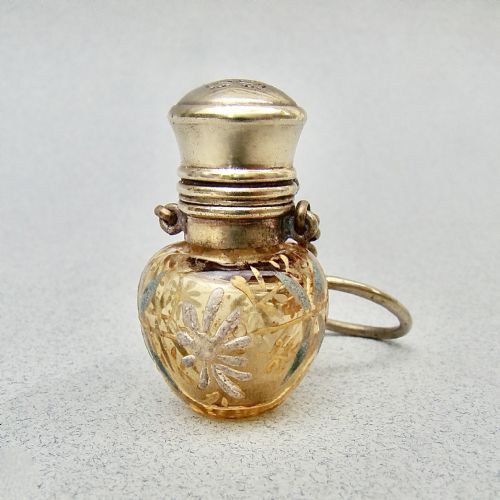
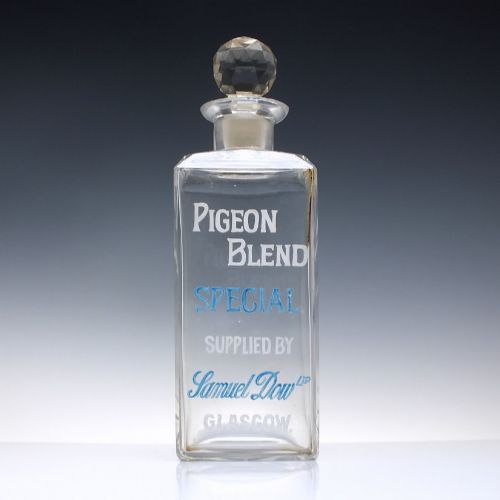
A victorian enamelled glass bottle typically takes the form of a scent bottle, a dressing table container, or a small decanter created during the nineteenth century. The selection ranges from chatelaine scent bottles meant for personal wear to larger spirits decanters produced for Scottish and continental markets.
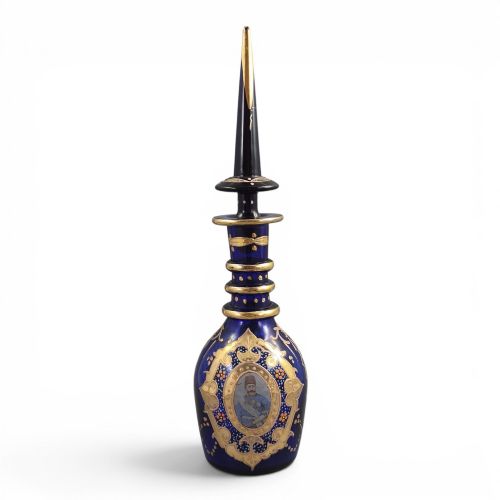
Makers utilised various body colours including cranberry, cobalt, green, amber, and opaline glass as a base for painted enamel decoration. These vessels often incorporate silver mounts, gilt highlights, or ormolu fittings that complement the enamelwork on the glass surface.
How they were made
Glassblowers shaped molten metal into bodies like gourds or ewers, frequently employing pressed or satin glass techniques to achieve different surface textures. Artisans then applied coloured enamels by hand, often adding gold leaf or gilding to accentuate the painted motifs.
What varies in quality
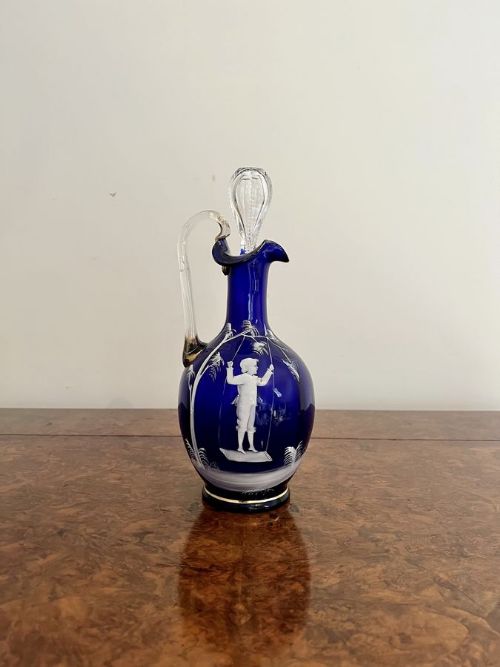
The precision and complexity of the enamel painting dictate much of the piece's refinement, with delicate floral scenes and Mary Gregory style figures showing superior brushwork. The integration of quality metalwork, such as substantial silver mounts or cast ormolu, separates standard production from finer examples.
The choice of glass body also influences the piece, as rich colours like cranberry or deep cobalt combined with gold leaf gilding represent high standards of nineteenth-century glass manufacturing.
James Fenton·J Grinsell and Sons·Mappin and Webb·Charles May·Levi and Salaman
The Victorian Enamelled Glass Bottle Glossary
- Mary Gregory
- A style of enamel painting depicting white silhouette figures, usually children amongst foliage. This technique appears frequently on green and blue glass vessels.
- Chatelaine
- A decorative belt hook worn with chains suspending small items like scent bottles. These portable containers allowed women to carry perfume easily.
- Ormolu
- Gilded bronze used for decorative mounts and fittings. It provides an ornate golden framework around the glass body.
- Cranberry glass
- A rich pinkish-red glass created by adding gold to the molten batch. It served as a popular background for enamel and gilt decoration.
- Gilding
- The application of gold leaf or gold paint to glass surfaces. This technique highlights rims, collars, and painted motifs.
Victorian Enamelled Glass Bottle: Frequently Asked Questions
How do I know the silver mount date?
Silver mounts on these bottles often bear British hallmarks that record the assay office, standard mark, and a date letter. These stamps indicate the exact year the metal component was tested and marked.
Matching the silver hallmarks helps narrow down the production period of the entire piece.
Were these bottles used for perfume?
Many smaller vessels served as scent or perfume bottles, often designed with tight-fitting silver lids to prevent evaporation. Some were made small enough to hang from a chatelaine.
Larger versions functioned as spirit decanters for gin or whisky on a dressing table.
What colours of glass are common?
The selection includes deep cobalt, cranberry, Bristol green, amber, and opaque opaline glass. These bold hues provided a strong contrast for the applied enamel and gold leaf decoration.
Clear glass also appears with specific regional enamel labels, such as Scottish whisky decanters.