





Victorian Enamel Vessel
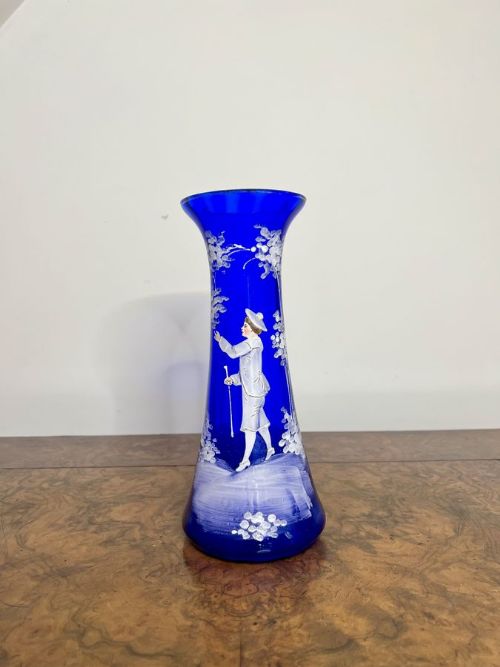
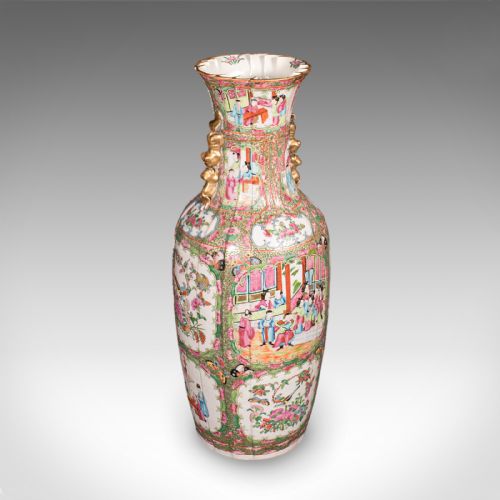
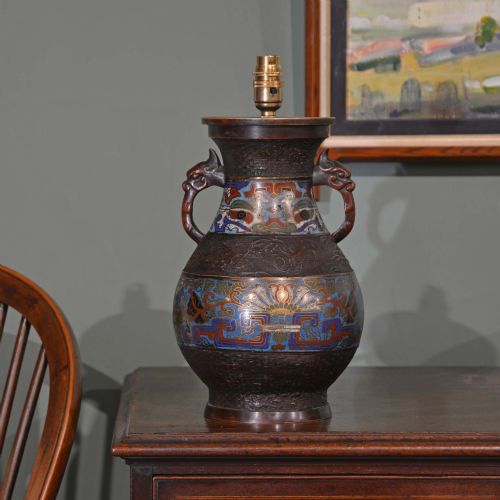
These victorian enamel vessel pieces combine vivid coloured glass and ceramic forms with detailed painted scenes.
Victorian Enamel Vessel
A victorian enamel vessel covers decorative items including vases, ewers, jars, and table lamps produced during the nineteenth century. These items showcase the period fascination with applied colour and painted detail on glass, ceramic, and bronze surfaces.
The most common examples on this page are glass vessels associated with Mary Gregory styles, alongside Bohemian glass and oriental inspired bronze or ceramic pieces. These range from small cabinet pieces to tall centrepieces.
Makers and makers' traditions span European glasshouses and oriental workshops, reflecting global trade influences during the Victorian era. Buyers encounter everything from translucent cranberry glass to opaque glass and cloisonné enamel.
How they were made
Makers utilised free blowing and mould blowing techniques to shape the glass bodies of vases, ewers, and jars before applying surface decoration. Enamel paint and gold leaf were then added by hand, requiring careful firing to bond the coloured pigments to the glass or ceramic substrate.
Bronze and ceramic pieces relied on casting and moulding, with cloisonné items incorporating wire cells filled with enamel paste prior to firing and polishing. Overlay glass methods involved casing one layer of glass over another before cutting away sections to reveal contrasting colours beneath.
A painted fox hunting scene gazes out from a bright green Bohemian glass vase.
What varies in quality
The precision and detail of the hand painting separate standard production items from finer studio pieces, particularly in the rendering of figures, foliage, and narrative scenes. Crisp outlines and controlled brushwork indicate skilled execution.
The weight, clarity, and depth of the base material also influence the piece, with heavier glass, clean crystal overlay, and well finished bronze or ceramic bodies commanding greater appreciation. Preservation of the applied enamel and gold leaf without excessive wear is crucial.
Moser·Royal Dux·François Eugène Rousseau·Baccarat
The Victorian Enamel Vessel Glossary
- Mary Gregory glass
- A style of Victorian glass featuring white enamel silhouettes of children amidst foliage, typically executed on cranberry, blue, or green glass grounds.
- Cloisonne
- A decorative metalwork technique where thin metal wires are applied to form cells, which are then filled with enamel paste and fired.
- Cranberry glass
- A rich red glass created by adding gold chloride to the molten metal batch, highly popular during the nineteenth century.
- Chinoiserie
- European artistic styles reflecting Chinese decorative motifs and cultural influences, frequently adapted during the Victorian period.
- Japonism
- The influence of Japanese art and design on Western decorative arts, prominent in late nineteenth century glass and ceramics.
Victorian Enamel Vessel: Frequently Asked Questions
What is a victorian enamel vessel?
A victorian enamel vessel is a decorative glass, ceramic, or metal object from the nineteenth century featuring painted or inlaid enamel decoration.
These items were produced in Europe and Asia for domestic display as vases, lamps, and centrepieces.
How do I identify Mary Gregory glass?
Mary Gregory glass is identified by its distinctive white enamel painting depicting children playing in woodland settings.
The figures stand out against coloured glass grounds such as cranberry, green, or blue.
Where were these vessels made?
These vessels originate from European glasshouses in Bohemia and France, alongside Japanese and Chinese workshops influenced by nineteenth century trade.
Production centres utilised local materials like blown glass, bronze, and ceramic.
How should I display these pieces?
Display these vessels in spaces with stable lighting to highlight the depth of the coloured glass and enamel details.
Keep them away from direct sunlight and sources of heat to protect the surface finishes.