




Victorian Enamel Lamps
Victorian enamel lamps bring rich colour and intricate pattern into a room, offering genuine period character through durable vitreous surfaces.
Victorian Enamel Lamps
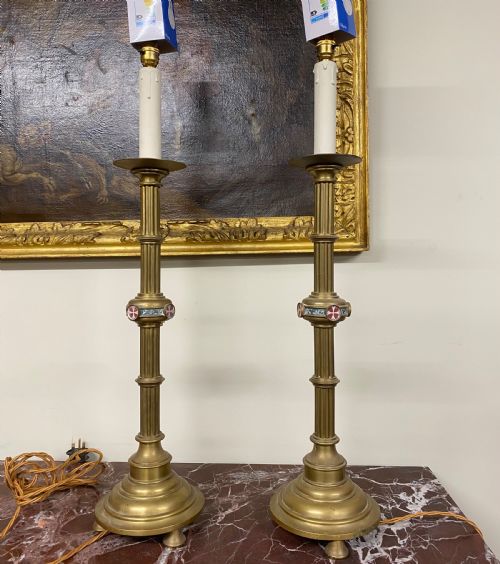
When you search for victorian enamel lamps, you encounter a varied selection of antique lighting fixtures that combine metalwork with fused glass surfaces. These pieces frequently manifest as converted oil lamps, table lamps, and decorative mantle lustres from the nineteenth century.
The objects on this page bridge domestic utility and ornamental craft, reflecting the diverse design movements of the period. You will find items spanning simple domestic lighting to elaborate decorative forms influenced by global aesthetic movements.
The most common examples on this page date from the late nineteenth century, encompassing European interpretations alongside imported wares. Their construction typically pairs a metallic base with applied coloured enamel work, creating striking focal points for interior spaces.
Materials and construction methods
The manufacture of these lamps relied on combining robust metal foundations with vitreous enamelling techniques. Artisans utilised bronze, brass, and copper frames to support intricate surface decoration executed in coloured glass pastes.
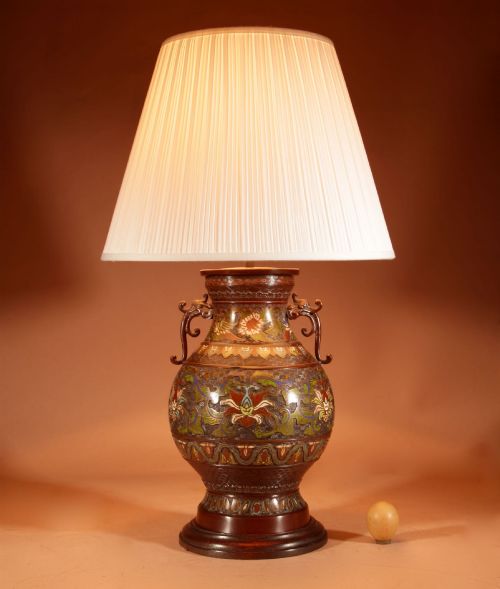
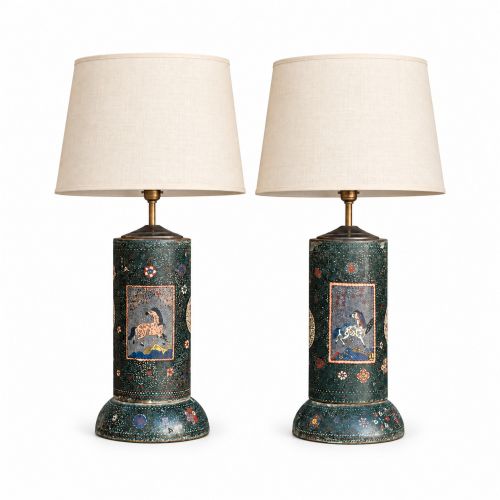
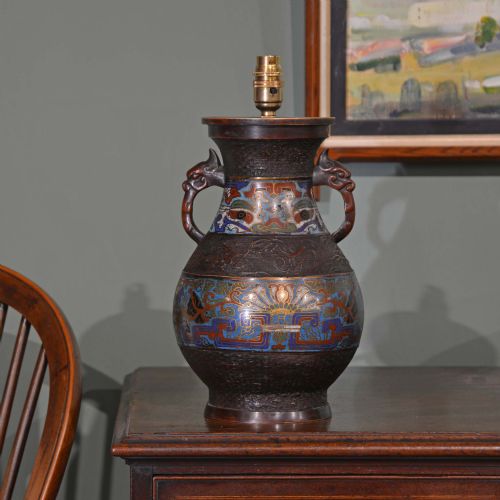
Many pieces incorporate specialised techniques such as champlevé and cloisonné, where metal partitions hold the enamel powders before firing. This method produced durable, vibrant surfaces that retained their lustre through decades of use.
Victorian Enamel Lamps Retail Price Guide 2026
Typical asking prices for victorian enamel lamps among the pieces listed under this phrase on Sellingantiques today, from the lower quarter to the upper quarter. They describe what is for sale here now, not the wider market.
Some nineteenth-century makers converted exotic bronze vases into lamps simply because they happened to be the right height.
Factors determining quality
The distinction between standard and superior pieces rests largely on the execution of the surface decoration and metalwork. Finer examples display meticulous detail in the enamel cells and precise casting in the underlying bronze or brass.
The integrity of the original materials and the sophistication of the design also dictate the overall standard of the object. Pieces that successfully integrate diverse cultural motifs or complex firing techniques command greater appreciation.
The Victorian Enamel Lamps Glossary
- Enamel
- A glassy substance fused to metal through high-temperature firing. This technique provides both protective coating and vibrant coloration.
- Champlevé
- A method where troughs are carved into a metal surface and filled with enamel before firing. It creates bold patterns defined by metal lines.
- Cloisonné
- A technique utilising thin metal wires soldered to a base to form compartments for enamel pastes. This allows for intricate and detailed pictorial designs.
- Mantle lustre
- An ornamental glass or ceramic vase adorned with hanging crystal prisms. These decorative objects frequently accompany period lighting arrangements.
- Converted oil lamp
- A historic lighting fixture adapted for modern electrical wiring. This modification allows original nineteenth-century bases to function safely today.
Victorian Enamel Lamps: Frequently Asked Questions
How do I wire an old lamp safely?
Safety updates require replacing perished internal wiring with modern insulated cables while preserving the external period components. Professional rewiring ensures the brass and bronze fittings meet contemporary electrical standards without altering historic appearance.
Qualified technicians can thread modern flex through existing channels inside the base. This approach maintains the structural integrity of the nineteenth-century body while ensuring safe domestic use.
What styles influence these pieces?
Designs draw upon multiple nineteenth-century movements, including Gothic Revival, Art Nouveau, and Orientalist aesthetics. Makers frequently incorporated Japanese Meiji period motifs and Chinese cloisonné vessels into European lighting forms.
This stylistic cross-pollination reflects the global trade and decorative tastes of the era. Examining the specific patterns helps place the object within its broader historical context.
How do I clean an enamelled surface?
Maintenance requires gentle dusting with a soft, dry cloth to prevent accumulation on delicate vitreous and metal areas. Avoid abrasive cleaners, harsh chemicals, and excessive moisture that could damage the fused glass or patinated bronze.
Preserving the original surface sheen depends on minimal intervention and careful handling. Periodic inspection of the metal components helps prevent corrosion without disturbing the historic finish.