




Painted Metal Table Lamps
These painted metal table lamps bring together painted finishes, brass, and toleware across Victorian, Regency, and early twentieth-century periods.
Painted Metal Table Lamps
When you search for painted metal table lamps, you look at lighting fixtures created from materials such as brass, toleware, metal, ormolu, and porcelain. The selection on this page centres on pieces that combine painted metal surfaces with traditional forms, originating from the nineteenth century through to the 1930s.
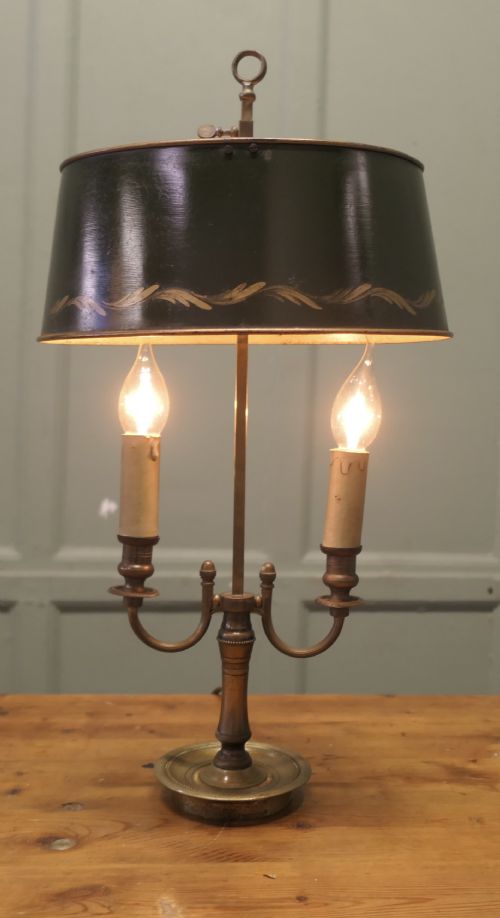
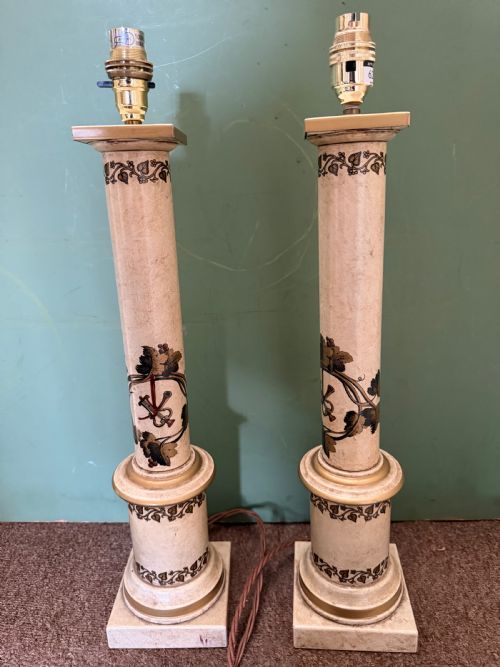
The varieties you are most likely to encounter include French bouillotte desk lamps, column lamps, and black and gold lacquer Chinoiserie designs. These pieces often feature hand-painted details or gilt porcelain mounts, showing influences ranging from French Empire and Neoclassical to Art Nouveau and Victorian styles.
How they were made
The construction of these lamps relies on combinations of metalwork and applied finishes, utilising brass components paired with painted toleware or ormolu mounts. Makers shaped sheet metal and cast bronze or spelter into forms such as column lamps and tea canisters before applying decorative paint layers.
Surface decoration frequently involves hand-painting and gilding directly onto metal or porcelain bodies, sometimes enhanced with lacquer work. Many examples incorporate adjustable brass shade mechanisms and bronze fittings that secure the lamp structure.
The listings feature painted metal table lamps spanning the nineteenth century, the Victorian era, and the 1920s to 1930s.
What varies in quality
Quality in these lamps rests on the precision of the hand-painted decoration, the crispness of the brass or ormolu casting, and the retention of the original finish. Pieces with detailed gilt work and well-preserved lacquer or tole-peinte display a higher degree of craftsmanship than simpler commercial versions.
The sophistication of the design also distinguishes the range, with balanced proportions in classical column forms or intricate Chinoiserie motifs marking out superior examples. The integration of original mounts and fittings further elevates the standing of an individual piece.
L & F Moreau
The Painted Metal Table Lamps Glossary
- Toleware
- Painted or enamelled sheet metalware, typically iron or steel, often decorated with lacquer or gilt motifs. This material forms the shades and bodies of many bouillotte and desk lamps.
- Bouillotte
- A type of adjustable desk lamp featuring a central metal shade and multiple candle or bulb arms. The shade height can be raised or lowered along a central stem.
- Ormolu
- Gilded bronze used for decorative mounts and fittings on furniture and lamps. It provides a bright metallic accent against painted metal surfaces.
- Spelter
- A zinc alloy used as a substitute for bronze in decorative castings. It appears in figural and sculptural table lamp bases.
- Tole-peinte
- Painted tinplate or sheet metal decorated in the manner of French folk or decorative art. The term describes the painted finish found on various column and desk lamps.
Painted Metal Table Lamps: Frequently Asked Questions
How do I date a toleware lamp?
Dating a toleware lamp involves examining the construction of the metal body, the type of paint finish used, and the style of any brass fittings. Nineteenth-century examples often show hand-mixed pigments and heavier sheet metal construction.
Stylistic cues such as Neoclassical columns or Victorian Chinoiserie motifs also help narrow the period. Comparing the joinery and mounting techniques provides further confirmation of the age.
Where were these lamps used?
These lamps were primarily designed for domestic interiors, functioning as desk lamps, reading lights, or decorative table lighting in studies and reception rooms. Their adjustable shades made them practical for focused work.
Over time, many oil lamps and candle lamps from the Victorian and Regency periods were later adapted for electrical wiring while retaining their original metal bases.
How do I clean painted metal?
Cleaning painted metal requires gentle dusting with a soft, dry cloth to protect the underlying painted finish or gilt details. Moisture and harsh chemical cleaners should be avoided as they can lift the paint or damage the lacquer.
Brass and ormolu components can be lightly dusted, leaving the natural patina undisturbed. Professional advice should be sought if deeper cleaning of fragile hand-painted surfaces is needed.
What styles are common in these lamps?
Common styles include French Empire, Neoclassical, Art Nouveau, and Victorian Chinoiserie. These design traditions influence the shape of the lamp bases, handles, and painted motifs.
Neoclassical pieces feature columns and classical urn shapes, while Art Nouveau examples incorporate organic floral lines. Chinoiserie lamps display black and gold lacquer finishes inspired by Asian decorative arts.