




Brass and Toleware Lamps
Brass and toleware lamps combine gleaming metal and painted shades to bring a refined, functional glow to any interior.
Brass and Toleware Lamps
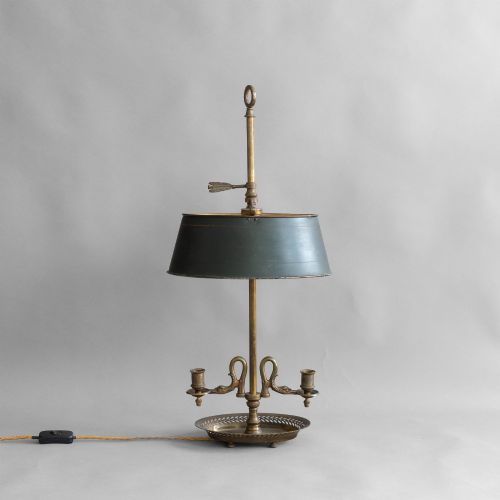
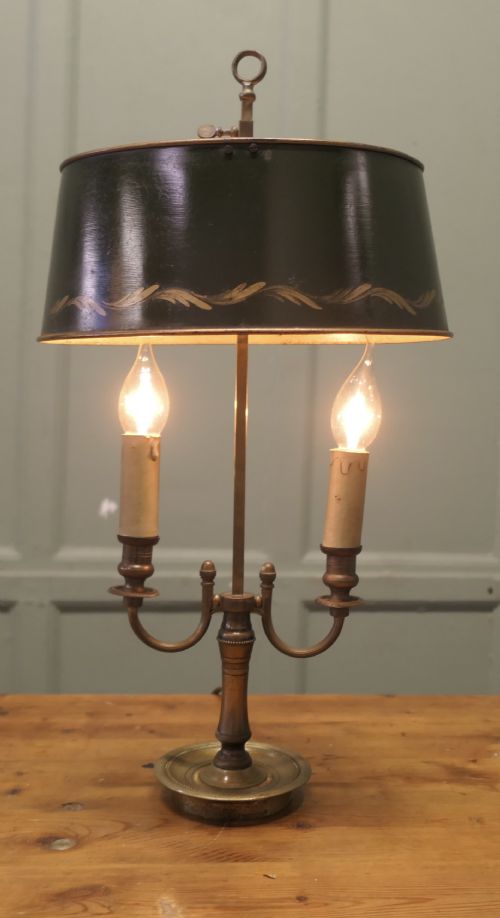
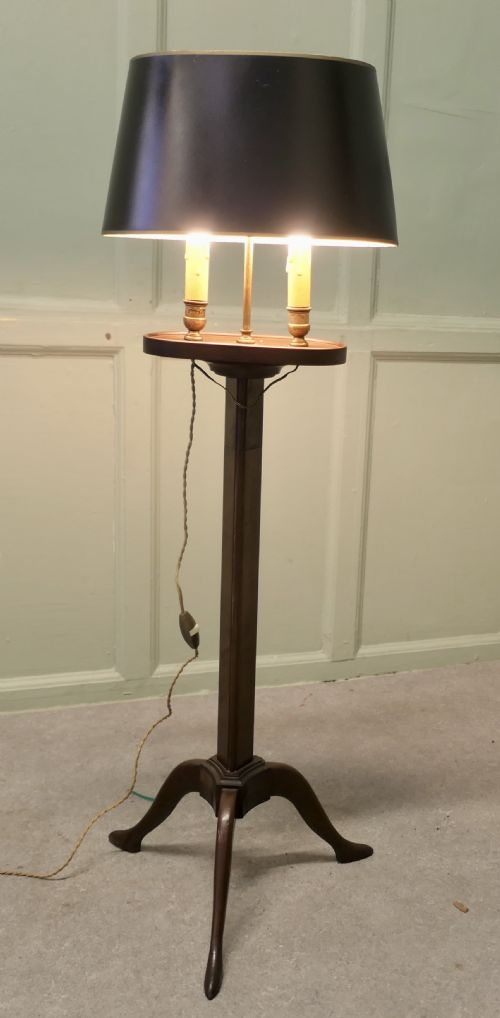
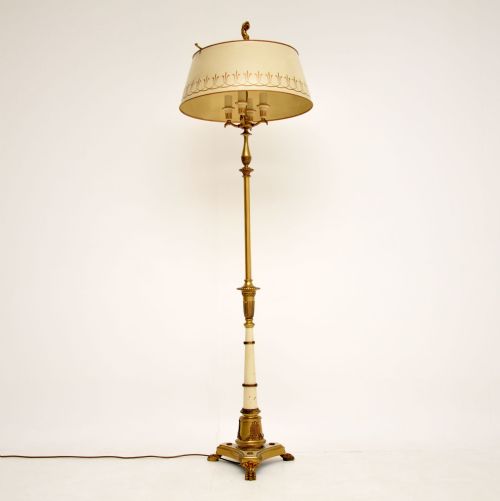
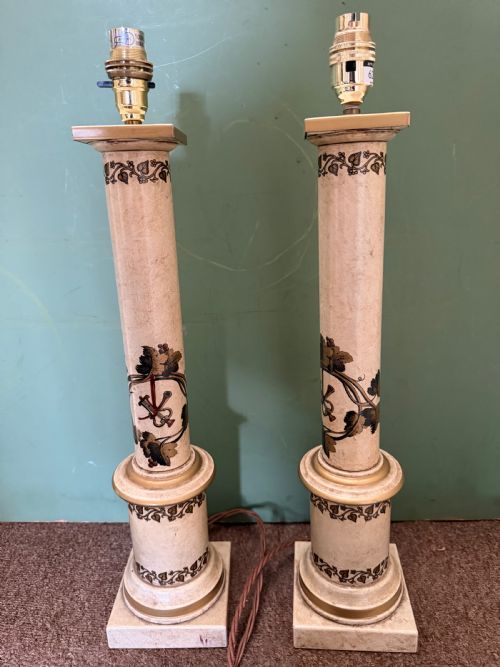
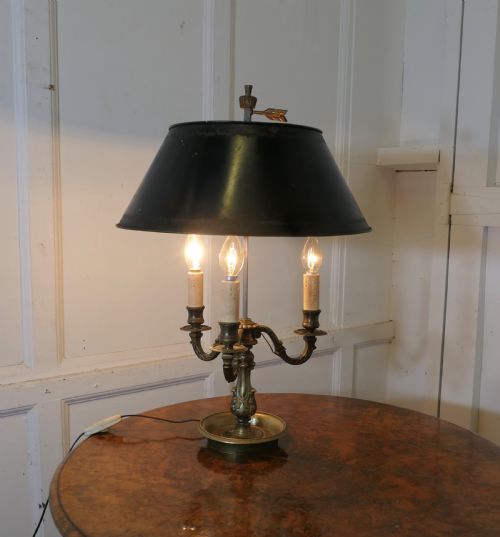
When you search for brass and toleware lamps, you encounter lighting fixtures that unite painted sheet metal with polished or cast metallic structures. These pieces typically take the form of bouillotte desk lamps, floor lamps, column lamps, and wall lights originating primarily from France across the nineteenth and early twentieth centuries.
The most common versions met on this page are green or black painted tole shades paired with brass or gilt metal columns, often configured with twin or triple candle arms. Styles lean heavily towards French Empire, Regency, and Neoclassical vocabularies, bringing traditional proportions and adjustable components to domestic spaces.
How they were made
Manufacturers formed the shades from toleware, which is painted or lacquered sheet metal, frequently decorated in shades of green or black with gold accents. This combined with turned or cast brass, gilt metal, and occasionally mahogany elements to construct the sturdy columns and bases.
Artisans applied surface treatments such as hand-painted lacquer and gilt detailing over the metal, while incorporating mechanical adjustments like sliding shade collars for practical utility.
Card players in the eighteenth century needed adjustable shades to keep the glare out of their eyes during late-night wagers.
What varies in quality
The distinction between standard examples and finer pieces lies in the weight of the cast brass components and the crispness of the hand-painted tole decoration. Superior items demonstrate careful hand-finishing on the lacquer, balanced proportions, and robust adjustable mechanisms that hold their position securely.
Subtleties in decorative motifs, such as detailed gilt ornamentation on black or green lacquered surfaces, separate ordinary production from pieces with greater visual presence.
The Brass and Toleware Lamps Glossary
- Toleware
- Painted or lacquered sheet metal items used for decorative and functional objects. The technique produces durable, colourful shades for lighting.
- Bouillotte lamp
- A traditional adjustable desk or table lamp featuring a central column and multiple candle arms shielded by a painted metal shade. It derives its name from an eighteenth-century card game.
- Gilt metal
- Base metal treated with a thin layer of gold-coloured finish or gilding. It mimics solid ormolu while offering a more accessible metallic sheen.
- Empire style
- A neoclassical design movement originating in early nineteenth-century France. It draws heavily on ancient Roman and Greek motifs.
Brass and Toleware Lamps: Frequently Asked Questions
What is a bouillotte lamp?
A bouillotte lamp is a traditional lighting fixture featuring a central column, several candle arms, and an adjustable painted metal shade. Originally designed for card games, it allows the user to slide the shade up or down to control the light.
These lamps function well on desks, side tables, and chests of drawers where focused illumination is required.
How do I identify French toleware?
French toleware is identified by its painted or lacquered sheet metal construction, often finished in deep greens, blacks, or reds with contrasting gilt or gold-painted trim. The surface typically exhibits a hand-applied finish rather than industrial powder coating.
Examining the interior of the shade and the edges of the metal reveals the handmade nature of these pieces.
Where should I place these lamps?
These lamps suit studies, libraries, living rooms, and hallways where traditional lighting adds character. Desk lamps and bouillotte forms work effectively on writing surfaces, while taller floor lamps and column lamps fit corners or beside seating areas.
The adjustable shades make them practical for directing light onto specific surfaces.
How do I date an antique lamp?
Dating involves examining the materials, construction methods, and stylistic cues present in the brass work and painted shade. Nineteenth-century examples often display heavier cast components and hand-cut threads, while early twentieth-century pieces incorporate standardised fittings.
Comparing the decorative vocabulary, such as Empire or Neoclassical motifs, helps narrow down the period of manufacture.