



Enamel Desk Lamps
Enamel desk lamps bring industrial utility and decorative colour to a workspace through durable vitreous surfaces.
Enamel Desk Lamps
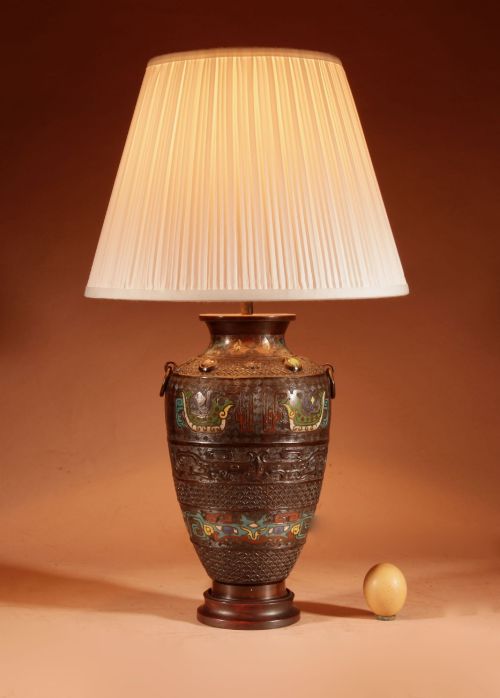
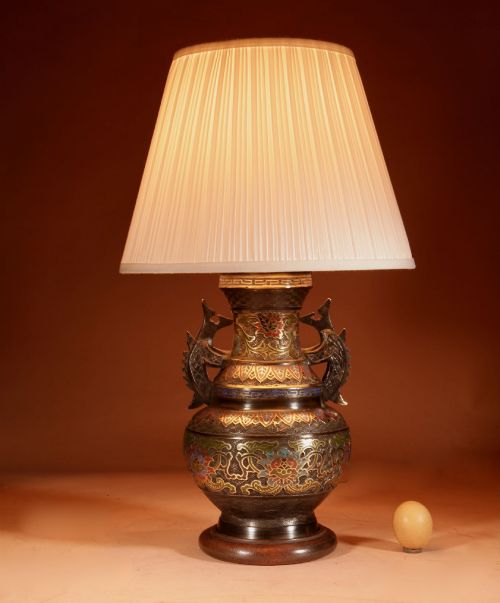
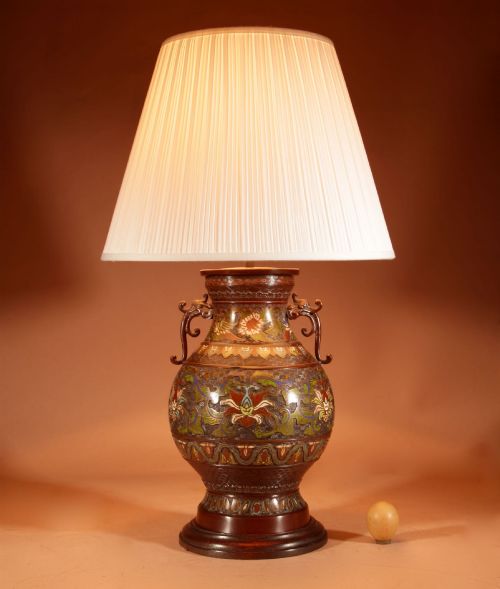
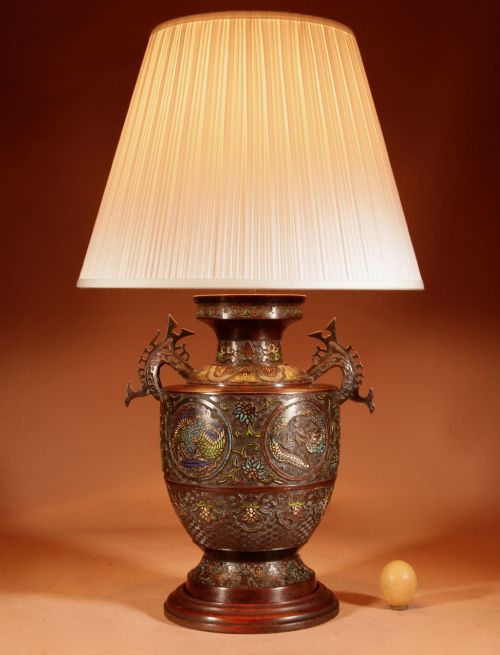
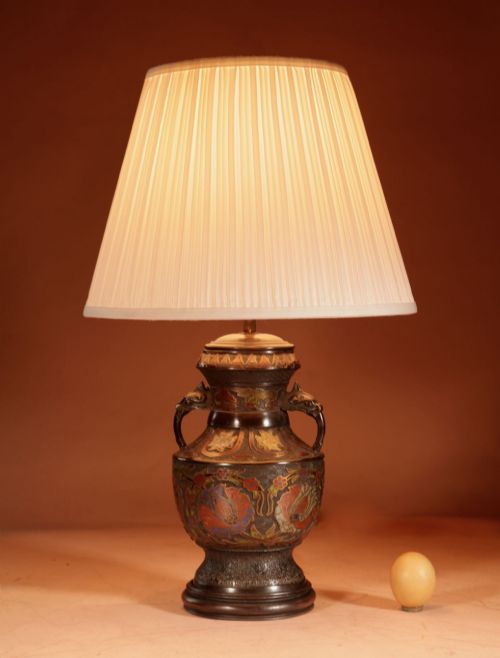
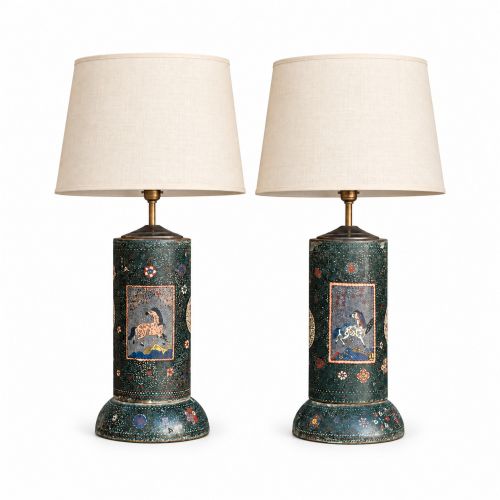
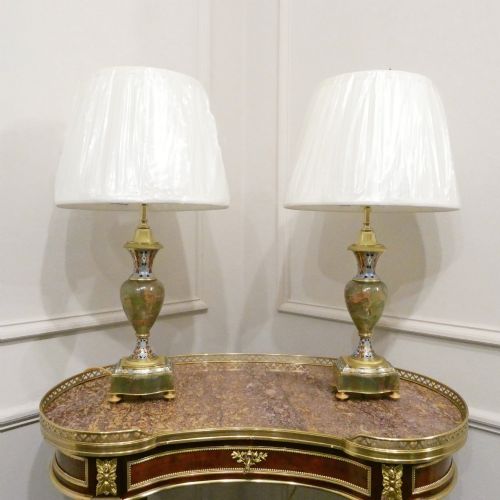
Enamel desk lamps combine metalwork with fused vitreous coatings to provide durable, focused illumination for working surfaces. When you search for enamel desk lamps, you encounter pieces spanning the nineteenth and twentieth centuries, including Japanese cloisonné and champlevé bronzes alongside French and Art Deco designs.
The selection ranges from Victorian and late nineteenth-century Asian vases mounted as lights to twentieth-century industrial fixtures like iron-based ship's gimbal lamps. These objects bridge the gap between utilitarian workshop tools and decorative arts, reflecting diverse origins from Meiji period Japan to European studios.
How they were made
Makers fused powdered glass onto metal substrates such as bronze, iron, copper, and brass at high temperatures to create hard, glossy enamel surfaces. Techniques like cloisonné and champlevé involved creating wire cells or troughs on the metal base to hold the coloured enamel pastes before firing.
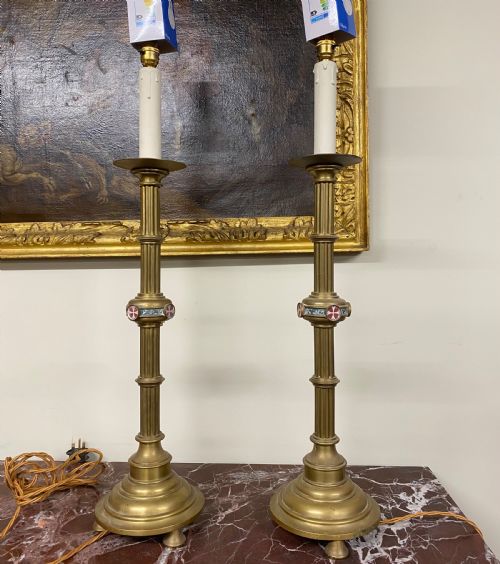
Many of these pieces began life as vases, candlesticks, or navigational instruments before being wired for electricity, combining hand-beaten or cast metalwork with delicate glass enamelling.
Enamel Desk Lamps Retail Price Guide 2026
Typical asking prices for enamel desk lamps among the pieces listed under this phrase on Sellingantiques today, from the lower quarter to the upper quarter. They describe what is for sale here now, not the wider market.
Listings feature items from the 19th Century, Victorian period, 1910, 1920, and 1960, utilising materials such as enamel, brass, bronze, glass, and copper.
What varies in quality
Quality rests in the precision of the metal casting and the clarity of the vitreous enamel work, where finer pieces display intricate cell work and balanced colour palettes without pitting or firing flaws. The integration of mounts, whether gilt brass, onyx, or wrought iron, dictates the overall refinement of the piece.
Condition of the enamel surface remains paramount, distinguishing tightly controlled studio or workshop output from heavier industrial utility items.
Karl Palda·Jaeger Le Coultre·Daum
The Enamel Desk Lamps Glossary
- Cloisonné
- Enamelling technique where thin metal wires are soldered to a metal base to form compartments, which are then filled with paste and fired. This method creates distinct patterns outlined in metal.
- Champlevé
- Enamelling process where troughs or cells are hollowed out directly into the surface of a metal object and filled with vitreous enamel. The remaining raised metal forms the outline of the design.
- Gimbal
- A pivoted ring mounting that allows a lamp or clock to stay level despite movement or listing. Often found on naval and ship's equipment.
- Faience
- Tinsed glazed earthenware used for decorative pottery bases and lamp bodies. It provides a smooth, opaque ceramic surface for painted enamels.
- Famille Rose
- A palette of Chinese ceramic glazes dominated by opaque pink or rose enamel, developed in the eighteenth century and utilised on vases later adapted into lamps.
Enamel Desk Lamps: Frequently Asked Questions
How do I wire an antique lamp?
Rewiring typically involves running modern compliant flex through the existing internal channels of the bronze or ceramic body. A qualified electrician should ensure the vintage brass or iron fittings meet current safety standards.
Original switches and holders are preserved where possible, but internal wiring is replaced to allow safe daily use on a desk.
Are these lamps stable on desks?
Most pieces rely on heavy bronze, iron, or onyx bases to counterbalance the height of the shade and fittings. This substantial weight prevents tipping during everyday work.
Naval gimbal versions use pivoting rings specifically designed to maintain stability on moving surfaces.
How do I clean enamelled surfaces?
Vitreous enamel requires only a soft, dry cloth or a slightly damp sponge to remove dust without harming the gloss. Avoid abrasive cleaners that might scratch the glass paste or tarnish the surrounding brass and bronze.
Metal mounts benefit from gentle dusting rather than harsh chemical polishes to retain their historic patina.
How do I date these lamps?
Dating relies on stylistic markers from periods like the Meiji era, Art Nouveau, and Art Deco, alongside manufacturing methods visible in the metalwork. Base materials such as wrought iron or gilt brass often point to specific decades of production.
Converted vases and vessels carry the stylistic traits of their original nineteenth-century manufacture before electrification.