




Victorian Enamel Glass Vessel
A victorian enamel glass vessel brings rich colour and painted detail to a room, ranging from vibrant cranberry tones to deep green hues.
Victorian Enamel Glass Vessel
When searching for a victorian enamel glass vessel, buyers encounter an array of decorative glassware originating from the nineteenth century. These items span various utilitarian and decorative forms, including ewers, jars, decanters, goblets, bowls, and tall vases. The selection draws heavily from Victorian and Bohemian traditions, alongside pieces influenced by the Japonisme movement.
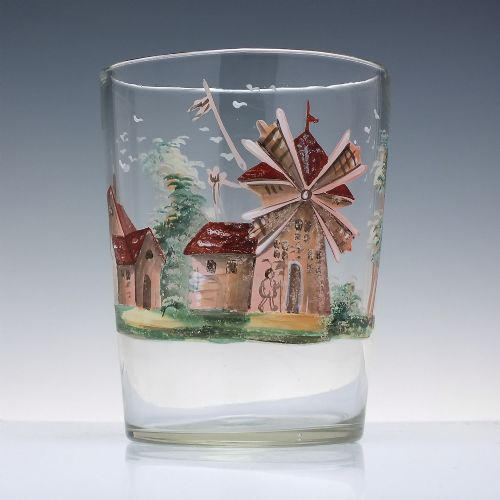
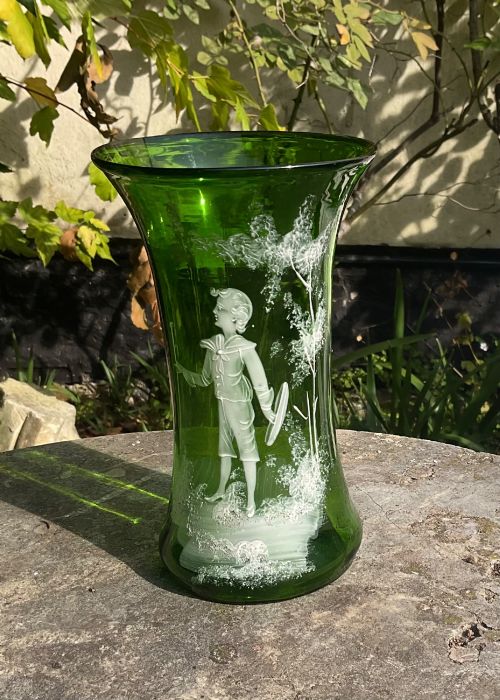
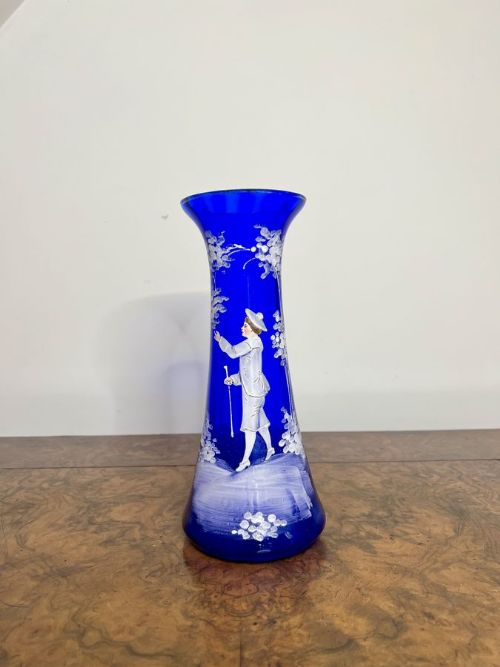
The objects most frequently met on this page are green, blue, or cranberry glass vases decorated with hand-painted enamel scenes. Many pieces feature the iconic white enamel figures associated with Mary Gregory, while others display polychromatic landscapes, animals, or floral motifs. Collectors also find larger decorative bowls and covered jars produced during the same era.
How They Were Made
These vessels rely on foundational glassblowing techniques, often utilising hand-blown glass coloured in shades such as amber, emerald, black, or opaque white. Artisans then applied surface decoration using enamel paint, sometimes accented with delicate gold leaf details. Certain pieces incorporate crystal overlay methods to create contrasting layers of colour and depth.
Painting required steady brushwork to apply the opaque white or polychromatic enamel directly onto the cooled glass surface. Artisans depicted elaborate scenes, from woodland foxes to human figures, before firing the vessel to fix the pigments. Additional decorative elements like gilt highlights were often layered on top to finish the piece.
Victorian Enamel Glass Vessel Retail Price Guide 2026
Typical asking prices for victorian enamel glass vessel among the pieces listed under this phrase on Sellingantiques today, from the lower quarter to the upper quarter. They describe what is for sale here now, not the wider market.
A painted fox hunting scene gazes out from a vibrant green Bohemian vessel, proving that Victorian glassware enthusiasts enjoyed a sporting narrative.
What Varies in Quality
The choice of base glass and additional embellishments also dictates the tier of the piece. High-end productions utilise heavy hand-blown glass bodies combined with rich polychromatic enamel palettes and extensive gold leaf gilding. Lighter, more standard vessels rely on simpler single-colour glass with minimal white enamel decoration.
Moser·Baccarat·François-Eugène Rousseau
The Victorian Enamel Glass Vessel Glossary
- Mary Gregory
- A style of glass decoration characterised by silhouette painting in white enamel, typically depicting Victorian children in pastoral settings. The name is widely used in the trade for this specific decorative manner.
- Cranberry glass
- A rich red-pink transparent glass created by adding gold chloride to the molten batch during production. It remains a signature colour of the Victorian period.
- Japonisme
- A late nineteenth-century artistic movement reflecting widespread European interest in Japanese art and aesthetics. It influenced the asymmetry and subject matter found on certain glass vessels.
- Crystal overlay
- A technique involving a layer of coloured glass encased in a layer of clear crystal, or vice versa, then cut away to reveal the contrasting colour underneath.
Victorian Enamel Glass Vessel: Frequently Asked Questions
What is Mary Gregory glass?
Mary Gregory glass refers to Victorian glassware decorated with hand-painted white enamel silhouettes of children amidst foliage or outdoor pursuits. The attribution stems from a popular trade designation rather than a single artist.
These pieces typically appear on green, blue, or cranberry glass bodies. The white enamel stands out sharply against the dark or saturated background hues.
Are these vessels dishwasher safe?
These antique items are entirely unsuitable for modern dishwashers. The combination of high heat, strong detergents, and vigorous water pressure will destroy the hand-painted enamel and gilding.
Manual cleaning is the only safe method for maintaining the surface decoration. Care must be taken around rims and applied handles during washing.
How are Bohemian and Victorian styles different?
Bohemian glass often emphasises heavy hand-blown forms with rich amber, green, or ruby colouring alongside elaborate enamelling. Victorian production encompasses a broader range of domestic decorative glassware, including distinctive moulded and overlay techniques.
Stylistic crossover is common because Bohemian workshops exported heavily to the British market during the nineteenth century. Both traditions share a fondness for vibrant colour and detailed surface ornamentation.