



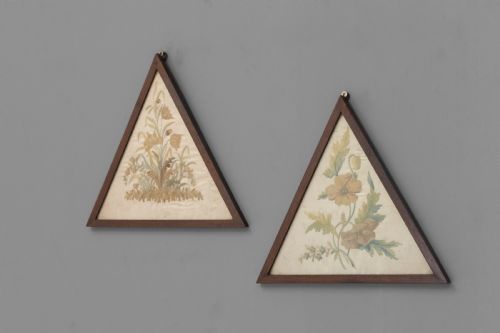
Victorian Embroidery Picture
A victorian embroidery picture brings tangible texture and colour to a wall through needlework preserved beneath glass in period frames.
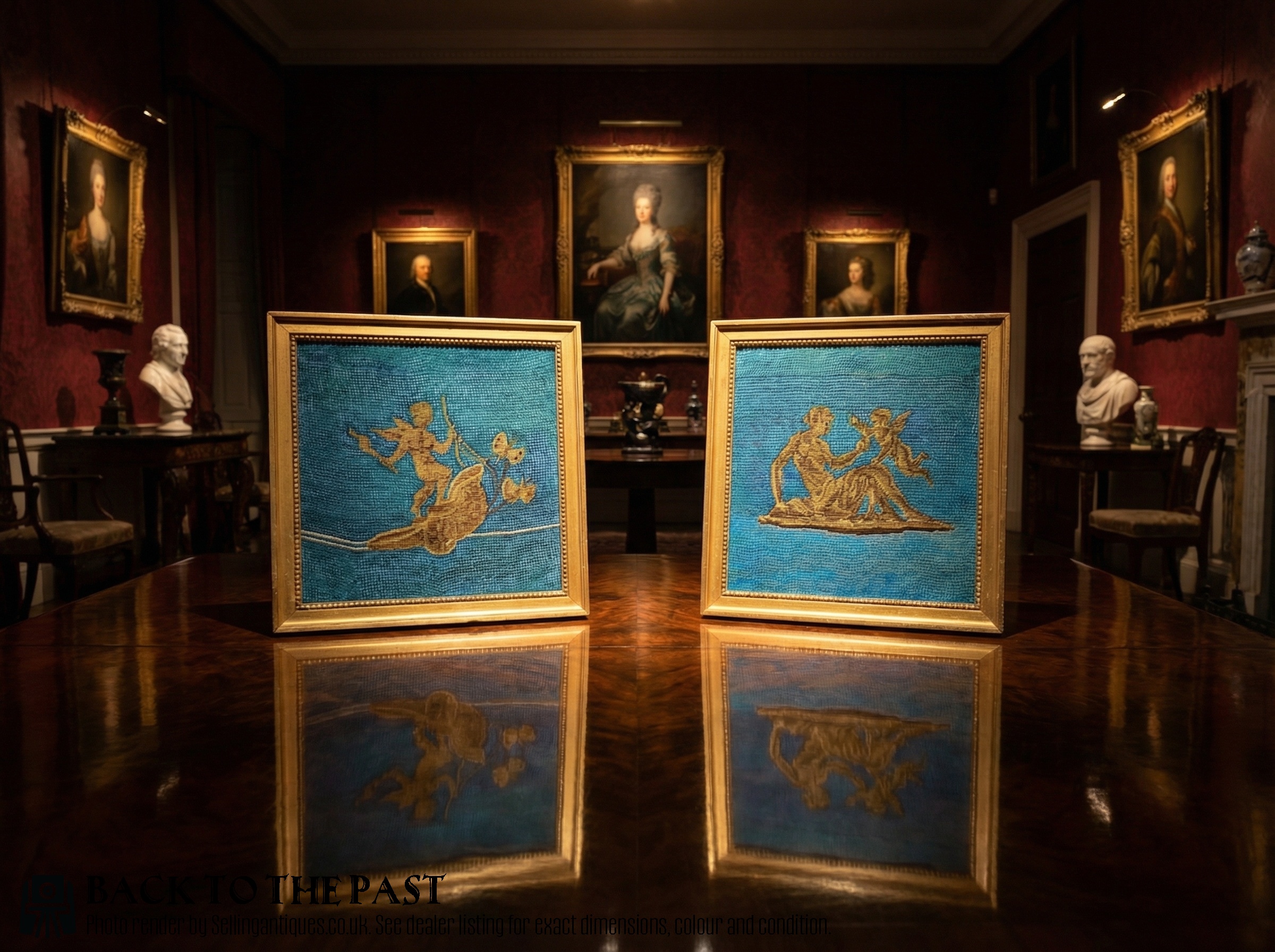
Victorian Embroidery Picture
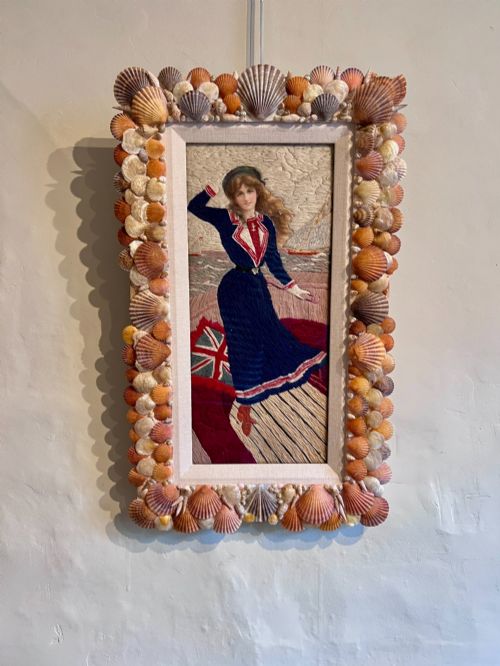
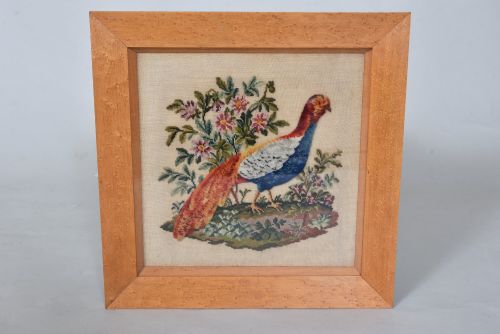
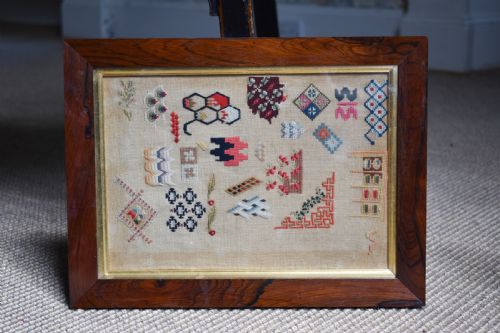
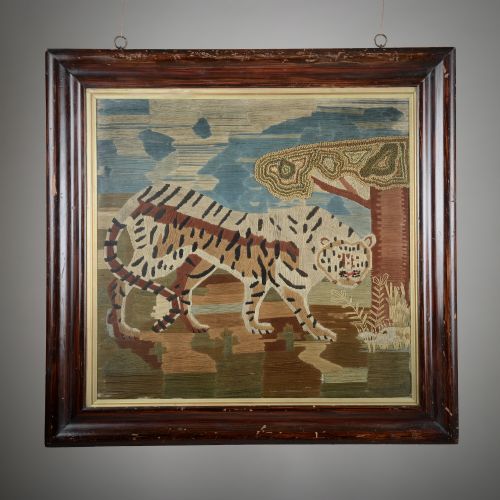
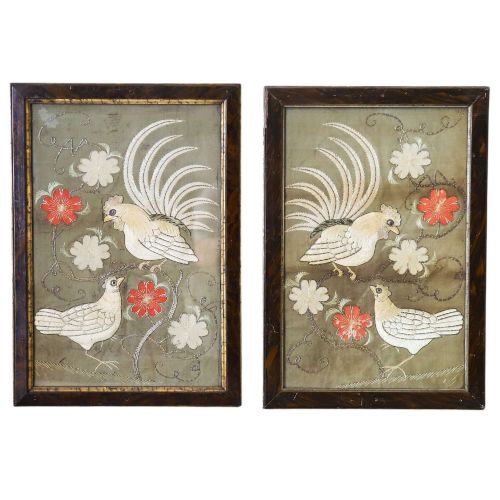
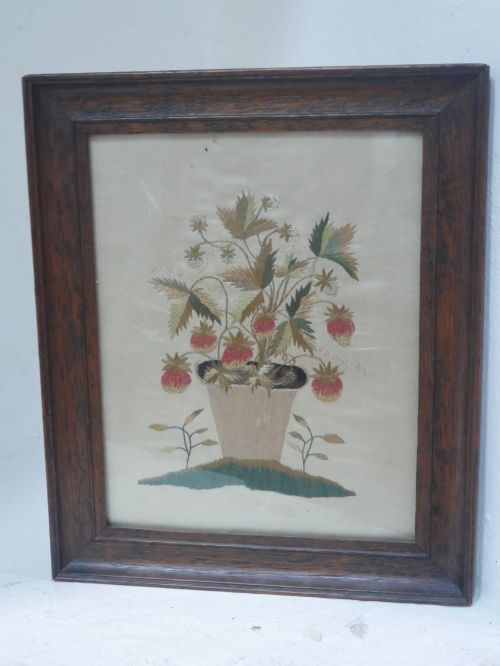
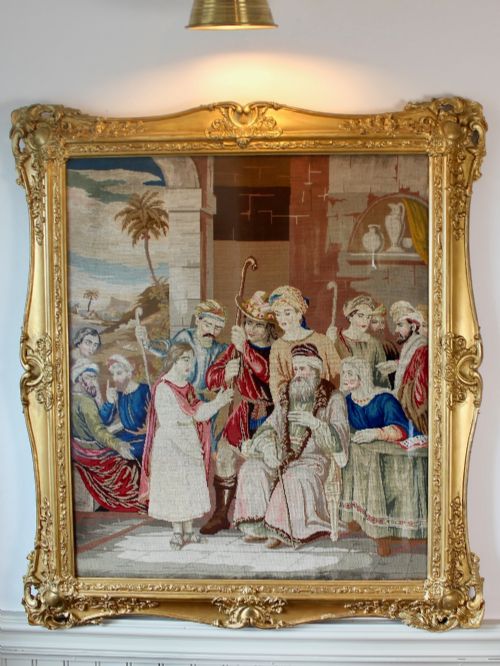
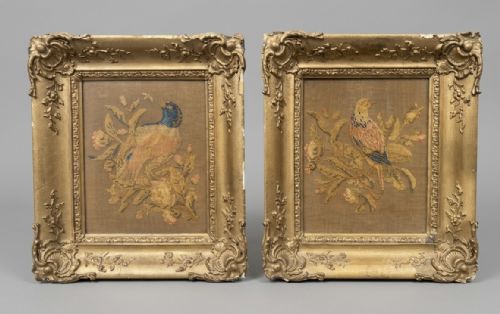
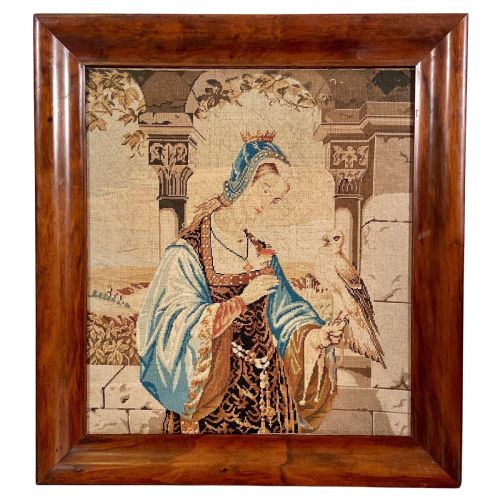
A victorian embroidery picture encompasses framed textile wall art created across the nineteenth century, ranging from woolwork and silk embroidery to samplers and tapestry. These pieces record domestic patience and artistic ambition, capturing subjects from animals and botanical studies to portraits and historical scenes.
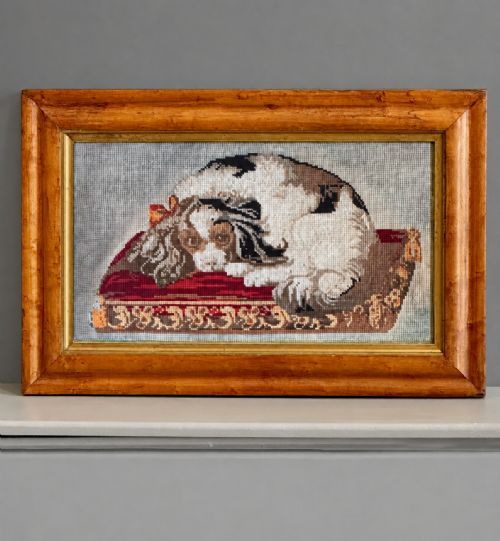
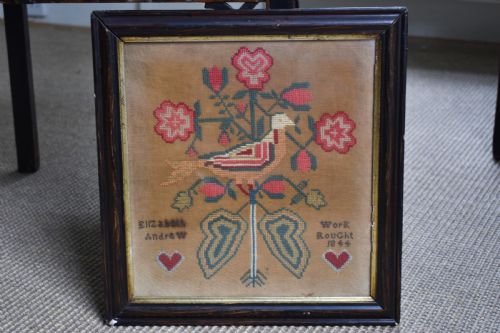
The most common examples on this page are woolwork pictures, often called woolies or Berlin wool work, alongside needlework samplers and framed silk panels. They typically arrive ready to hang in their original frames of burr maple, giltwood, or rosewood.
How They Were Made
Maker's utilised natural fibres such as wool, silk, linen, and canvas, working stitches by hand across open grounds to build dense, pictorial surfaces. Gros-point and plushwork techniques added varied pile and physical depth to animals, figures, and foliage.
Finished textiles were stretched over mounts and secured behind glass within wooden frames, occasionally paired with watercolour details or gilt ornamentation to complete the composition.
Victorian Embroidery Picture Retail Price Guide 2026
Typical asking prices for victorian embroidery picture among the pieces listed under this phrase on Sellingantiques today, from the lower quarter to the upper quarter. They describe what is for sale here now, not the wider market.
Needlework dogs and cats gaze out from under glass, having outlived the hands that stitched their whiskers.
What Varies in Quality
Quality rests upon the precision of the needlework, the complexity of the colour palette, and the vitality of the subject depicted. Skilled shading and fine tension elevate a tapestry or woolie from a simple domestic exercise to a striking work of art.
The preservation of the textile against fading and the survival of the original frame heavily influence the character of the piece. Contemporary mountings sit differently in the hand compared to period burr maple or giltwood surrounds.
Stevens of Coventry·Iida Takashimaya Company
The Victorian Embroidery Picture Glossary
- Berlin wool work
- A style of needlepoint popular in the nineteenth century, worked in coloured wool on canvas from printed charted designs. It allowed makers to produce vivid pictures of animals, people, and landscapes.
- Sampler
- A piece of needlework produced to demonstrate proficiency in various stitches and alphabets, often signed and dated by young makers. They serve as key historical records of domestic education.
- Plushwork
- A specialised embroidery technique involving raised loops that are often cut to create a velvety, tactile surface. It appears on animal depictions to simulate fur.
- Gros-point
- A coarse needlepoint stitch executed on canvas, producing a sturdy and durable texture suitable for substantial wall hangings and tapestries.
Victorian Embroidery Picture: Frequently Asked Questions
How do I hang a textile picture safely?
Keep embroidered wall art out of direct sunlight to prevent the wool and silk threads from fading over time.
Ensure the hanging wire and fixings on the original frame are secure before mounting the piece on a stable wall.
What is the difference between a sampler and a tapestry?
A sampler displays alphabets, numbers, and practice stitches worked by a maker, often recording a name and date.
A tapestry or wool work picture portrays a complete scene, such as a portrait, landscape, or animal study, using pictorial stitching.
How can I tell the age of these frames?
Period frames utilise materials like burr maple, rosewood, and giltwood constructed with traditional joinery techniques.
Examining the reverse reveals older backing boards, handmade nails, and paper tapes consistent with nineteenth-century framing methods.
Were these pictures made by professionals?
Many surviving examples were worked at home by women and children as domestic accomplishments or decorative household projects.
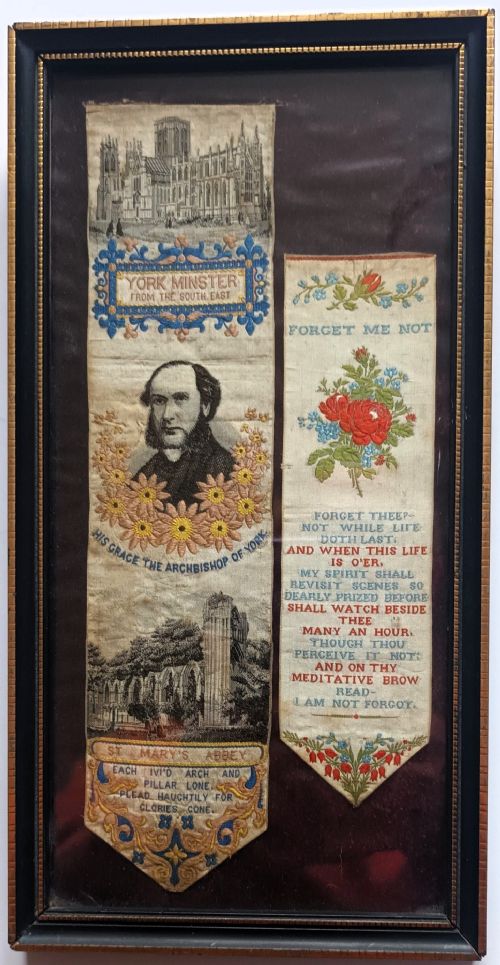
Other pieces, such as silk bookmarks and specific tapestries, originated from commercial workshops and specialised textile companies.