

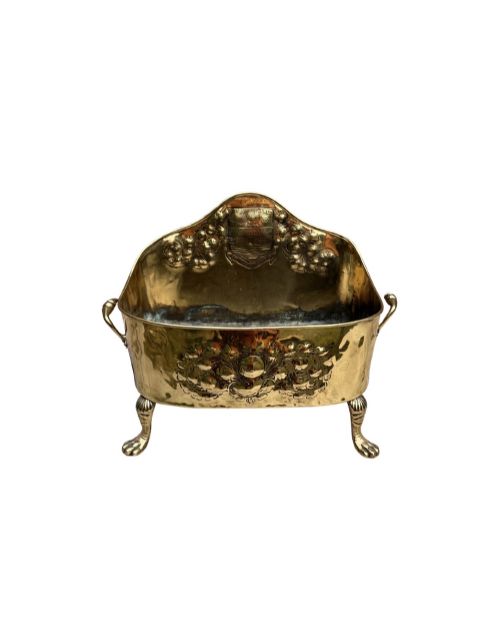
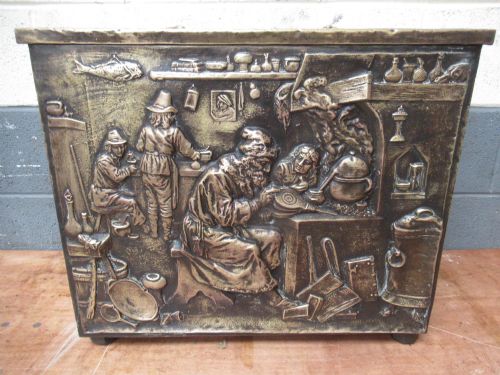


Victorian Embossed Log Container
These Victorian embossed log containers are heavy metal hearth vessels built to hold firewood with style.
Victorian Embossed Log Container
Victorian embossed log containers serve as practical fireside fuel storage, keeping logs and coal contained beside the hearth. You will most frequently encounter brass and copper vessels shaped as buckets, bins, and scuttles.
The selection ranges from circular coal receivers to lidded boxes and helmet scuttles. Pieces span the Victorian era alongside related Edwardian and Regency examples.
Makers utilised resilient metals to build vessels that stood up to daily hearth use. Many incorporate decorative embossing depicting tavern scenes or decorative bands.
Materials and construction
Makers formed these containers primarily from sheet brass and copper, often combining both metals on a single body. Iron and galvanised metal also appear in the construction of interior linings and structural elements.
Workers employed heavy embossing and hand-beating techniques to raise decorative motifs directly from the metal sheet. Rivets and soldered joints secure the handles and seams.
Victorian Embossed Log Container Retail Price Guide 2026
Typical asking prices for victorian embossed log container among the pieces listed under this phrase on Sellingantiques today, from the lower quarter to the upper quarter. They describe what is for sale here now, not the wider market.
Listings feature items spanning the Regency period, the Victorian era, and the Edwardian years.
Assessing quality
Quality rests upon the thickness of the metal gauge and the depth of the hand-embossed detail. Stronger vessels maintain their structural integrity without buckling under heavy loads of logs.
Superior examples display crisp hammering work and integrated copper banding rather than pressed surface patterns. Original handles and secure fixings indicate better craftsmanship.
Henry Loveridge·Petrus Ramus
The Victorian Embossed Log Container Glossary
- Embossing
- Raising a design in relief from the surface of sheet metal by hammering from the reverse side. This technique gives these vessels their textured pictorial panels.
- Helmet scuttle
- A coal container featuring a flared mouth and a sloped body resembling a classical helmet. It includes a hinged handle for carrying.
- Jardiniere
- An ornamental pot or vessel designed to hold plants, frequently utilised as a description for these large brass containers. Their generous proportions suit holding logs.
- Dinanderie
- Objects made of beaten brass or bronze, named after the Belgian town famous for metalwork. This term covers heavy decorative vessels of this period.
Victorian Embossed Log Container: Frequently Asked Questions
How were these metal containers originally used?
These vessels sat beside the fireplace to store fuel such as coal, logs, or peat ready for the hearth fire. Their enclosed nature kept domestic dust and debris contained.
Servants filled them from larger coal bunkers elsewhere in the house before bringing them into the main living rooms.
Can I still use an antique coal bucket for logs?
Many people continue to utilise these robust metal vessels beside modern wood burners and open fireplaces. Their solid brass and copper construction handles heavy logs without difficulty.
Checking the interior for watertightness helps if you store damp wood, though most serve well for dry fuel storage.
How do I clean brass and copper log bins?
Routine dusting with a soft dry cloth removes hearth soot and everyday debris from the embossed surfaces. Harsh metal polishes can strip away desirable aged patination.
Gentle cleaning preserves the dark patinated finish that centuries of handling and smoke exposure have created.
What periods do these fireside vessels cover?
The pieces span from the Regency era through the Victorian period and into Edwardian times. Arts and Crafts examples appear alongside traditional Victorian designs.
Stylistic shifts move from plain functional coal buckets to heavily embossed decorative showpieces.