



Victorian Ebonised Writing Table
A victorian ebonised writing table brings dark elegance and refined utility to a room, offering a polished surface for correspondence and study.
Victorian Ebonised Writing Table
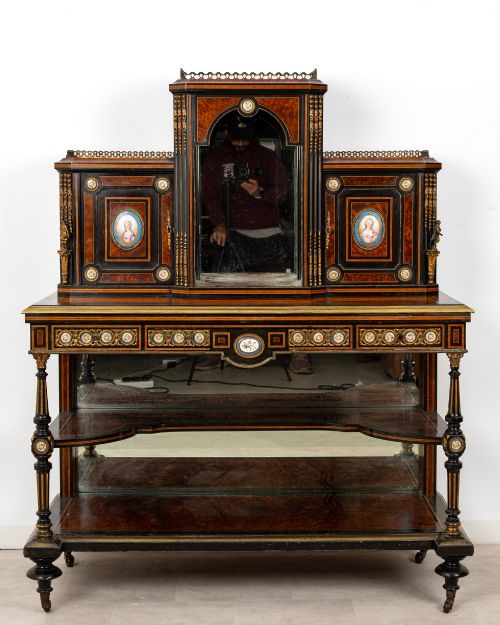
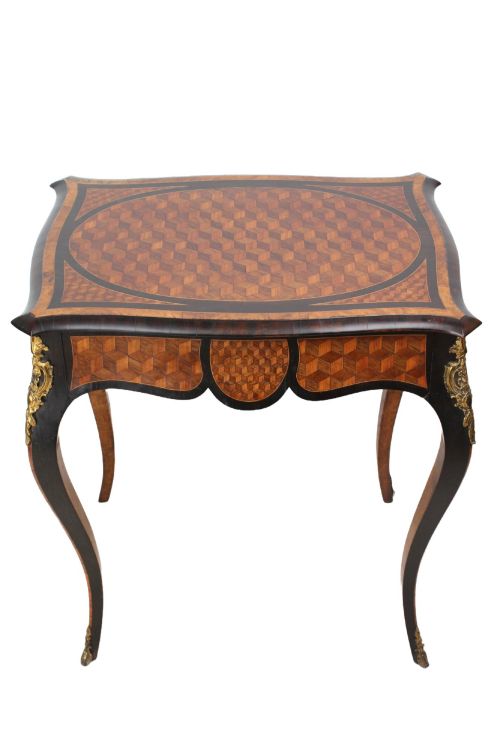
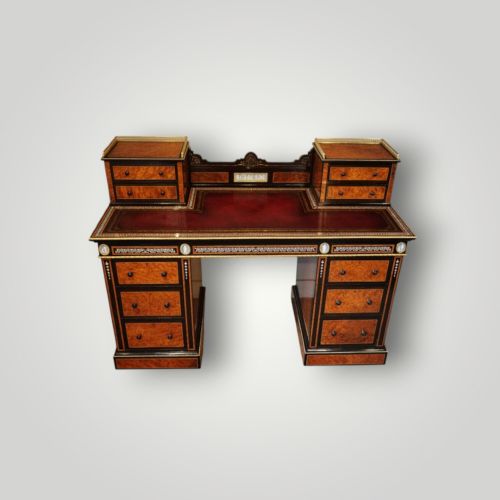
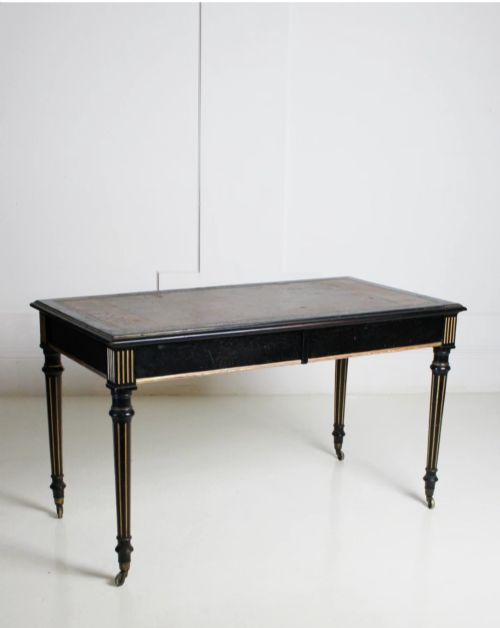
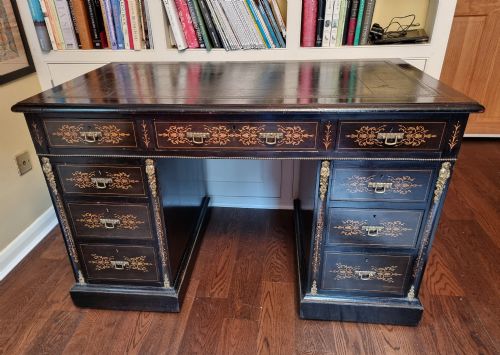
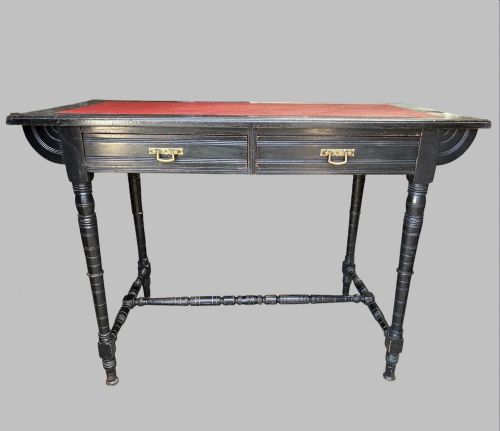
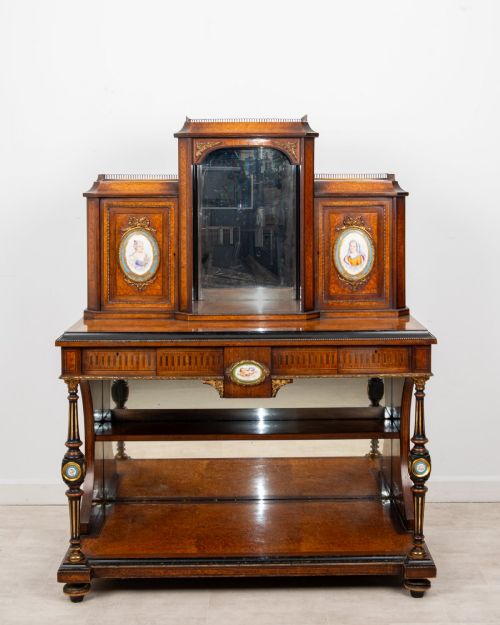
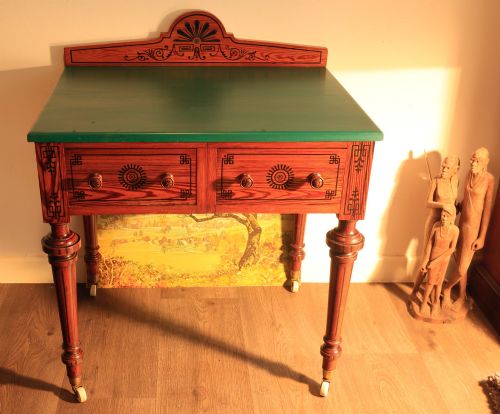
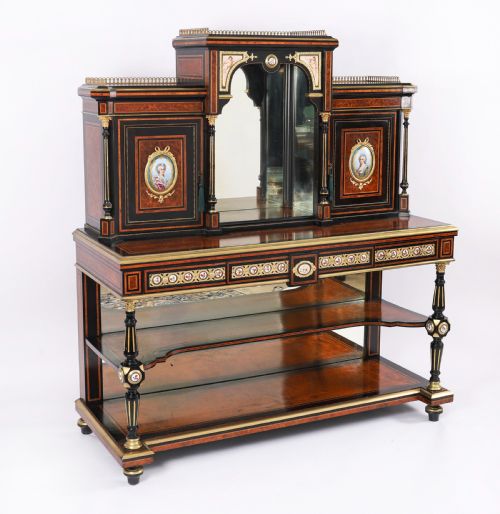
A victorian ebonised writing table typically dates from the nineteenth century, emerging in forms such as compact ladies' desks, bonheur du jour writing cabinets, and freestanding library tables. These pieces display the dark, simulated ebony finishes characteristic of the period, often combined with contrasting timber veneers and gilt highlights.
The aesthetic movement and revival styles heavily influence these examples, incorporating details derived from French design alongside indigenous British cabinet making. Pieces range from simple side tables adapted for correspondence to elaborate pedestals fitted with drawers and compartments.
Buyers encounter variations spanning from the 1860s through to the Edwardian era, each reflecting the shifting tastes for dark wood furniture in formal reception rooms and private studies.
Assessing Quality and Execution
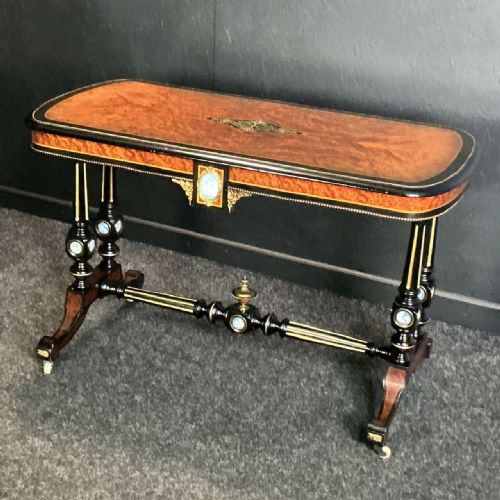
The refinement of the ebonised finish and the crispness of the gilt or ormolu mounts dictate the visual success of the piece. Superior examples integrate contrasting wood inlays and ceramic plaques with precision rather than relying on surface decoration alone.
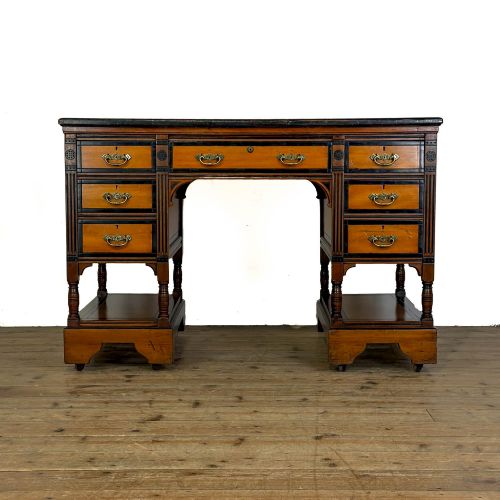
Structural integrity reveals itself in the execution of drawers, the stability of pedestals, and the quality of secondary timbers used within the carcass. Master workshops demonstrate an adherence to proportion and clean joinery that elevates utilitarian desks into decorative works of art.
Materials appearing across these listings include amboyna, burr walnut, mahogany, porcelain, and ormolu.
JAS Shoolbred·Edwards And Roberts·Jackson & Graham
The Victorian Ebonised Writing Table Glossary
- Ebonised
- Wood stained or painted to imitate ebony. This dark finish became popular during the nineteenth century for furniture influenced by Asian design and classical revivals.
- Ormolu
- Gilded bronze mounts applied to furniture. These decorative elements frame drawers and corners on finer Victorian desks.
- Bonheur du jour
- A small ladies' writing desk featuring a small cabinet or superstructure with drawers and shelves above the main writing surface. Originating in France, it remained popular throughout the Victorian period.
- Marquetry
- Patterns formed by veneer pieces applied to a furniture structure. Craftsmen used various coloured woods to create pictorial or geometric designs.
- Parquetry
- Geometric wood mosaic work used for floors and tabletops. It differs from marquetry by forming regular angular patterns like cubes or chequers.
Victorian Ebonised Writing Table: Frequently Asked Questions
What is an ebonised writing table?
An ebonised writing table is a nineteenth-century desk treated with a dark finish to resemble ebony, designed for correspondence and light administrative tasks.
These pieces often feature contrasting gilt mounts, leather writing surfaces, and exotic wood veneers reflecting the aesthetic taste of the period.
How do I care for ebonised wood?
Maintain ebonised furniture by dusting with a soft, dry cloth and avoiding direct sunlight that can fade the dark finish.
Keep the environment stable in humidity to protect the underlying timber and prevent movement in delicate veneers and inlays.
Where were these desks used?
These tables served primarily in private studies, morning rooms, and ladies' drawing rooms for letter writing and keeping personal accounts.
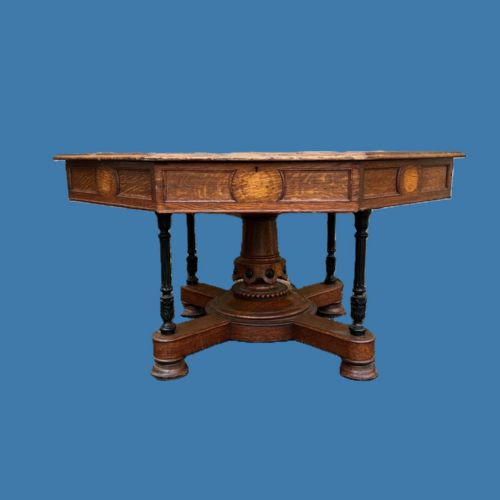
Freestanding variants also functioned as centre tables in larger reception spaces where all sides of the furniture remained visible.
How do I identify the period?
Dating relies on stylistic clues such as the presence of aesthetic movement motifs, french revival forms, or specific wood combinations like amboyna and walnut.
Construction methods, drawer linings, and hardware types further assist in placing the piece within the Victorian or Edwardian eras.