




Victorian Ebonised Display Table
These Victorian ebonised display tables combine dark polished surfaces with glass or tiered shelving to showcase small treasures.
Victorian Ebonised Display Table
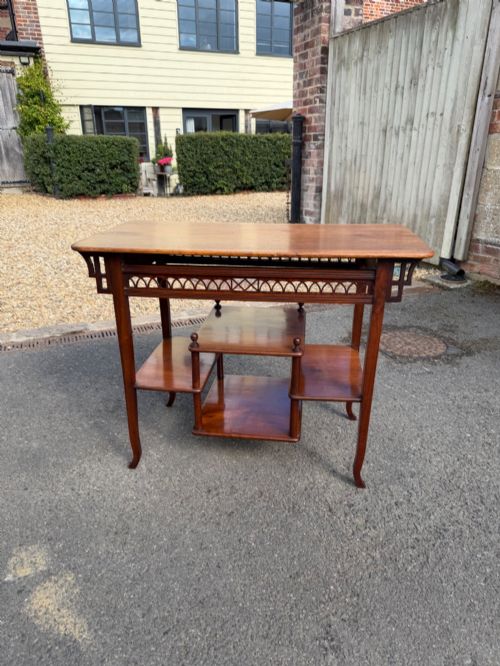
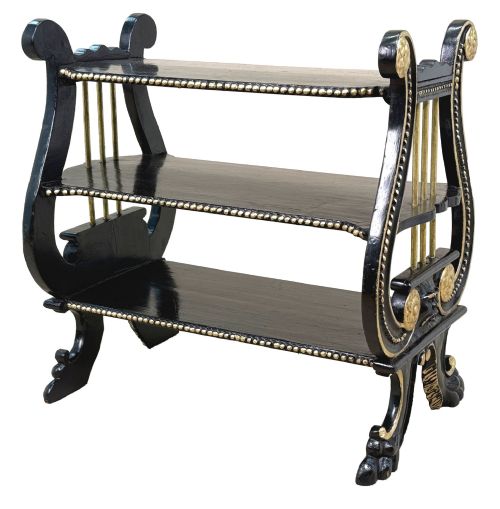
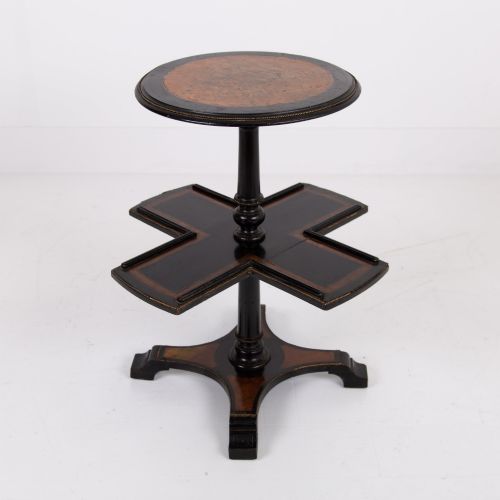
A victorian ebonised display table is a furnishing designed to present decorative objects, taking forms such as side tables, etageres, plant stands, and tiered stands. These pieces predominantly date from the nineteenth century, including specific years like 1860, 1870, 1880, and 1890, alongside late Victorian iterations.
The aesthetic influences on this page stretch beyond standard Victorian design to encompass the Aesthetic Movement, Arts and Crafts, Japanese Meiji, and Chinese Export styles. Buyers will encounter side tables and display boxes that integrate walnut, elm, rosewood, and exotic veneers into their dark frames.
Many examples function as vitrines, bijouterie tables, or jardiniere stands, incorporating brass inlay or porcelain mounts to elevate their utility. The selection ranges from compact cart de visite display tops to multi-tiered etageres intended for sophisticated parlour presentation.
Materials and Construction
Cabinet makers utilised hardwood or walnut as a base, applying an ebonised finish to mimic costly ebony wood in emulation of Asian imports. Parcel gilding, ormolu mounts, and contrasting veneers such as amboyna and burr walnut were frequently added to enrich the dark surfaces.
Inlay work relied on brass or other metals set directly into the timber, while display sections incorporated fitted glass panels to protect delicate curiosities. Structural assembly often involved multiple tiers supported by slender turned legs or crouching figure stands.
Victorian Ebonised Display Table Retail Price Guide 2026
Typical asking prices for victorian ebonised display table among the pieces listed under this phrase on Sellingantiques today, from the lower quarter to the upper quarter. They describe what is for sale here now, not the wider market.
Some tables incorporate crouching figures beneath their tops, giving tiny wooden Atlases the perpetual job of holding up your tea.
Distinguishing Quality
Design sophistication also marks the upper tier, seen in balanced proportions across multi-tiered etageres and the crisp carving of Japanese Meiji or Aesthetic Movement motifs. Finer examples maintain structural integrity in their delicate display frames and glass mountings.
Bertram & Son·Liberty & Co.
The Victorian Ebonised Display Table Glossary
- Ebonised
- Wood treated with stain or paint to imitate ebony. This dark finish became immensely popular during the Victorian period for its dramatic contrast with gilt or inlaid details.
- Étagère
- A piece of furniture consisting of open shelves for displaying small objects. These tiered stands allow maximum visibility for ornaments from multiple angles.
- Bijouterie table
- A glass-topped table specifically designed for displaying jewellery and small valuables. They often feature hinged lids and velvet-lined interiors.
- Parcel gilded
- Partially covered in gold leaf or gold paint. This technique highlights carved details and mouldings against an ebonised background.
- Amboyna veneer
- A highly prized decorative wood grain applied in thin slices to a stable base timber. It provides a warm, speckled contrast to dark ebonised framing.
Victorian Ebonised Display Table: Frequently Asked Questions
What is an ebonised display table?
An ebonised display table is a Victorian furnishing finished in a dark, polished stain that mimics expensive ebony wood. These pieces feature tiered shelving, glass tops, or inset surfaces designed to showcase ornaments and curiosities.
The style draws heavily on nineteenth-century aesthetic tastes, often incorporating brass inlay, ormolu mounts, or influences from Japanese and Chinese design traditions.
How were these tables used in Victorian homes?
Victorians used these tables in parlours and drawing rooms to exhibit small decorative items, photographs, and natural history specimens. Tiered designs and bijouterie cabinets kept delicate objects visible yet protected.
They served as focal points for displaying a household's cultural interests, travel souvenirs, and refined taste to visiting guests.
What materials are common in these tables?
Construction typically involves hardwood, walnut, or elm treated with an ebonised finish. Finer examples incorporate contrasting veneers like amboyna and rosewood alongside brass inlay.
Display sections frequently utilise glass panels, while decorative mounts employ ormolu or porcelain components to enhance the visual appeal.
How do I identify an Aesthetic Movement piece?
Aesthetic Movement tables from the late nineteenth century often reflect Japanese design principles with clean lines, ebonised surfaces, and minimal carved detail. They prioritize artistic harmony over heavy Victorian ornament.
Look for structural simplicity combined with contrasting materials like brass or exotic woods, sometimes associated with progressive retailers of the era.
Where should I place a display table today?
These tables suit reception rooms, hallways, or studies where their compact footprints and display surfaces can be appreciated. They work well as side tables or plant stands that hold modern collections.
Placing them away from direct sunlight protects vulnerable wood veneers and historic finishes from fading over time.