
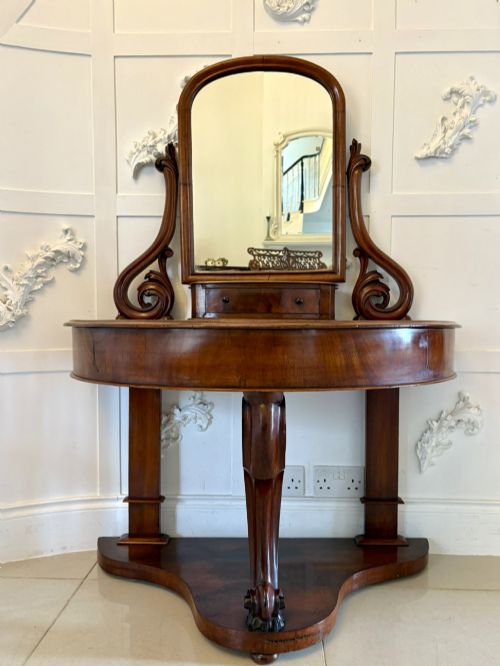
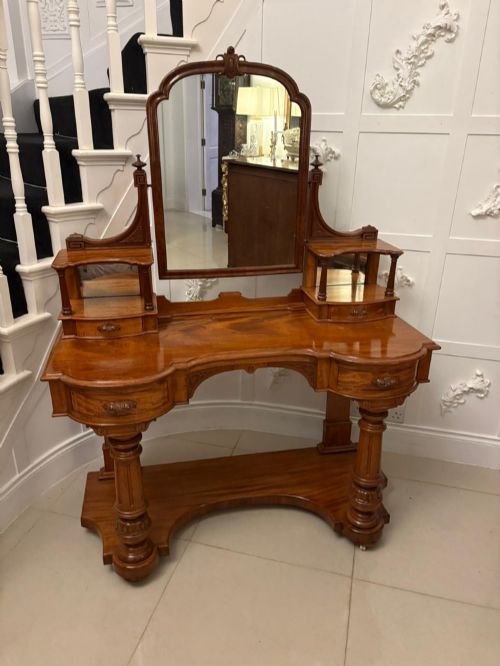
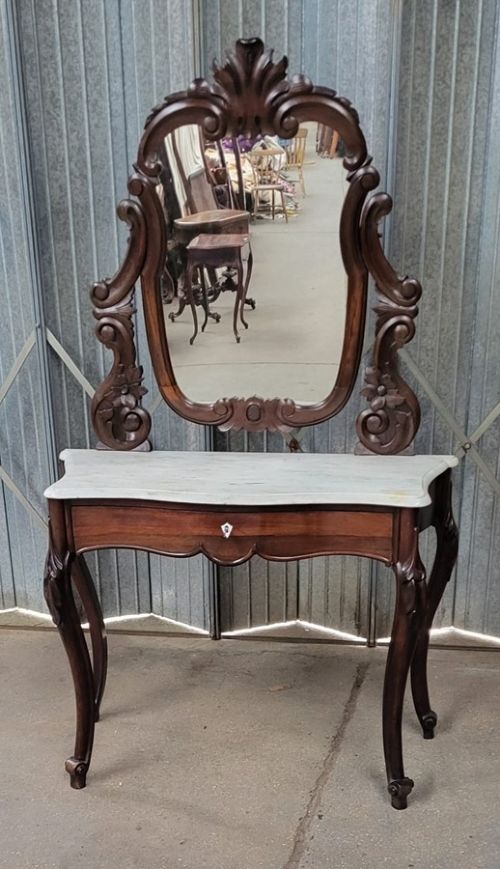


Victorian Duchesse Dressing Table
A Victorian duchesse dressing table is a grand vanity designed for the bedroom, combining a large central mirror with tiered surfaces.
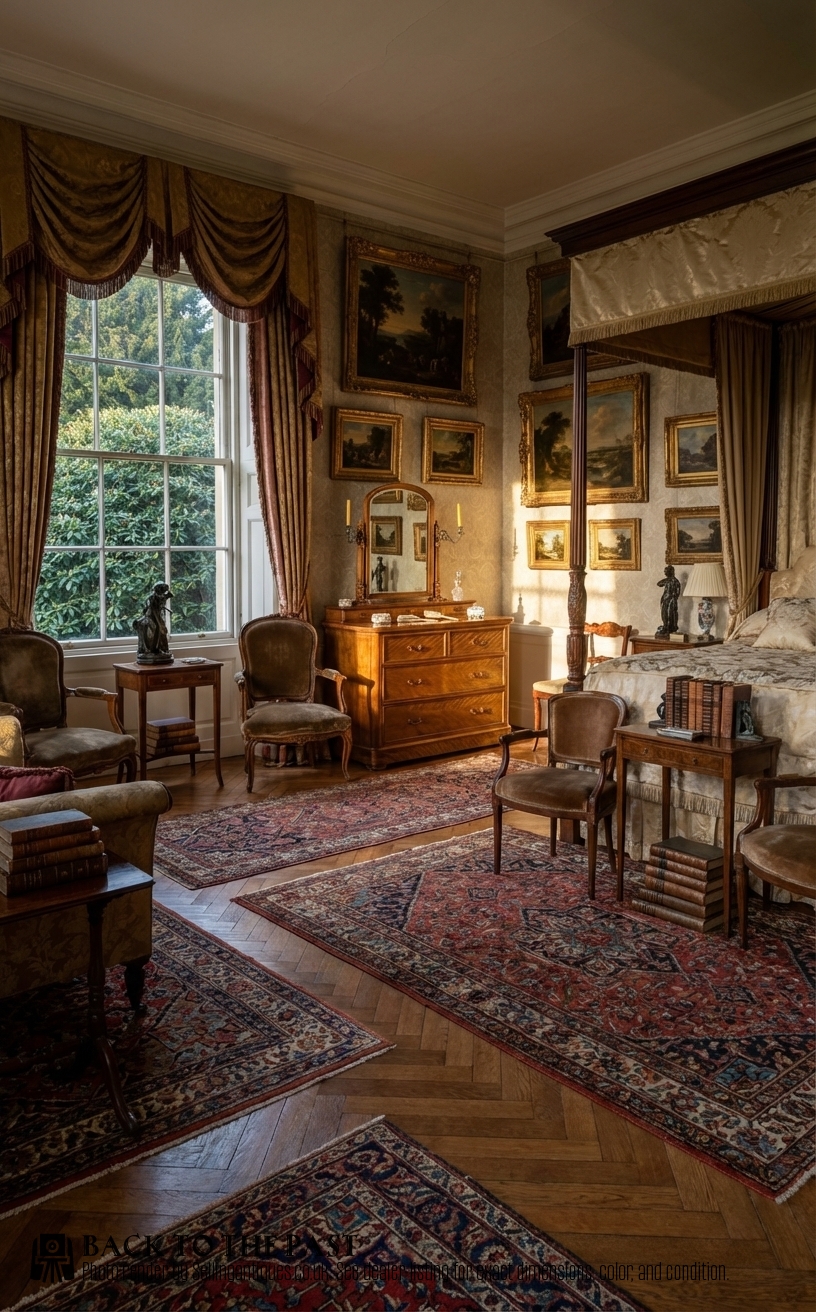
Victorian Duchesse Dressing Table
When you search for a victorian duchesse dressing table, you encounter pieces designed primarily during the nineteenth century, most frequently appearing from the eighteen sixties onwards. These forms typically include a central pivoting mirror flanked by smaller trinket drawers or jewellery compartments above a lower desk surface. The archive and current selection show these pieces span the Victorian period into the early twentieth century.
The dominant material across these vanity units is mahogany, often selected in flame or plain grain, though burr walnut and satinbirch also appear in the record. Surviving examples reflect revival aesthetics, including French rococo and empire styles, alongside marquetry inlay and satinwood details. Some iterations incorporate marble tops or brass candle sconces.
Materials and Construction
Cabinet makers utilised dense hardwoods such as mahogany and burr walnut for the primary structure, applying timber veneers to curved surfaces and drawer fronts. Satinwood inlay and contrasting light timbers decorate the panels of select pieces, while brass hardware secures the pivoting mirror frames.
Mirrors use original glass set into carved wooden frames, and marble slabs occasionally form the upper counter surface on washstand and dressing table hybrids. Structural joinery relies on traditional drawer construction and frame assembly typical of nineteenth-century workshops.
Listings for this phrase feature mahogany, burr walnut, and satinbirch across the Victorian period.
Judging Quality
The degree of refinement in the carved wooden ornamentation and the choice of timber figure distinguish standard examples from more ambitious commissions. Finely figured mahogany or burr walnut veneer displays greater depth and movement across large surfaces compared to plain stock.
Makers such as Edwards & Roberts integrated intricate marquetry inlay that elevates the decorative standard of the furniture. The inclusion of original brass candle sconces, intact mirrored backs, and auxiliary trinket drawers indicates a higher level of completeness.
Edwards & Roberts
The Victorian Duchesse Dressing Table Glossary
- Duchesse dressing table
- A large nineteenth-century vanity incorporating a central swinging mirror and multiple small drawers above a main writing or display surface. These units were standard bedroom furnishings for elite households.
- Flame mahogany
- A distinctive wood grain pattern created by slicing through the bough of a mahogany tree where it joins the trunk. Cabinet makers utilised this figuring on primary drawer fronts.
- Marquetry inlay
- Decorative wood pieces fitted into a precut veneer surface to form floral or geometric designs. This technique decorates panels on specific tables.
- Trinket drawer
- A small drawer positioned around the base of the main dressing table mirror. These compartments held jewellery and hair accessories.
Victorian Duchesse Dressing Table: Frequently Asked Questions
What is a duchesse dressing table?
A duchesse dressing table is a large nineteenth-century vanity unit featuring a prominent central mirror flanked by small trinket drawers.
These pieces provide substantial surface area and storage compartments designed specifically for grooming and dressing.
How do I date a Victorian dressing table?
Dating relies on timber choices, revival styles, and construction methods recorded across the nineteenth century. Pieces from eighteen sixty often display heavy mahogany frames, while later examples incorporate satinbirch or marquetry.
Archival records show these vanities continued into the early twentieth century with modified proportions.
Where were they placed in a bedroom?
These dressing tables stood against principal bedroom walls to capture natural light from nearby windows. Their large dimensions required generous floor space.
They served as the central grooming station in Victorian bedchambers.
Did they come with matching pieces?
Certain dressing tables were produced alongside matching washstands featuring marble tops. These suites maintained consistent timber veneers and carving styles.
Collectors occasionally find these companion pieces offered together.