


Antique Carved Makeup Desk
An antique carved makeup desk brings proper craftsmanship to the dressing room, offering fitted mirrors and timber surfaces built to last.
Antique Carved Makeup Desk
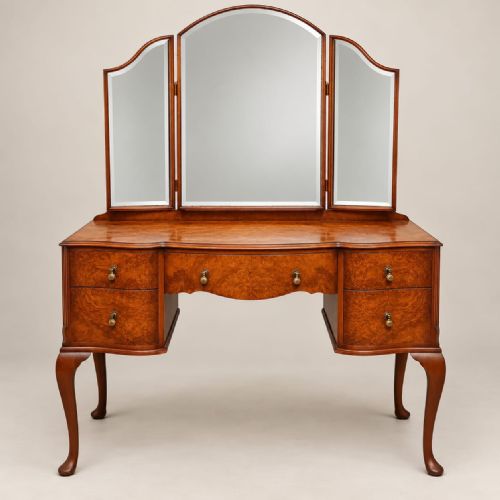
When buyers search for an antique carved makeup desk, they encounter dressing tables spanning the Victorian and Edwardian periods, including pieces from eighteen-fifty to nineteen-hundred. These wooden tables often incorporate pivoting or triple mirrors alongside dedicated storage compartments for cosmetics and personal items.
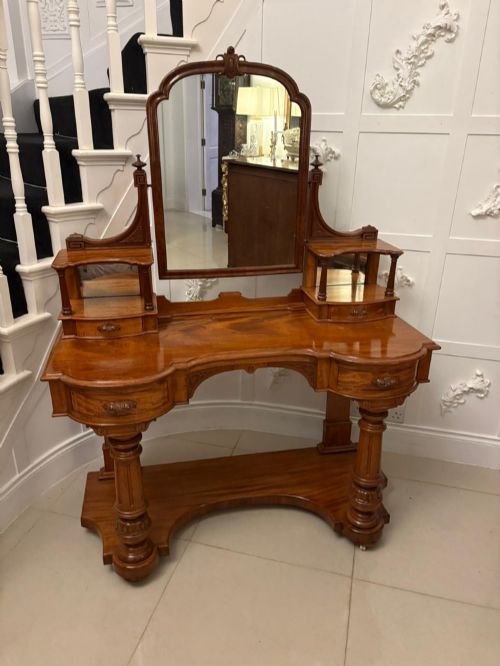
The most common formats found here are mahogany and walnut pieces, including elaborate Duchess styles and pedestal designs. Makers utilised burr walnut, satinwood, and painted finishes to create decorative focal points for period bedrooms.
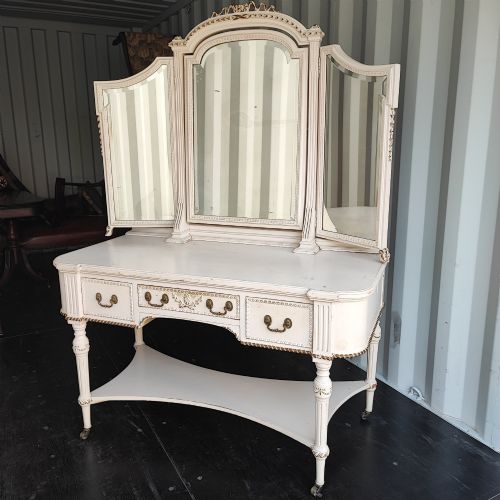
French influence appears through Louis XVI revival pieces and decorative triple mirror setups originally retailed by firms like Maples of London and Paris. Each piece reflects the domestic habits and interior tastes of the nineteenth century.
Materials and construction
Cabinet makers relied on solid mahogany, walnut, and burr walnut veneers applied to sound timber carcases, adding carved ornamentation by hand. Brass fittings secure the adjustable mirror frames and drawer pulls.
Glass mirrors, frequently original, sit within carved wooden frames supported by scrolling arms or pedestal structures. Painted wood variations demonstrate alternative surface treatments utilised during the Victorian and Edwardian eras.
Secret drawers tucked beneath jewellery compartments remind us that nineteenth century Victorians loved hiding their little treasures away.
Judging the quality
Quality rests in the choice of timber figurations, particularly the richness of burr walnut or the depth of grain in polished mahogany. Heavier carving, crisply executed by hand rather than cast in composition, separates standard production from finer workshop output.
The sophistication of the mirror arrangement and the integrity of the original glass and brass hardware dictate the standing of a dressing table. Finer examples retain matched pedestals, integrated jewellery compartments, and untouched polish.
Maples of London and Paris
The Antique Carved Makeup Desk Glossary
- Duchess dressing table
- A large Victorian dressing table featuring a large central mirror, often flanked by smaller auxiliary mirrors and numerous small drawers above a main surface.
- Burr walnut
- Timber taken from a walnut tree growth, yielding highly figured, swirling grain patterns prized for decorative veneer work on Victorian furniture.
- Pedestal dressing table
- A form supported by two banks of drawers or columns flanking the seated space beneath the main writing or grooming surface.
- Louis XVI revival
- A nineteenth century decorative style drawing on neoclassical French eighteenth century motifs, characterised by symmetry, straight tapered legs, and restrained carving.
Antique Carved Makeup Desk: Frequently Asked Questions
What is a Duchess dressing table?
A Duchess dressing table is a substantial Victorian form featuring a prominent central mirror supported by smaller accessory glasses and multiple trinket drawers. These pieces served as the centrepiece for wealthy nineteenth century bedrooms.
They combine generous surface space with elaborate woodwork, often executed in burr walnut or mahogany. The design prioritises both personal grooming and decorative display.
How do I date these dressing tables?
Dating relies on identifying timber choices, construction methods, and stylistic markers associated with the Victorian and Edwardian periods. Mid nineteenth century examples often favour solid mahogany, while later decades embraced burr walnut and satinwood.
Hardware styles, mirror glass bevels, and specific revival motifs provide additional clues. Comparing the piece to documented nineteenth century designs helps confirm its era.
Are the mirrors original?
Many dressing tables retain their original glass, which can exhibit subtle foxing, minor silver degradation, or handmade distortions. These minor age characteristics confirm the antiquity of the mirror plate.
Replacements occur because mirror glass is fragile and susceptible to dampness over generations. Examining the backing boards and silvering helps determine authenticity.
How do I maintain the timber surface?
Maintenance involves applying quality beeswax sparingly and buffing with a soft cloth to nourish the historic polish. Avoid placing these tables in direct sunlight or near heat sources to prevent timber shrinkage and veneer lifting.
Regular dusting with a dry cloth keeps the carved details clear of debris. Gentle care preserves the patina developed over more than a century of use.