
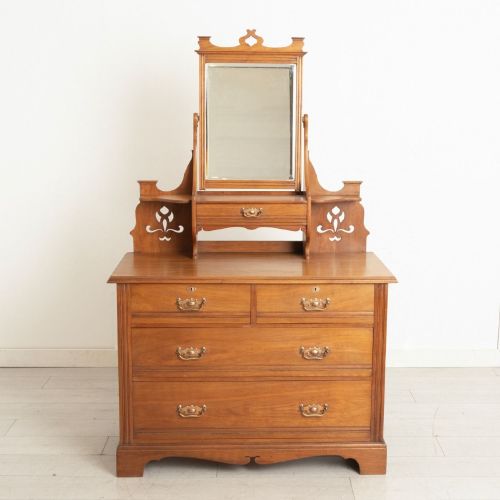
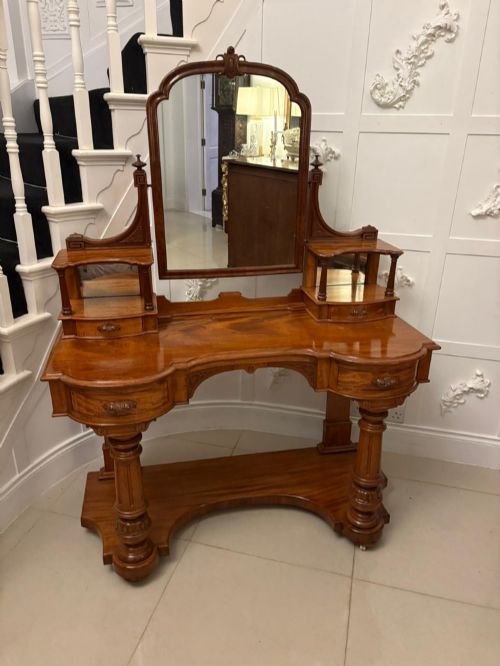


Brown Wood Vanity Unit
These brown wood vanity unit pieces are solid timber dressing tables and shaving stands that bring traditional craft and deep grain warmth to a bedroom.
Brown Wood Vanity Unit
A brown wood vanity unit covers traditional dressing tables and shaving stands built from timbers like mahogany, oak, walnut, and satinwood inlay. These items serve as functional bedroom furniture equipped with mirrors, drawers, and specific surfaces for grooming.
Victorian and Edwardian examples dominate the selection, spanning from the mid nineteenth century into the early twentieth century. Pieces range from large pedestal dressing tables with marquetry to compact shaving stands and cupboard designs.
Forms include kneehole pedestal tables, dressing table chests of drawers, and standing mirrors retail-marked by notable London houses. Buyers find both elaborate carved revival styles and simpler oak constructions from the interwar period.
Materials and construction
Cabinet makers utilised dense hardwoods such as solid mahogany and oak as the structural base for these dressing units. Burr walnut and satinwood inlay provide decorative surface contrast on drawer fronts and tabletops.
Many items incorporate functional hardware including brass handles, glass mirrors, and occasional fabric elements. Decorative techniques span intricate marquetry inlay, original stencilled decoration, and deep relief carving.
One surviving Victorian cupboard includes a dedicated space for your shaving cup.
Markers of quality
Quality rests in the selection of timber veneers and the crispness of applied marquetry or carved detail. Pieces bearing attribution to documented firms demonstrate superior cabinet making through refined joinery and proportion.
The integration of original decorative elements, such as stencilled decoration and period brass hardware, elevates a piece above standard utility items. Subtleties in timber grain, notably burr walnut and figured mahogany, define the upper tier.
Edwards & Roberts·James Shoolbred
The Brown Wood Vanity Unit Glossary
- Kneehole pedestal
- A desk or dressing table form featuring central leg space flanked by two columns of drawers. This layout allows a seated user to get close to the mirror.
- Marquetry
- Decorative woodwork where different coloured veneers are fitted together to form pictorial patterns. It is frequently seen on Edwardian and late Victorian surfaces.
- Shaving stand
- A dedicated compact furniture piece designed for men's morning grooming, typically incorporating a small adjustable mirror and a cupboard or shelf space. Examples range from mid nineteenth century models to Edwardian editions.
- Burr walnut
- A highly figured timber cut from walnut tree growths, prized for its swirling grain patterns. Cabinet makers utilised it on prominent drawer fronts and tabletops.
Brown Wood Vanity Unit: Frequently Asked Questions
How do I date a dressing table?
Dating relies on observing timber choices, construction methods, and stylistic details recorded in the design. Victorian pieces often display rich mahogany or burr walnut with carved ornamentation, while Edwardian examples frequently utilise marquetry inlay.
Mid nineteenth century models favour kneehole pedestal formats, whereas later pieces sometimes incorporate stencilled decoration or simpler oak frames.
What is the difference between a dressing table and a shaving stand?
A dressing table is a wider piece of furniture designed for general grooming, complete with a large mirror and multiple drawers. It serves as a seated station for personal care.
A shaving stand is a more compact piece created specifically for morning routines, usually housing a small mirror, a cupboard, and dedicated spaces for shaving cups.
How do I care for antique wood furniture?
Antique timber requires stable indoor humidity away from direct heat sources to prevent wood splitting and veneer lifting. Regular dusting with a soft dry cloth maintains the finish.
Avoid chemical polishes that can build up on nineteenth century surfaces; instead, consult a specialist for occasional wax treatments.