

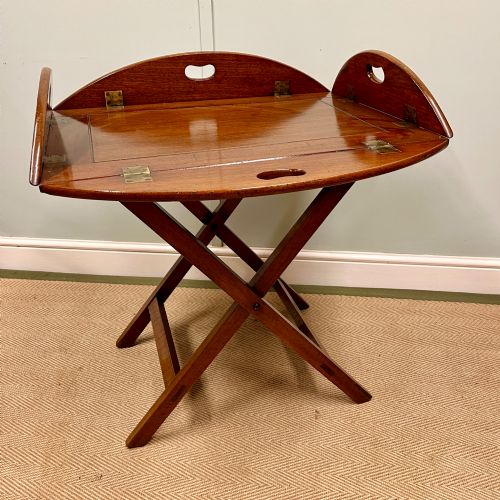
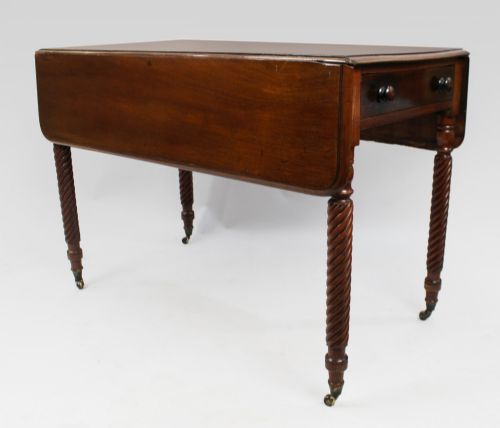

Victorian Drop Side Table
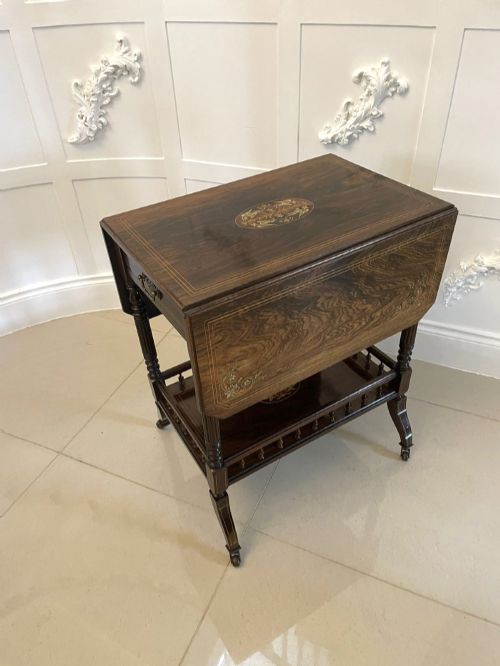
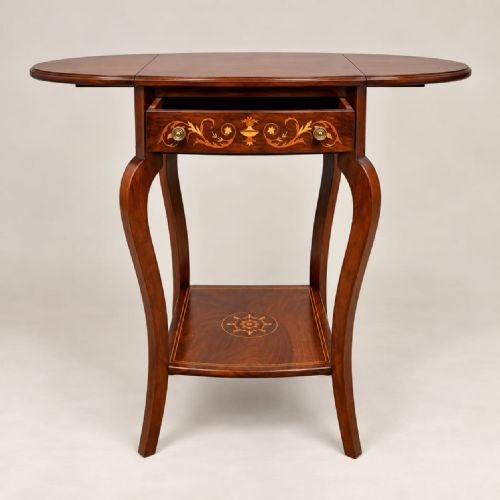
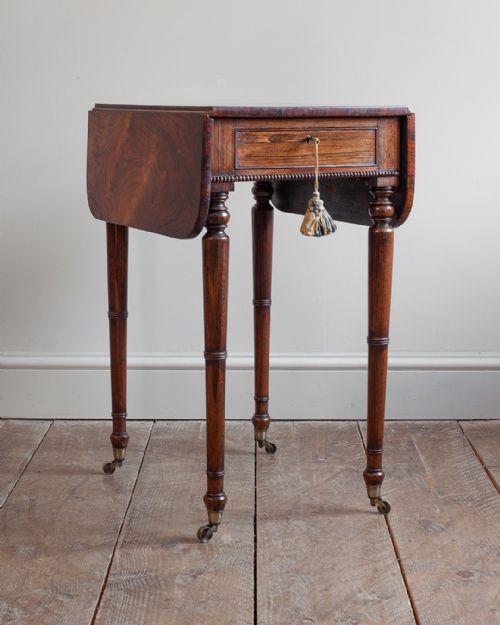
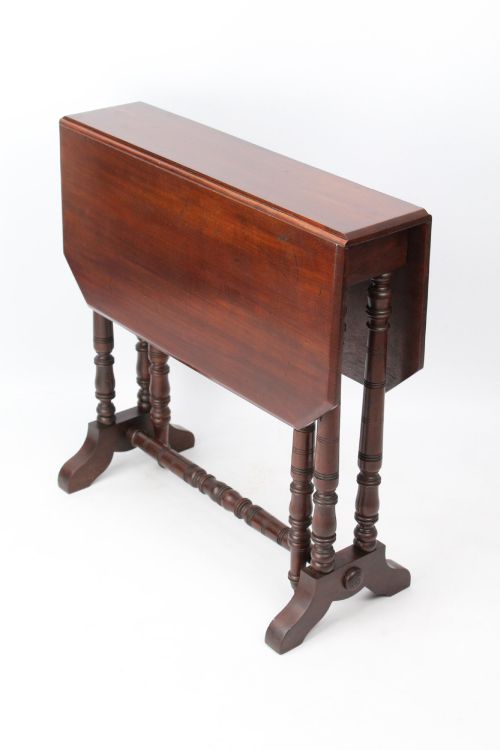
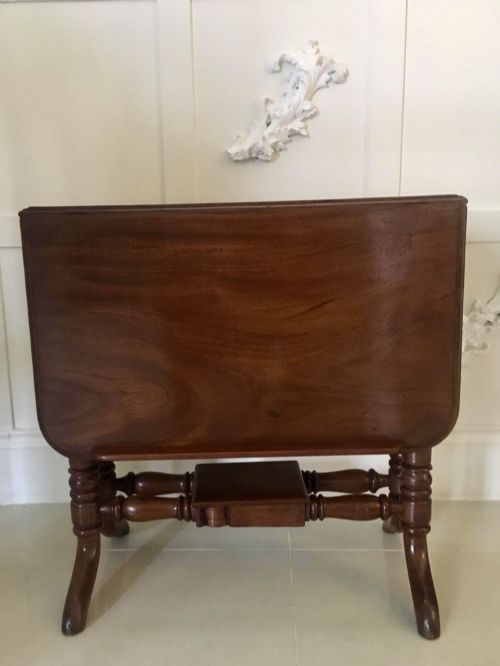
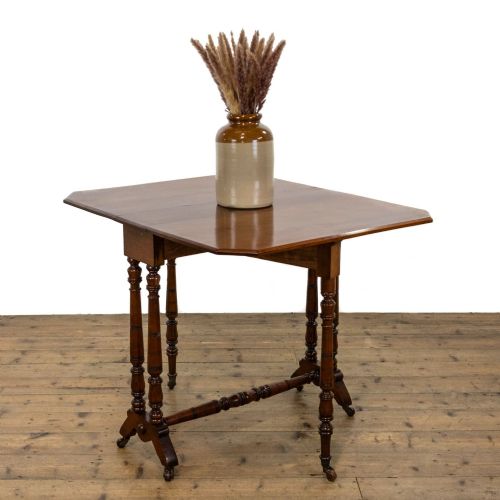
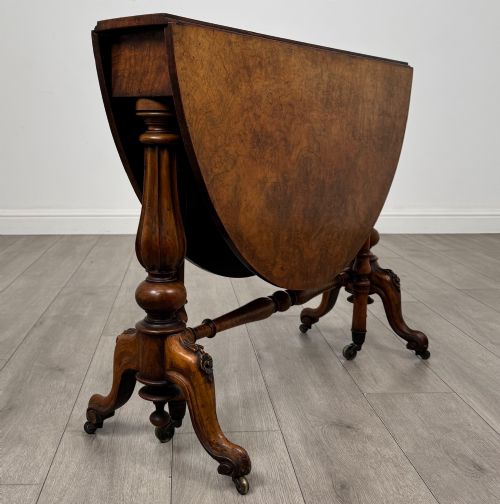
These Victorian drop side table examples bring folding leaves and versatile timber surfaces together to suit compact rooms.
Victorian Drop Side Table
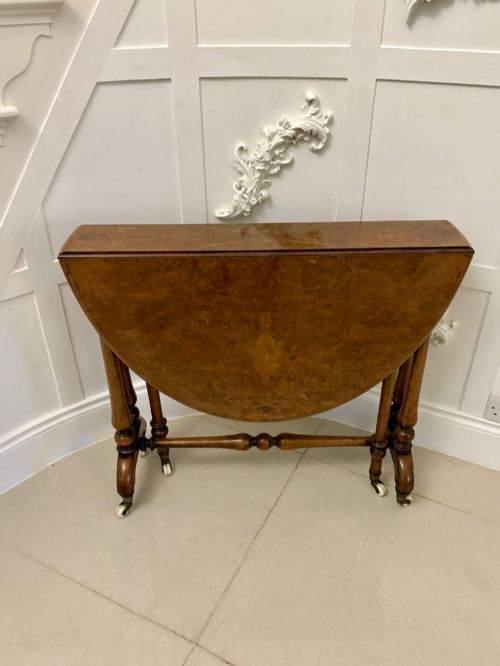
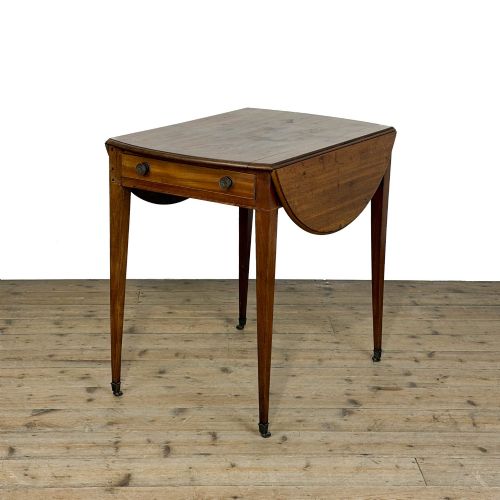
A victorian drop side table provides an adaptable surface with hinged flaps that drop down when space is tight and lift up on gate legs or brackets when needed. Buyers encounter these versatile pieces in forms ranging from narrow Sutherland tables to Pembroke and sofa tables.
Most examples originate from the nineteenth century, spanning periods from early Victorian to the end of the 1800s. They served varied domestic duties in period homes, functioning as occasional, sewing, lamp, or dining tables depending on their scale.
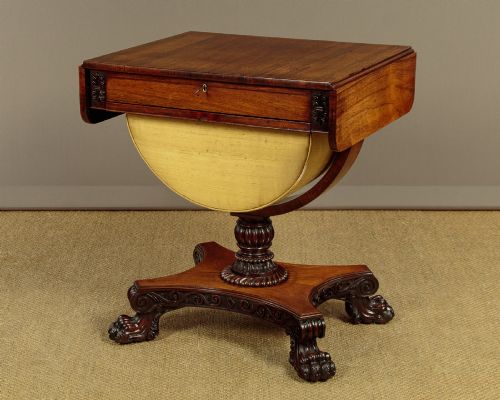
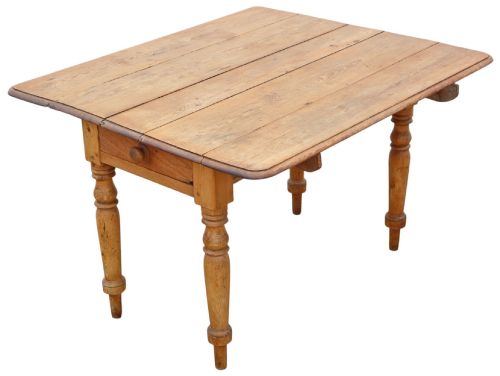
The selection includes robust pine kitchen versions alongside polished mahogany, walnut, and rosewood drawing room pieces. This variety ensures buyers find suitable proportions for both formal reception rooms and practical everyday spaces.
How they were made
Cabinetmakers constructed these tables using dense hardwoods like mahogany, rosewood, and walnut, often selecting burr veneers for decorative surfaces. Pine served for robust kitchen and utility tables where utility outweighed display.
Hinged leaves relied on sturdy wooden gate legs, folding brackets, or slender pivots to support the dropped flaps. Brass castors, ceramic fittings, and inlaid satinwood or floral marquetry completed the finer parlour pieces.
Miniature Sutherland tables turn up occasionally, built either as apprentices' masterpieces or as dollhouse furnishings for the very grand doll.
What varies in quality
Quality rests upon the choice of timber and the execution of veneers, with burr walnut and figured mahogany setting a higher standard than plain secondary woods. The crispness of carved details and precision in marquetry inlay distinguish superior workshop production.
Construction integrity shows in the smooth operation of drop leaves, the stability of gate legs, and the retention of original brass hardware or castors. Finer pieces maintain tight joinery and balanced proportions across the folding flaps.
Johnstone and Jeanes
The Victorian Drop Side Table Glossary
- Sutherland table
- A narrow table with exceptionally slender drop leaves that fold almost flat. They became popular during the Victorian period for occasional use in limited spaces.
- Pembroke table
- A small table fitted with two hinged flaps on opposite sides and frequently a drawer. It developed in the eighteenth century and remained common through the Victorian era.
- Sofa table
- A rectangular occasional table designed to stand in front of a sofa with drop leaves on the short sides. These often incorporate pedestal supports or twin pillars.
- Marquetry
- Decorative patterns formed by inserting pieces of contrasting veneer into a wood foundation. Victorian makers utilised floral and geometric motifs.
- Gate leg
- A hinged leg that swings outward from the frame to support a drop leaf. This provides sturdy support when the table stands fully open.
Victorian Drop Side Table: Frequently Asked Questions
How do I use a Sutherland table?
A Sutherland table fits neatly against a wall with its leaves dropped when floor space is at a premium. Raising the slim flaps and swinging out the gate legs creates a wider surface for tea, books, or lamps.
These tables move easily between rooms because of their narrow folded profile. They suit sitting rooms where surface area needs to expand and contract on demand.
Where did people place Pembroke tables?
Pembroke tables typically sat beside chairs or against drawing room walls for letter writing and needlework. Their small drawers provided storage for small accessories.
In larger houses, pairs served in reception rooms or bedrooms. Their drop leaves allowed them to sit unobtrusively until needed.
What is burr walnut?
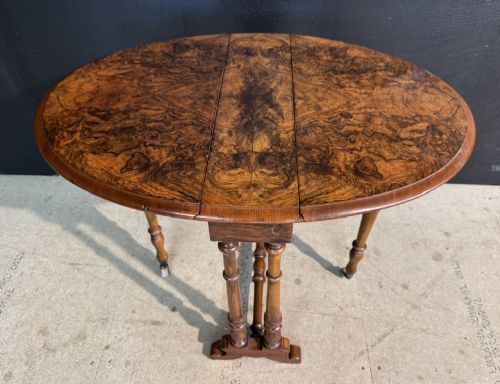
Burr walnut is timber taken from a growth or wart on the walnut tree, producing swirling, highly figured grain patterns. Cabinetmakers sliced this wood into thin veneers for decorative table tops.
Tables featuring burr walnut typically date to the mid to late Victorian period. The striking grain made them centrepieces for fashionable parlours.
How do I tell an early Victorian table apart?
Early Victorian examples often display restrained mahogany construction influenced by late Georgian and William IV designs. Their proportions tend to be heavier and timber selection focuses on solid mahogany or simpler veneers.
Later Victorian pieces from the 1880s frequently introduce lighter woods, intricate marquetry inlay, and turned bobbin legs. Comparing the timber choice and decorative flourishes helps indicate the decade of manufacture.