


Victorian Drop Front
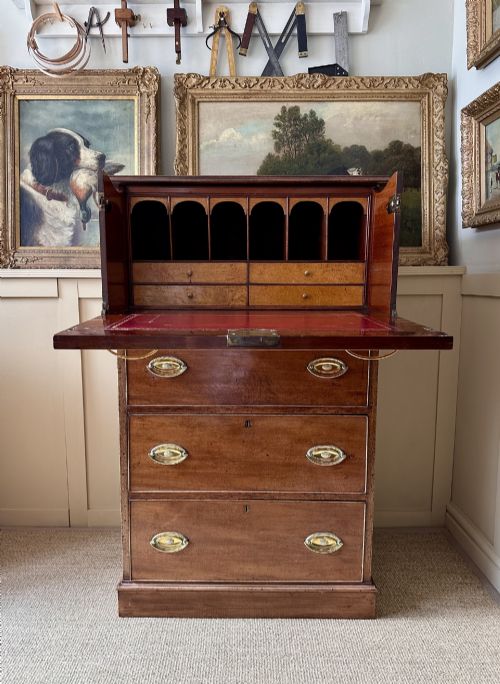
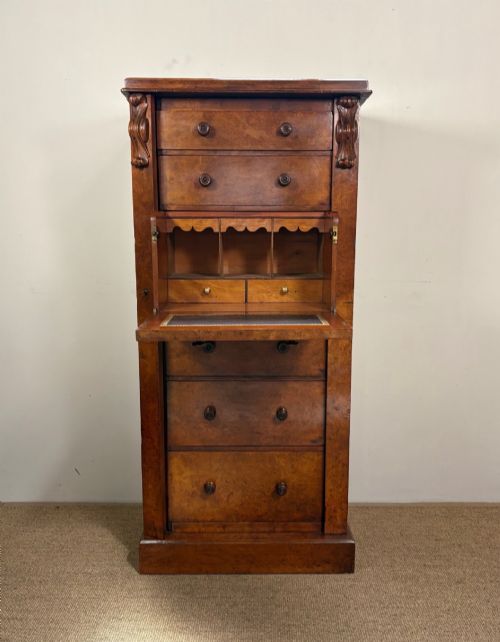
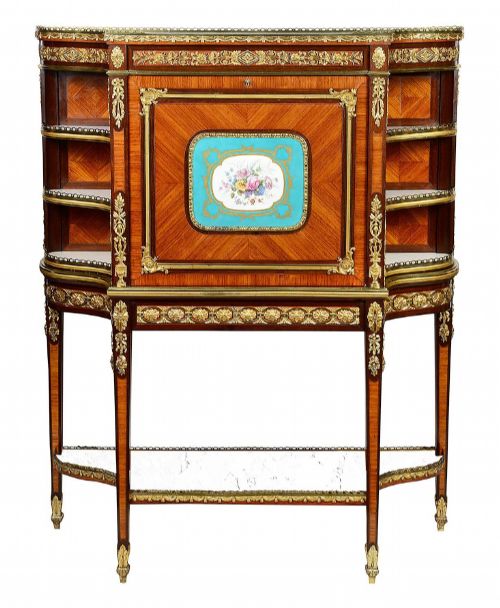
These victorian drop front pieces are functional writing desks and cabinets designed to conceal a fold-down writing surface behind a vertical panel.
Victorian Drop Front
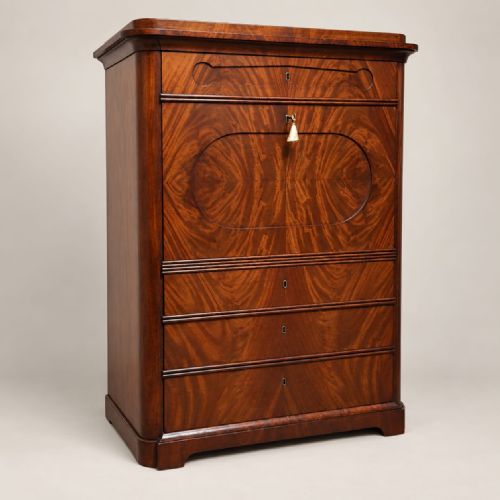
A victorian drop front encompasses a range of form types including secretaire chests, bureau bookcases, cabinets, and escritoire desks produced during the 19th century and into the early 20th century. Buyers seek these items for their dual purpose as concealed writing surfaces and practical storage units.
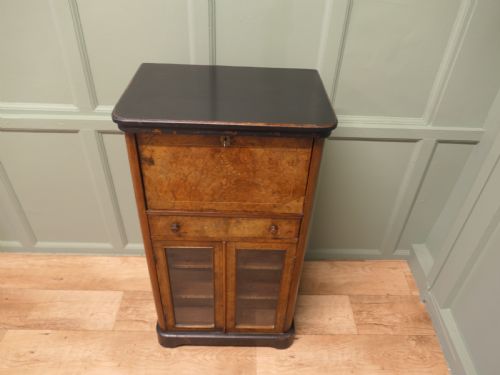
The most common variations on this page include mahogany and burr walnut secretaire chests, alongside pine, oak, and rosewood bureau bookcases that reflect Victorian and Arts & Crafts design influences.
Materials and Technique
Cabinet makers utilised dense hardwoods such as mahogany, walnut, rosewood, and oak, frequently applying intricate burr veneers and brass or glass details to enhance the exterior surfaces.
Drop front panels and writing slopes rely on sturdy hinges and internal support mechanisms to bear the weight of the desk flap, while interior compartments often incorporate small drawers and pigeonholes.
Several pieces conceal tiny secret drawers behind their pigeonholes, perfect for hiding love letters or spare keys.
Quality and Construction
Quality rests in the precision of the timber matching on the drop front panel and the structural integrity of the internal pigeonholes, secret drawers, and hinges.
Finely made examples display careful grain selection in veneers like burr walnut or amboyna, alongside clean dovetail joinery in the internal compartments.
Blake London·Harris Lebus·Gregory & Co of London·Druce & Co
The Victorian Drop Front Glossary
- Secretaire
- A piece of furniture containing a drawer or compartment that pulls down or drops open for writing. It often disguises the writing surface as a standard chest of drawers.
- Abattant
- A vertical fall front or drop front panel on a cabinet that hinges downwards to create a desk surface. This term frequently appears on continental European pieces.
- Escritoire
- A small writing desk fitted with drawers and compartments. These pieces usually feature a drop front writing flap.
- Wellington chest
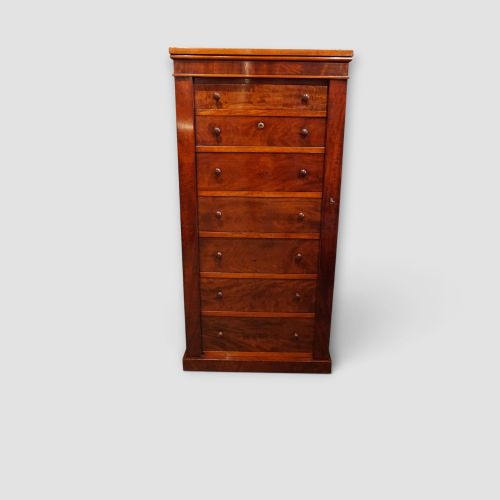
- A tall, narrow chest of drawers secured by a locking side flap. Certain variations incorporate a secretaire drawer within the stack.
- Bureau bookcase
- A combination furniture form featuring a lower writing section with a drop front beneath an upper shelving unit enclosed by doors.
Victorian Drop Front: Frequently Asked Questions
What is a drop front desk?
A drop front desk is a piece of furniture featuring a hinged panel that pulls down to form a horizontal writing surface. When closed, the panel conceals internal compartments, small drawers, and pigeonholes.
These designs allowed Victorian households to keep correspondence and writing materials neatly hidden away when not in use.
How do I identify a Victorian secretaire?
Victorian secretaires are identified by their 19th-century construction methods, typical wood selections such as mahogany, walnut, and rosewood, and period-specific decorative styles.
Many examples disguise the writing drawer behind a facade that matches the rest of a chest of drawers or chiffonier.
What woods were used for these cabinets?
Cabinet makers predominantly used mahogany, walnut, oak, and pine as foundational timbers. Decorative veneers like burr walnut, amboyna, and rosewood added visual grain patterns to the exterior surfaces.
Inland details in brass or lighter woods also appear on specific revival and Arts and Crafts pieces.
Where should I place a drop front cabinet?
These cabinets suit studies, living rooms, and bedrooms due to their compact footprint and enclosed storage. Ensure there is sufficient floor clearance for the drop front panel to open fully.
Keep them away from direct heat sources to prevent the timber veneers from drying out or warping over time.