

Victorian Dressing Seat
A victorian dressing seat offers a low, cushioned perch for the bedroom, combining practical height with carved timber frames.
Victorian Dressing Seat
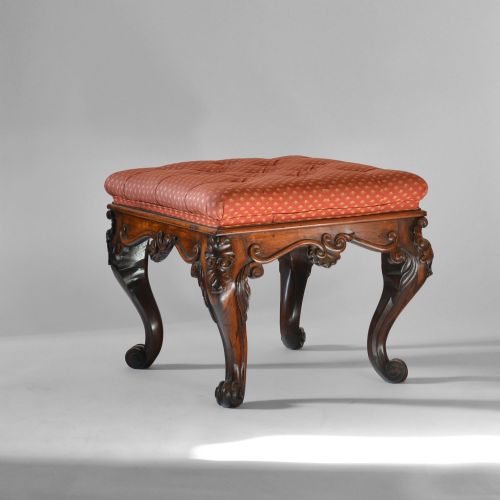
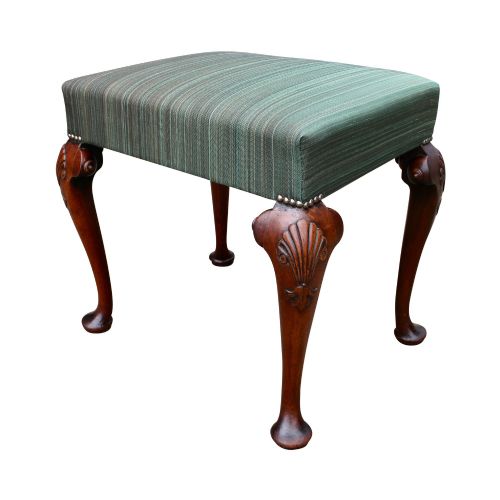
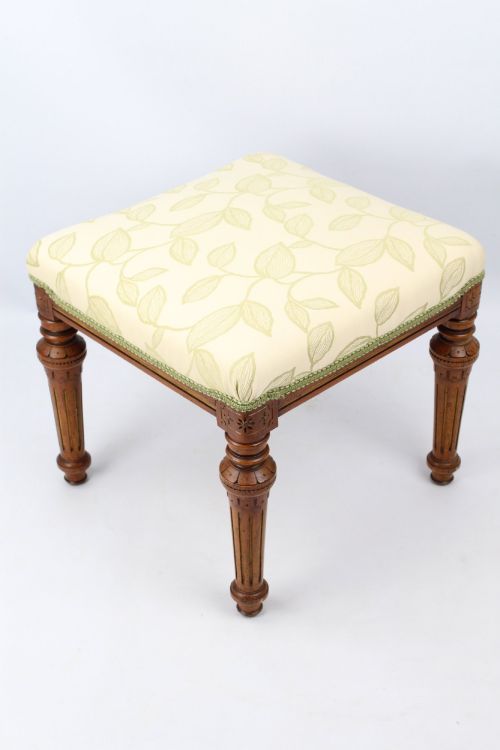
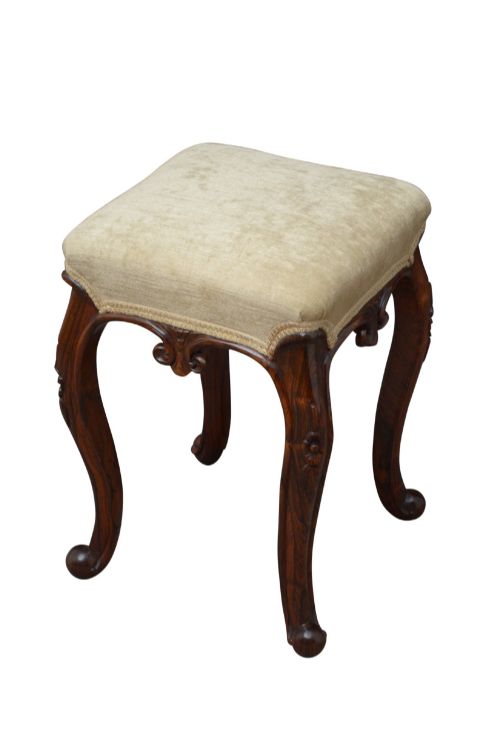
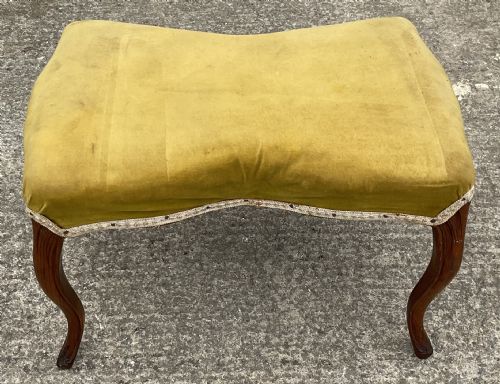
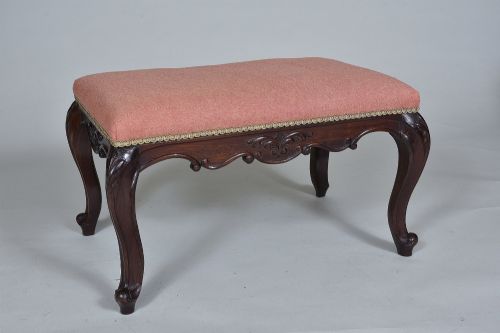
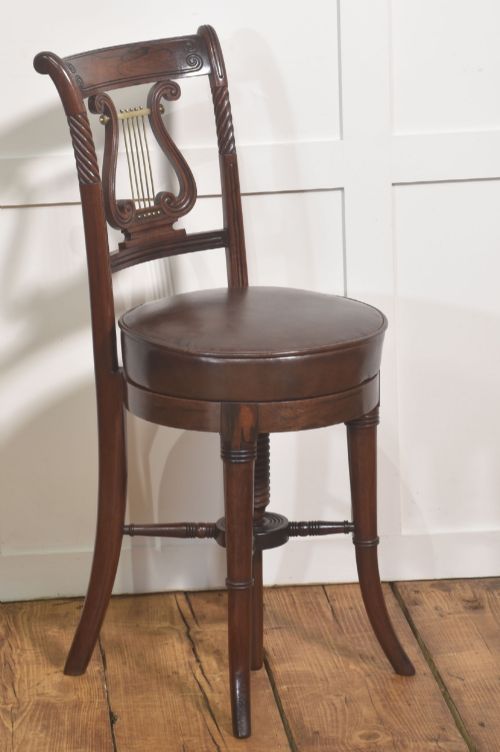
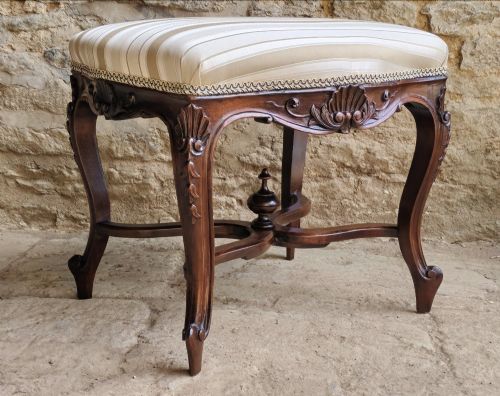
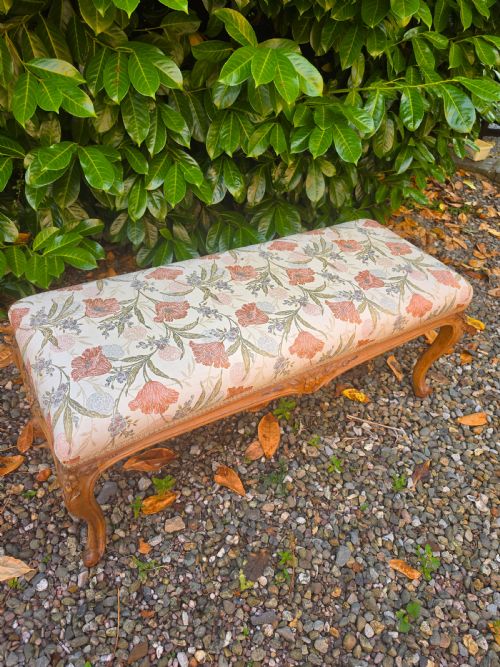
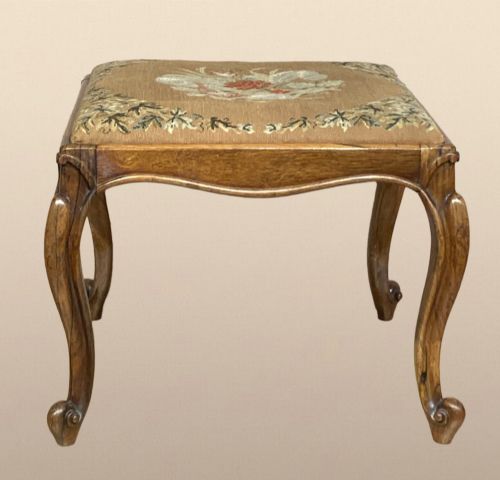
A victorian dressing seat functions as a companion piece to a dressing table, standing lower than a standard chair to allow comfortable seating during grooming. The form appears most frequently as a small upholstered stool supported on cabriole or turned legs, though adjustable revolving versions also occur.
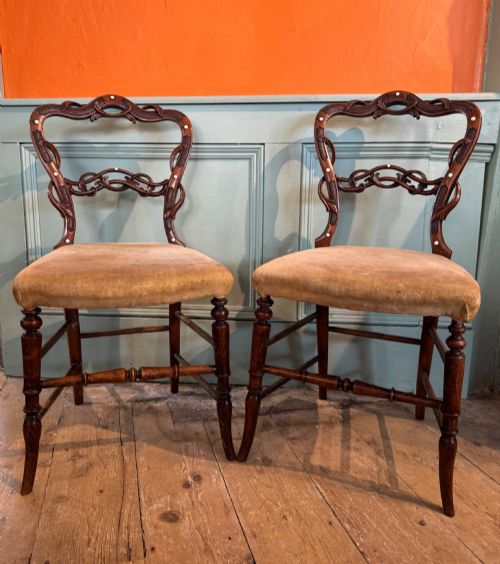
Makers designed these seats to match the bedroom suites of the period, drawing on revival styles ranging from Queen Anne walnut to heavily carved rosewood and mahogany. Alongside dedicated dressing stools, the selection includes related low seating such as piano stools, window seats and bedroom chairs.
Materials and Construction
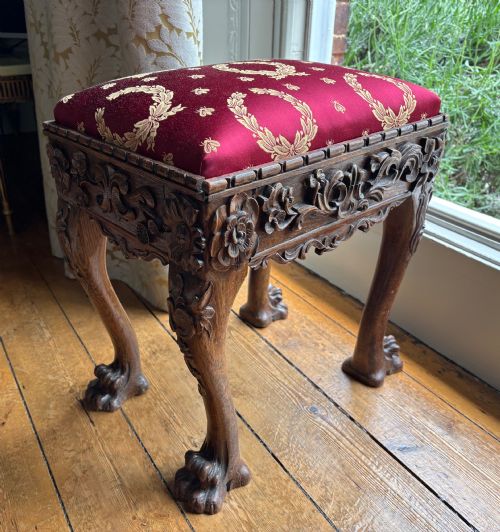
Cabinet makers built the frames using dense hardwoods such as mahogany, walnut and rosewood, often shaping the timber into flowing cabriole legs with scroll or leaf carving. Exotic woods like goncalo alves, satinwood and burr maple occasionally appear on high-status examples.
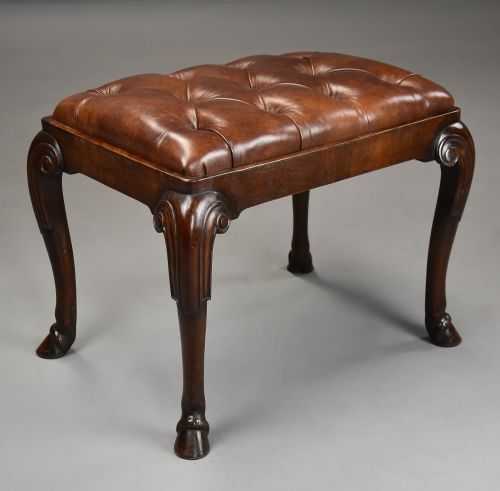
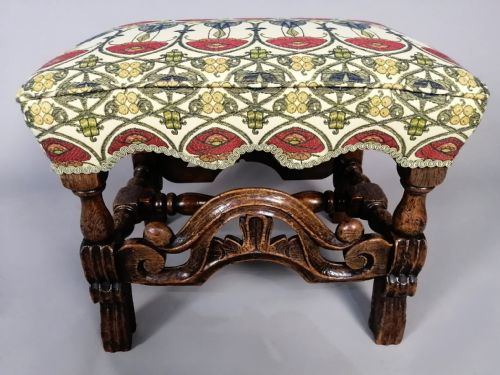
Upholstery formed an essential part of the construction, employing traditional stuffing techniques beneath top covers of velvet, silk, leather or patterned textile. Frames utilised secure joinery methods, sometimes incorporating brass hardware or adjustable screw mechanisms for height variation.
A revolving top allowed nineteenth-century musicians to spin in place without missing a note or scuffing their skirts.
Gradations in Quality
Superior quality rests on the crispness of the timber carving and the weight of the chosen wood, with dense walnut and figured rosewood outranking plain beech or secondary conifers. Well-proportioned frames exhibit harmonious curves and solid joint construction without excessive reinforcement.
The degree of original detail preservation separates standard production from exceptional pieces. Finer examples retain untouched patination on the polished timber alongside traditional upholstery foundations rather than modern synthetic replacements.
J. Shoolbred
The Victorian Dressing Seat Glossary
- Cabriole leg
- A furniture leg that curves out and down in an s-shape, ending in a pad, scroll or carved foot. This form became popular during the revival of earlier eighteenth-century designs in the nineteenth century.
- Giltwood
- Timber coated with a thin layer of gold leaf or gold paint to give a metallic finish. It appears on decorative seating designed for formal reception rooms or boudoirs.
- X-frame
- A structural support formed by two intersecting diagonal members creating an x-shape. This classic curule form provides stability without heavy side rails.
- Satinwood
- A durable, yellow-brown timber with a natural sheen, prized for fine cabinet work and decorative veneer. It was frequently utilised during the late nineteenth and Edwardian periods.
- Buttoning
- An upholstery technique where deep tufts are secured by cord or thread pulled through the stuffing and fastened with fabric-covered buttons. This method creates a geometric pattern of padded squares or diamonds.
Victorian Dressing Seat: Frequently Asked Questions
What is a victorian dressing seat?
A victorian dressing seat is a low, upholstered stool or chair designed specifically to sit in front of a bedroom dressing table. These pieces range from simple mahogany frames to ornate carved walnut examples with cabriole legs.
They provide a comfortable height for grooming and were typically styled to match the other bedroom furniture of the period.
How do I date a dressing seat?
Dating relies on examining the timber species, secondary woods, leg profiles and upholstery methods used in the construction. Walnut and rosewood dominate mid-nineteenth-century pieces, while satinwood and lighter frames often point toward the end of the century.
Revival styles also offer clues, as cabinet makers drew heavily on Queen Anne, Chippendale and Rococo motifs during different decades of the era.
Can I use an antique stool every day?
Most victorian dressing seats are sturdy enough for regular daily use provided the frame joints remain tight and secure. Solid mahogany and walnut structures handle normal weight easily, though antique upholstery stuffing may feel firmer or softer than modern foam.
Checking the underside and leg fixings ensures the piece is stable before placing it into daily service.
How do I match one to my room?
Choosing a dressing seat depends on matching the timber tone and decorative style of your existing furniture. A mahogany or walnut frame integrates smoothly with traditional bedroom sets, while an ebonised or giltwood piece acts as an accent.
Upholstery fabric can easily be updated to tie in with your room's colour scheme while preserving the historic wooden frame.