

Victorian Dressing Desk
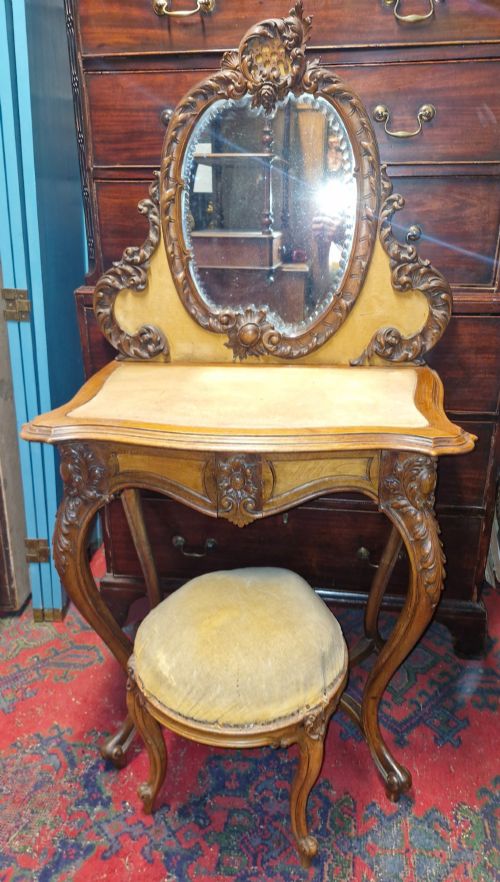
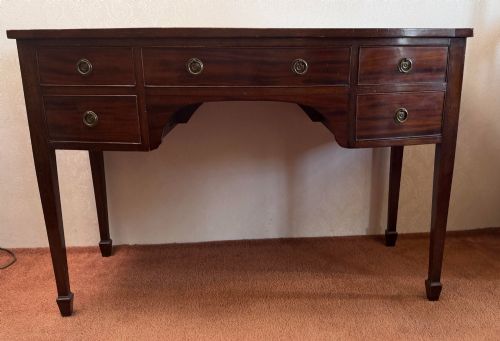
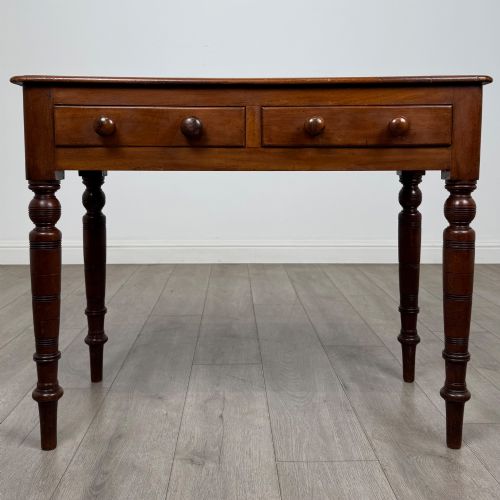
A victorian dressing desk combines the utility of a writing table with the surface space for a bedroom vanity.
Victorian Dressing Desk
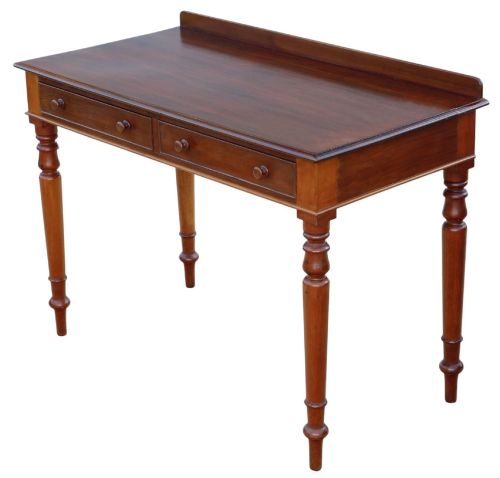
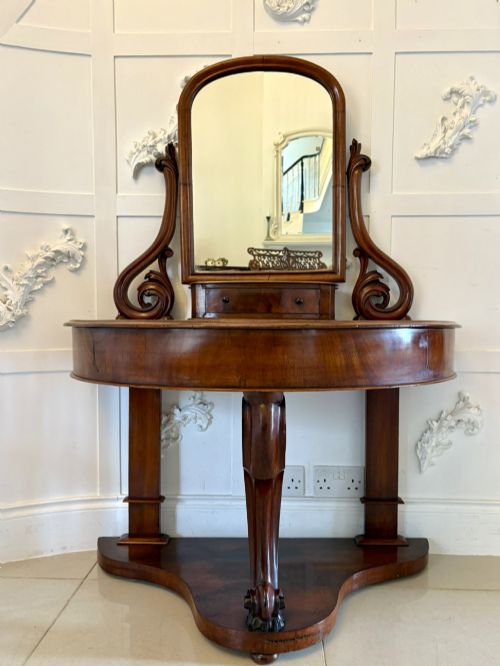
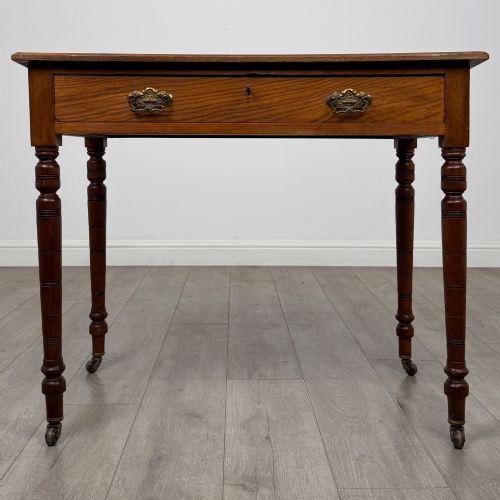
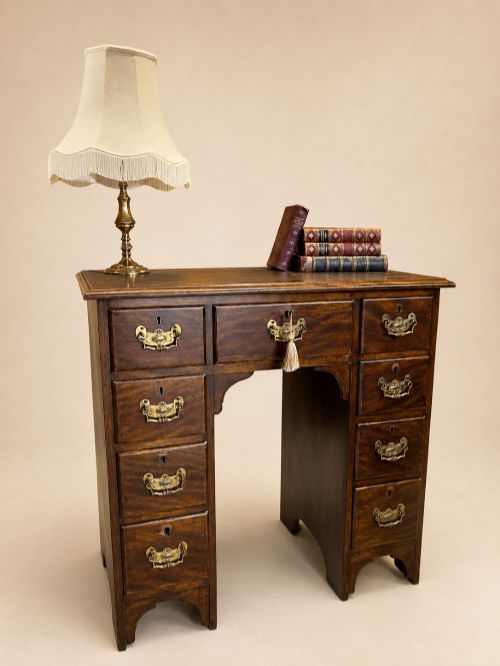
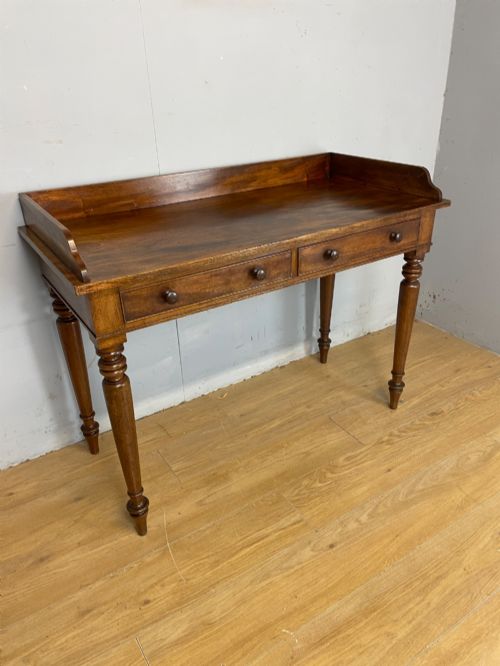
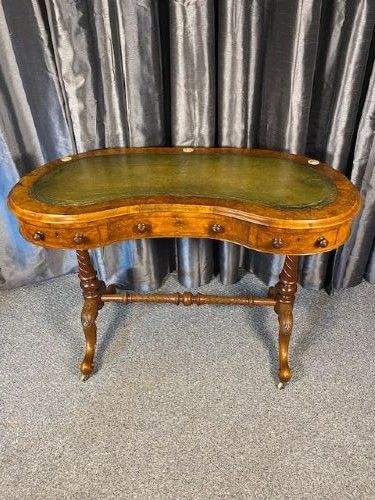
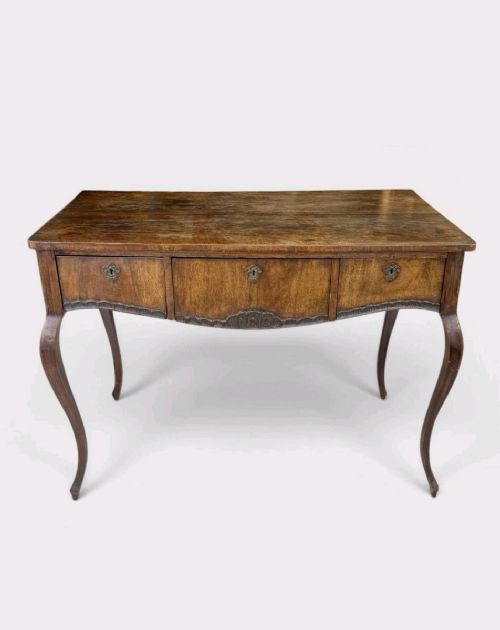
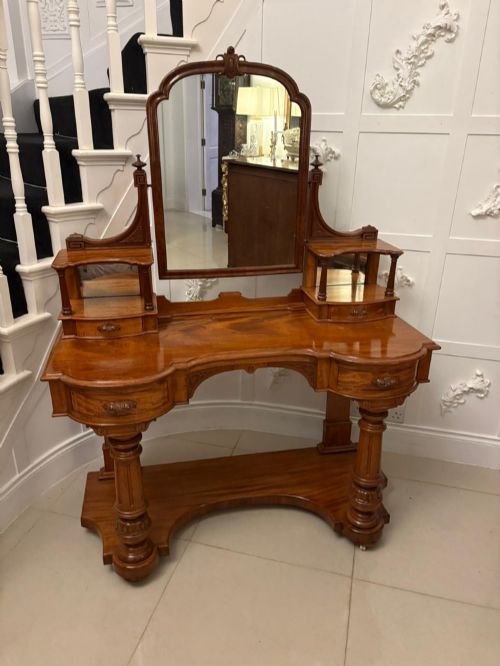
A victorian dressing desk bridges the gap between a domestic writing table and a bedroom vanity, designed for correspondence and personal grooming alike. These pieces typically feature set-in drawers, kneeholes, or writing flaps surfaced in leather, reflecting the multi-purpose needs of nineteenth-century domestic spaces.
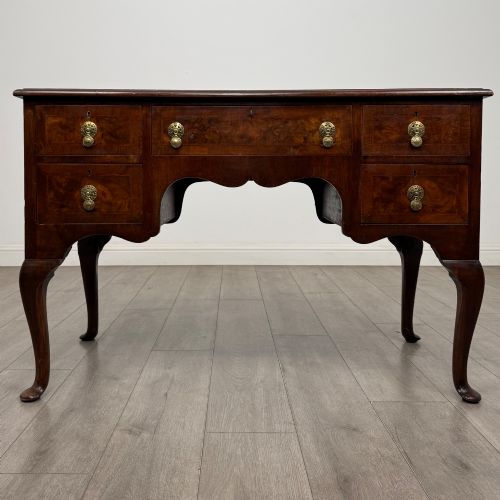
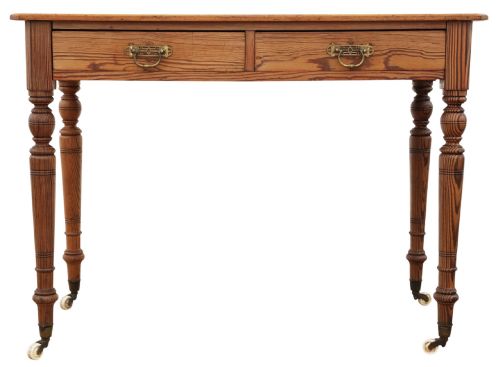
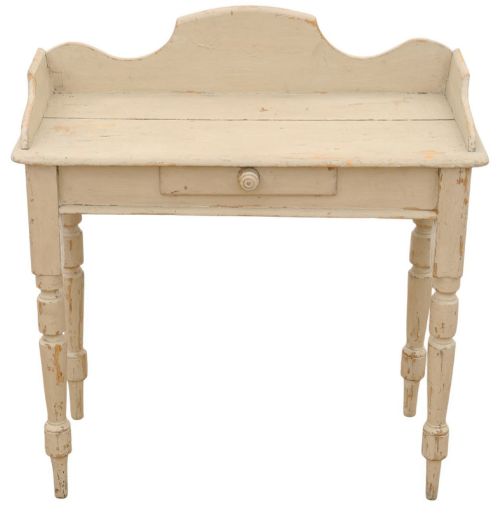
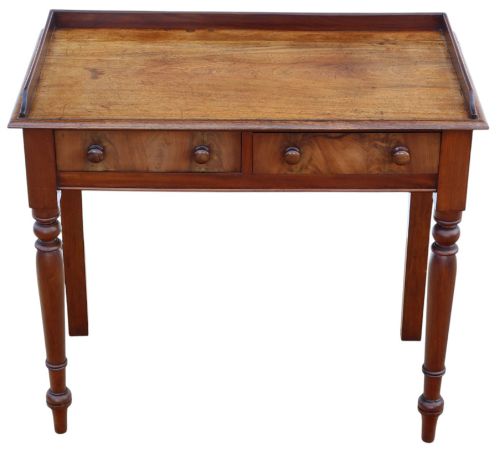
On this page, you are most likely to encounter mahogany and walnut examples dating from the mid to late nineteenth century, often fitted with turned legs or pedestal drawer arrangements. Variations range from simple pine washstands and side tables adapted for writing to elaborate satinwood and burr walnut creations.

How They Were Made
Cabinet makers utilised dense hardwoods like mahogany, walnut, and satinwood for the primary frames and drawer linings, frequently employing flame or burr veneers to add visual depth to the top surfaces. Secondary woods such as pine appear internally and in more rustic or country pieces.
Joinery techniques combined traditional dovetailed drawer construction with turned or carved legs, sometimes incorporating brass hardware, leather writing inserts, and hand-painted Chinoiserie lacquering.
Materials recorded across the inventory include brass, mahogany, walnut, pine, glass, leather, and satinwood.
What Varies in Quality
The standard of timber selection largely dictates the tier of the piece, moving from plain pine and standard mahogany up to figured burr walnut, satinwood, and rosewood. Superior examples display careful matching of wood grain across drawer fronts and table tops.
Refinement of carving and hardware also separates standard production items from workshop pieces bearing maker attributions, such as finely turned handles, brass mounts, and detailed scroll carving on structural supports.
Heal and Son·Gillows
The Victorian Dressing Desk Glossary
- Kneehole desk
- A desk featuring a central recess for the legs, flanked by pedestals of drawers on both sides. This form allows a comfortable seated position directly facing the furniture.
- Burr walnut
- A prized wood veneer harvested from the knot growths of walnut trees, displaying intricate, swirling grain patterns. It was frequently utilised on high-grade Victorian cabinet furniture.
- Pedestal desk
- A heavy writing table supported by two vertical columns of drawers resting on the floor. These offer substantial storage capacity beneath the main writing surface.
- Satinwood
- A lustrous, yellow-toned timber imported from tropical regions and used extensively for fine stringing, banding, and complete veneer surfaces during the nineteenth century.
- Chinoiserie
- A decorative style employing European interpretations of traditional Chinese artistic motifs and lacquer techniques. It appears on select late Victorian surfaces.
Victorian Dressing Desk: Frequently Asked Questions
How do I use a dressing desk today?
These tables adapt easily to modern bedrooms as a combined dressing table and laptop workstation. The integrated drawers provide convenient storage for daily essentials.
Their modest nineteenth-century proportions also allow them to function effectively as compact console tables or hallway writing surfaces.
Were these desks used for writing or grooming?
Historical workshop designs accommodated both functions interchangeably, often featuring leather inserts for writing alongside surface space for toilet mirrors.
Many surviving pieces include small internal compartments or multiple drawers originally intended for stationery, inkwells, or cosmetics.
How do I identify a Victorian piece?
Look for construction traits typical of the nineteenth century, such as hand-cut dovetails on the drawer sides and the use of solid secondary timbers like oak or pine inside.
Period surfaces often display warm patination developed through decades of wax polishing on hardwoods like mahogany and walnut.
What is the difference between walnut and mahogany?
Mahogany offers a dense, reddish-brown grain that ranges from plain to heavily figured flame patterns, favoured for its durability throughout the Victorian era.
Walnut provides a darker, richer brown tone with prominent grain variation, particularly when utilised as decorative burr veneer on high-end tables.