


Victorian Doulton Salt Glaze
Victorian doulton salt glaze pieces are robust stoneware vessels carrying distinct textured surfaces that bring tactile warmth to any room.
Victorian Doulton Salt Glaze
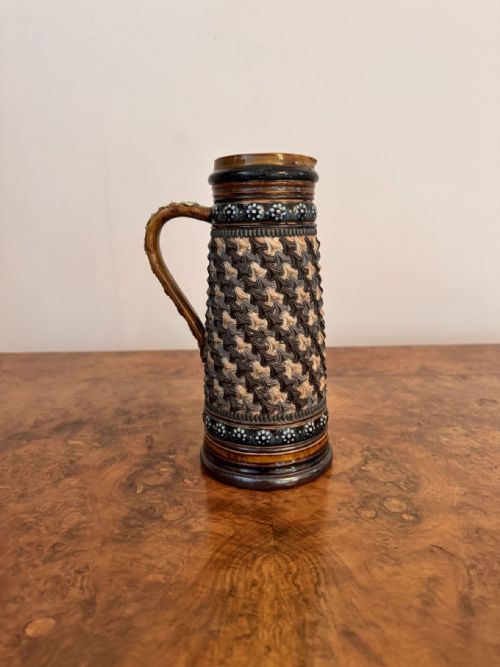
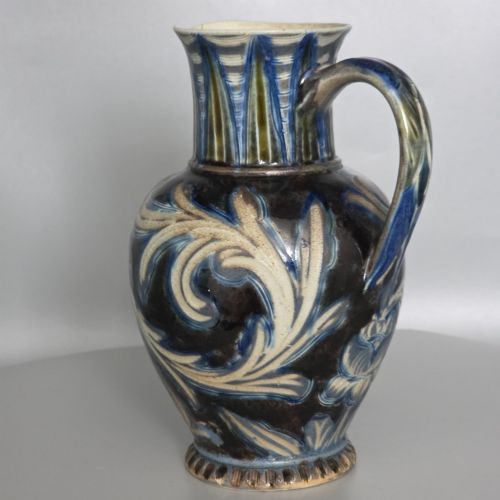
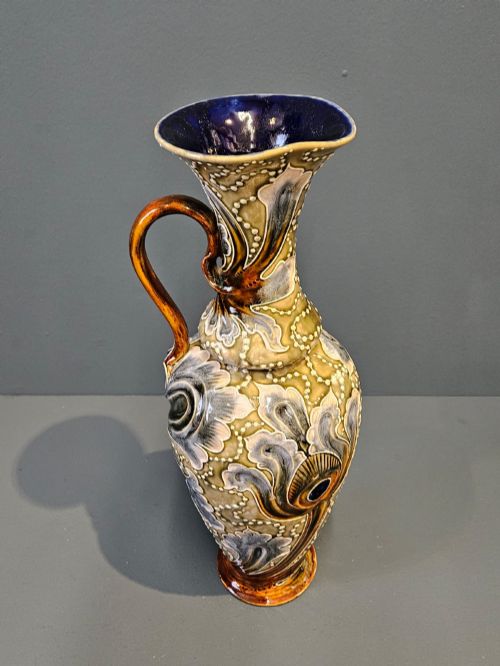
Victorian doulton salt glaze pieces span jugs, pitchers, vases, ewers, jardiniere, and tea sets produced during the nineteenth century. These objects reflect the transition from utilitarian harvest vessels to sophisticated art pottery.
The jugs and pitchers dominate the selection, often featuring silver rims or mounts applied in sterling silver. Smaller vases and larger exhibition pieces provide variety in scale across the available forms.
Materials and Technique
Potters shaped these objects from dense clay before introducing salt into the kiln during high-temperature firing. This chemical reaction produced the characteristic textured glaze finish across the stoneware body.
Many items incorporate cream sprigged decoration applied to the salted surface, while others display incised patterns or painted details handled by studio artists.
Art pottery styles from the Victorian era dominate these listings, showcasing individual artist marks alongside standard factory stamps.
Judging Quality
The clarity of the salt glaze texture and the precision of the incised or sprigged ornamentation determine the visual standing of each vessel. Pieces bearing identifiable artist ciphers or specific studio stamps hold greater artistic weight.
The addition of hallmarked sterling silver rims or mounts alters the character of the stoneware, providing a deliberate contrast between metal and ceramic materials.
Emma Shute·Emily Stormer·Florence Barlow
The Victorian Doulton Salt Glaze Glossary
- Salt Glaze
- A glossy, textured finish achieved by throwing common salt into the kiln during the high-temperature firing of stoneware. This process leaves a characteristic orange-peel surface texture on the clay body.
- Stoneware
- A dense, hard ceramic fired at high temperatures until vitrified. It is completely impermeable to liquids even without a glaze.
- Ewer
- A large jug or pitcher with a wide spout and a curved handle, traditionally used for holding water. Victorian examples often function as decorative display items rather than for service.
- Sprigged
- A decorative technique where small moulded clay motifs are applied to the surface of a vessel before firing. These relief details typically appear in a contrasting cream colour against the darker body.
- Jardiniere
- An ornamental ceramic pot designed to hold a large plant or floral arrangement. These substantial vessels often repeat the motifs found on smaller jugs of the period.
Victorian Doulton Salt Glaze: Frequently Asked Questions
What is victorian doulton salt glaze?
These pieces are nineteenth-century ceramic vessels created using a specialised salt-firing technique that imparts a textured finish. They include jugs, vases, and jardiniere forms originating from the Doulton workshops.
Many examples feature applied sprigged decoration, incised patterns, or decorative sterling silver rims that elevate them from utilitarian objects to artistic pieces.
How were these salt glazed jugs used?
Original uses ranged from everyday pouring vessels for harvest ale and water to decorative display items in Victorian homes. Tea sets and jugs also served functional roles at the table.
Over time, many of these durable stoneware items transitioned into purely decorative art pottery displayed on mantelpieces and shelves.
How do I date a doulton salt glaze piece?
Dating relies on stylistic clues such as Art Nouveau or Arts and Crafts influences, alongside impressed factory marks and specific studio ciphers. Pieces often reflect the aesthetic shifts of the eighteen-seventies through to nineteen-hundred.
The presence of dated silver mounts also provides a reliable indicator for the year of production.
How do I care for antique stoneware?
Antique stoneware requires gentle cleaning with a soft cloth and mild soap to preserve the salt glaze surface. Avoid harsh chemical cleaners that might damage the ceramic body or any attached silver elements.
Keeping the pieces away from extreme temperature fluctuations protects both the clay and the historical mounts from unnecessary stress.