


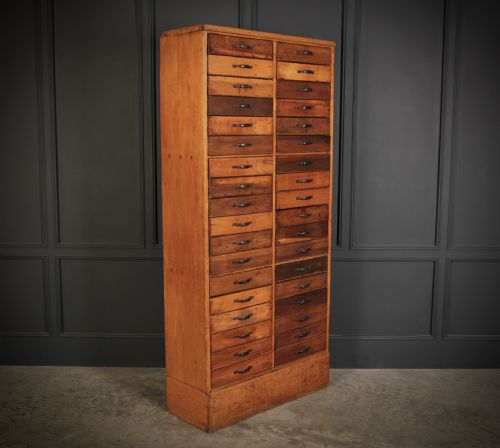


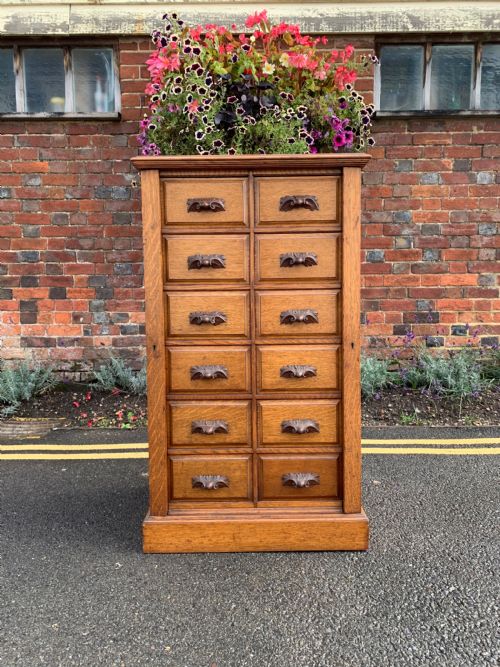
Victorian Double Chest Drawers
Victorian double chest drawers are substantial two-part storage pieces built to hold linens and garments, offering the traditional tall proportions that collectors prize.
Victorian Double Chest Drawers
Victorian double chest drawers comprise tall dual-section units, often encountered as linen presses, chests on chests, or double Wellington chests spanning the nineteenth century.
These forms combine large cabinet bodies with multiple internal drawers, reflecting the functional storage needs of nineteenth-century interiors.
The pieces listed on this page span variations from early Victorian mahogany designs to late nineteenth-century satin walnut pieces and fruitwood haberdashery chests.
How they were made
Makers utilised solid timbers alongside flame mahogany veneer, pine, fruitwood, satin walnut, and maple, paired with brass and metal hardware.
Construction methods involved stacking two separate carcases, visible in standard chest on chest and linen press designs, often incorporating glass elements or carved details.
Periods represented on this page span the 19th Century, Victorian era, Regency, 1890, 1920, and 1950.
What varies in quality
Quality shifts according to the choice of timber figure, such as flame mahogany veneer or satin walnut, and the crispness of any carved elements.
The refinement of the internal drawer construction and the integration of secondary woods like pine or fruitwood determine the standing of each piece.
The Victorian Double Chest Drawers Glossary
- Chest on Chest
- A tall storage unit formed by stacking one smaller chest directly on top of a larger base chest. This configuration maximises vertical storage capacity.
- Linen Press
- A tall cabinet featuring upper doors enclosing sliding trays or shelves above a lower bank of drawers. It was traditionally designed for storing folded textiles.
- Wellington Chest
- A tall, narrow chest of drawers secured by a vertical locking side flap held with a padlock. This design originated in the nineteenth century.
- Flame Mahogany Veneer
- A decorative wood slicing displaying a distinct flame-like grain pattern applied over a secondary timber carcase. It creates a striking visual surface.
- Satin Walnut
- A North American hardwood with a lustrous finish utilised for cabinetmaking during the later nineteenth century. It yields a warm golden tone.
Victorian Double Chest Drawers: Frequently Asked Questions
What is a double chest drawers?
A double chest drawers is a tall, two-section storage unit designed to hold linens and garments. These pieces typically separate into upper and lower carcases for easier transport.
The form includes traditional chest on chest designs and double Wellington chests. They provide substantial vertical storage capacity while occupying a compact floor footprint.
How do I date a Victorian chest?
Dating these pieces involves examining the timber selection, construction methods, and hardware styles. Early examples often utilise solid mahogany, whereas later Victorian pieces employ satin walnut or maple.
Secondary woods like pine can also indicate the period of construction. Comparing the piece to documented nineteenth-century cabinetmaking styles helps narrow the date range.
Where were these pieces used?
These tall storage items were primarily placed in bedrooms and dressing rooms of nineteenth-century homes. Their large capacity suited the storage of bulky linens and seasonal garments.
Selected variants, such as haberdashery chests or apothecary cabinets, served commercial or specialised domestic functions. Their robust proportions allowed them to withstand daily household use.
How do I care for mahogany?
Maintaining mahogany furniture requires keeping pieces away from direct sunlight and steady heat sources to prevent the wood from drying out. Regular dusting with a soft, dry cloth preserves the finish.
Applying occasional appropriate wax feeds the timber and enhances the natural grain. Avoid silicone-based polishes that can degrade antique surfaces over time.