



Victorian Double Albert Chain
A victorian double albert chain is a robust length of precious metal designed to secure a pocket watch while spanning a waistcoat.
Victorian Double Albert Chain
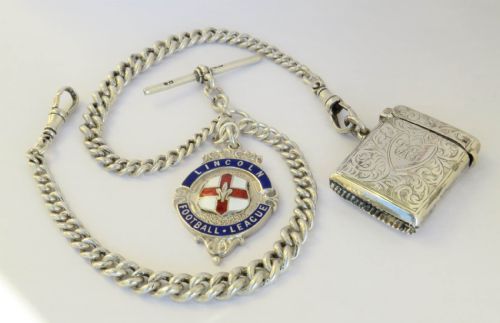
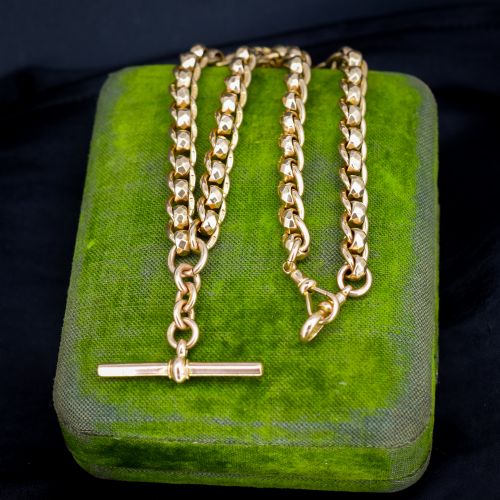
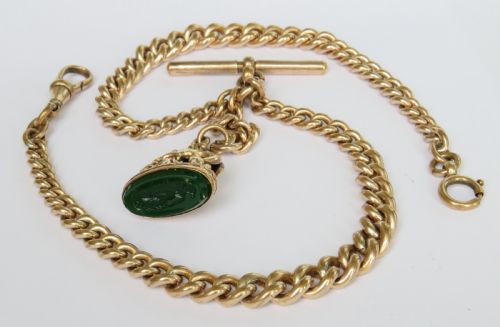
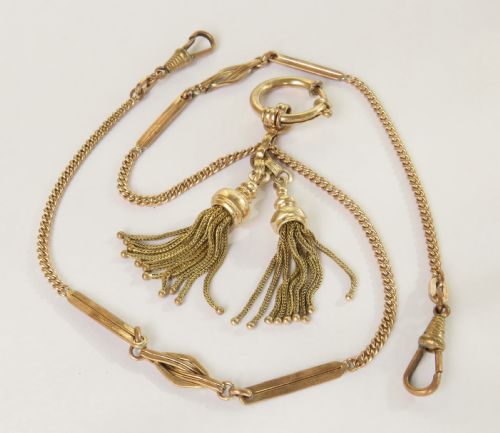
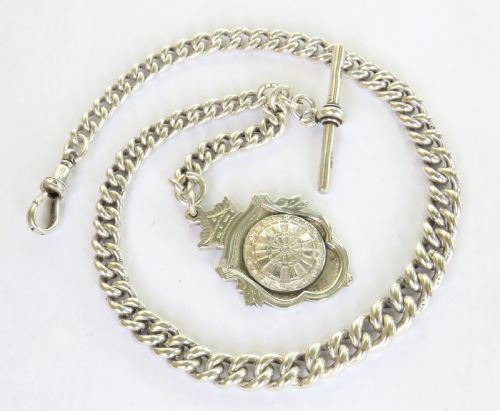
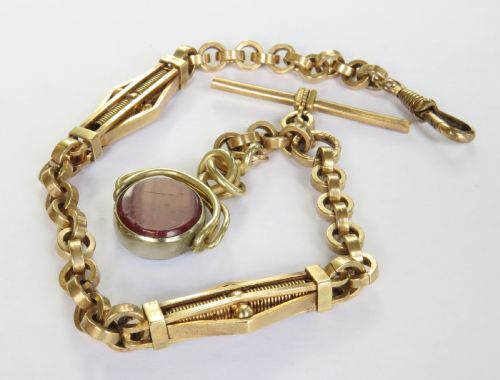
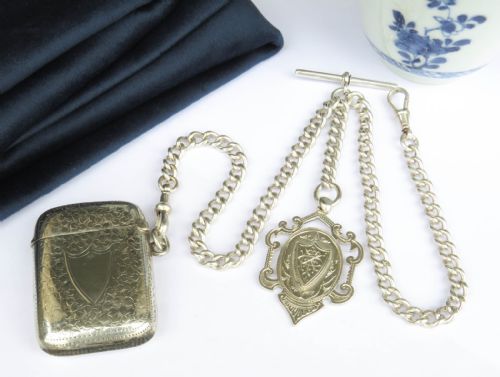
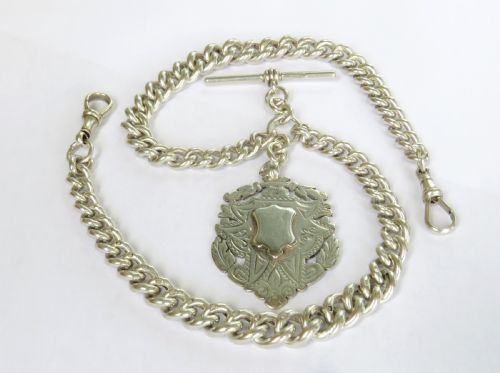
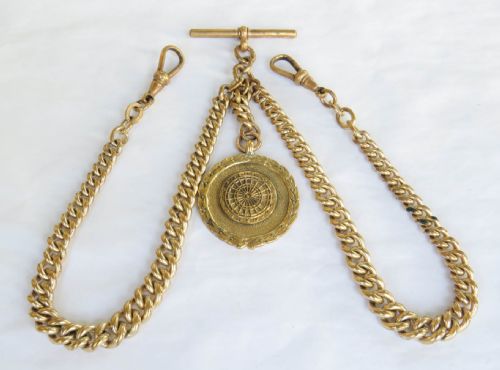
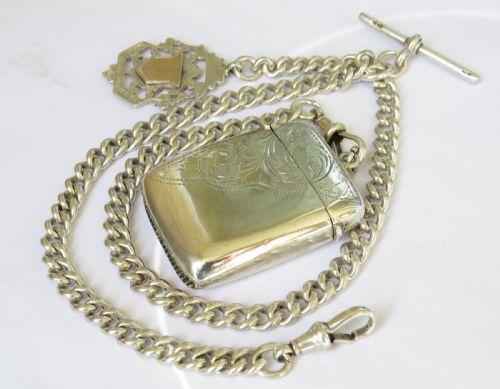
A victorian double albert chain forms a symmetrical drape across the front of a garment, anchored by a central T-bar that slips through a buttonhole. The dual strands extend to secure a timepiece in one pocket and often a sovereign case or vesta in another, though contemporary wearers frequently utilise them as substantial necklaces. The pieces seen span from the late nineteenth century into the Edwardian era, encompassing both solid gold and sterling silver iterations alongside gold-filled varieties.
Curb links and paperclip or trombone patterns dominate the construction, giving the strands considerable weight and presence. Many examples retain their original dog clips and swivel clasps at each end, allowing the chain to be configured in various ways. The integration of accessories such as silver vestas or fobs alongside the main chain remains a notable characteristic of these survivals.
How they were made
Goldsmiths and silversmiths constructed these chains from sterling silver, nine-carat and eighteen-carat gold, as well as rolled gold and gold-filled metals. Individual links were formed, soldered, and assembled by hand to create uniform curb, fetter, or trombone patterns capable of sustaining daily use.
Functional elements like the T-bar, swivel clasps, and dog clips were cast or forged separately and attached securely to the main strands. Enamel details occasionally augmented the metalwork, adding colour and contrast to the vestas or fobs accompanying the chains.
Victorian Double Albert Chain Retail Price Guide 2026
Typical asking prices for victorian double albert chain among the pieces listed under this phrase on Sellingantiques today, from the lower quarter to the upper quarter. They describe what is for sale here now, not the wider market.
Materials span sterling silver, nine-carat rose and yellow gold, eighteen-carat gold, rolled gold, and steel, alongside enamel detailing.
What varies in quality
The choice of material sets the foundation, with solid eighteen-carat and nine-carat gold examples sitting at the upper end compared to rolled gold or gold-filled alternatives. Weight and gauge dictate the substantial feel of the drape, separating heavier, heavy-duty silver and solid gold pieces from lighter iterations.
The preservation of original components, including matching dog clips, swivel clasps, and the T-bar, influences the integrity of the piece. Craftsmanship in the link formation and the clarity of any hallmarks further distinguish standard production from exceptional examples.
The Victorian Double Albert Chain Glossary
- T-bar
- The crossbar attached to the centre of an albert chain that slips through a waistcoat buttonhole to anchor the piece.
- Dog clip
- A spring-loaded snap hook used to fasten the chain to a pocket watch or fob.
- Vesta case
- A small box designed to hold matches, frequently suspended from a pocket watch chain.
- Curb link
- A type of chain link twisted so that it lies flat when assembled.
- Fetter link
- A pattern alternating long and short links within the chain construction.
Victorian Double Albert Chain: Frequently Asked Questions
How do you wear a double albert chain today?
The central T-bar inserts through a buttonhole, while the two strands drape across the front of a waistcoat or jacket. Alternatively, the chain can be unclasped and worn around the neck as a choker or collar.
Original dog clips at either end make it straightforward to attach pendants or secure the chain back onto itself for neckwear.
How can you tell silver from rolled gold pieces?
Sterling silver examples display specific hallmarks indicating the silver standard, assay office, and date of manufacture. Rolled gold and gold-filled pieces consist of a base metal bonded with a thin layer of gold.
Examination under magnification often reveals the underlying metal where wear occurs on gold-filled or rolled gold items.
What metals were used for these chains?
Makers utilised sterling silver, nine-carat yellow gold, nine-carat rose gold, and eighteen-carat gold for solid metal pieces. Rolled gold and steel also appear within the available selections.
Enamel accents were occasionally incorporated into the accompanying fobs or vestas.