



Victorian Dog Portrait Painting
A victorian dog portrait painting captures the distinct personality and loyal stance of a cherished animal through nineteenth-century brushwork.
Victorian Dog Portrait Painting
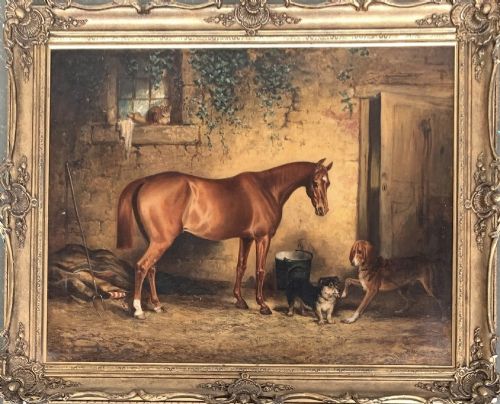
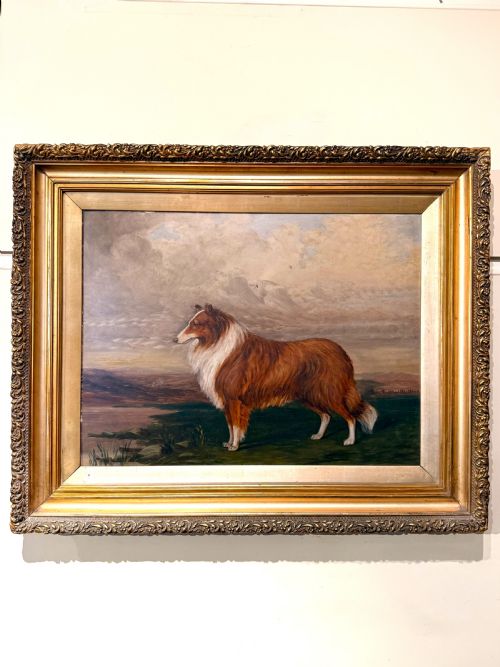
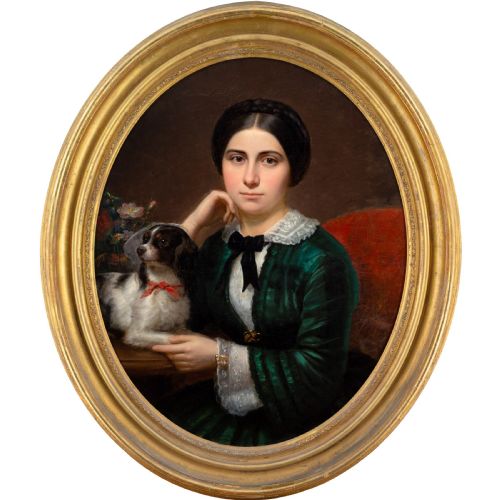
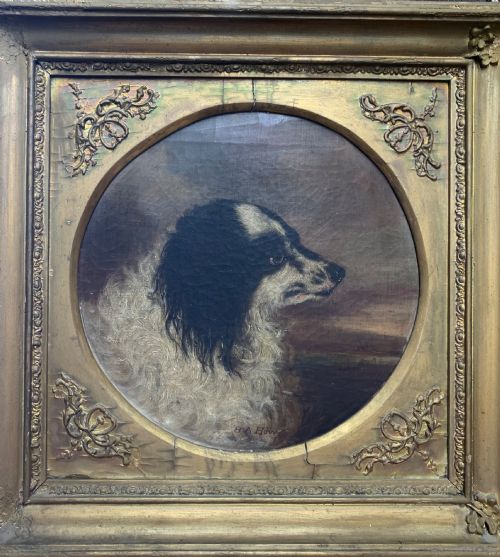
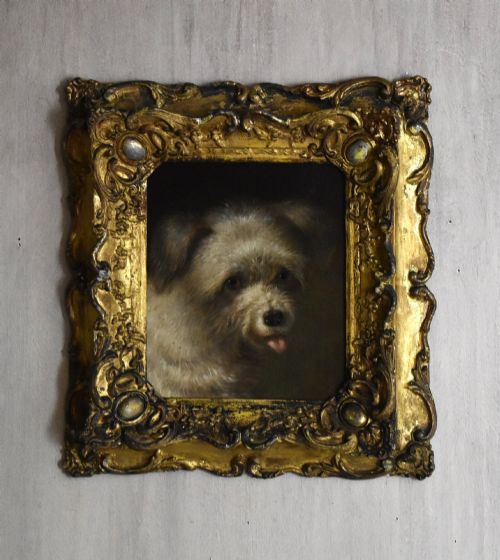
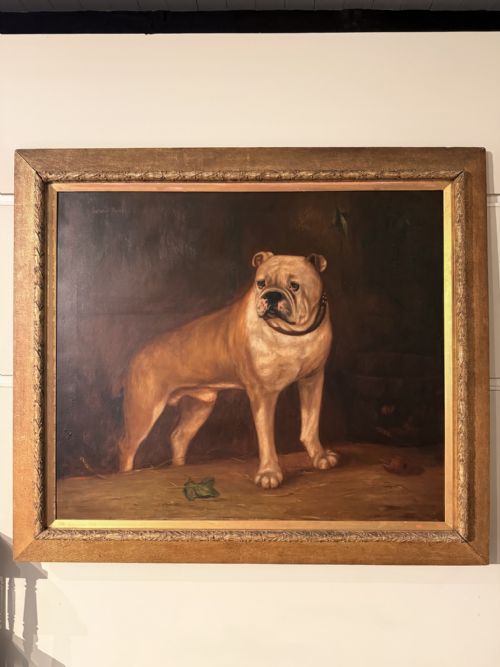
A victorian dog portrait painting represents a significant branch of nineteenth-century animal art, focusing on individual hounds, gun dogs, and domestic companions. These works range from naive folk art depictions to sophisticated academic canvases originating from British and French studios.
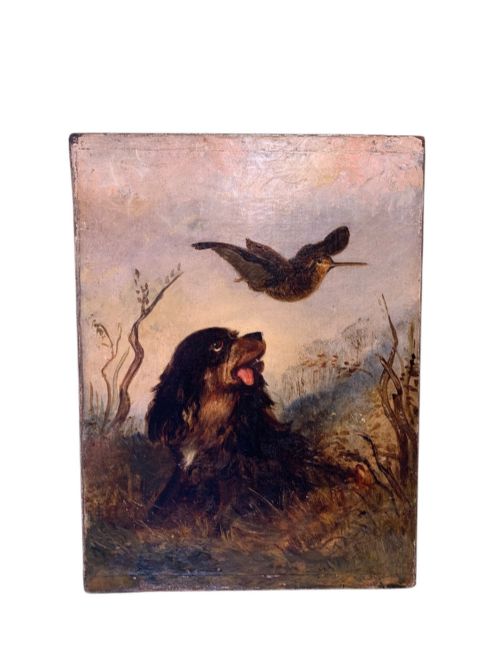
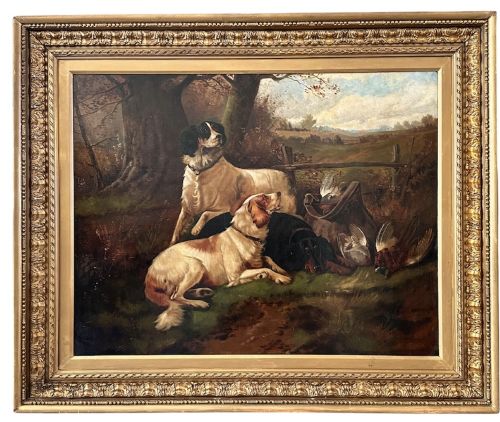
The most frequent form encountered on this page is the oil painting on canvas or board, often housed in its original giltwood frame. Subjects stretch from solitary collies and spaniels in open landscapes to detailed pack scenes associated with the hunt.
Materials and Construction
Artists of this era typically applied oil paint onto stretched canvas or wooden boards, frequently building up texture with layered brushstrokes. Preparatory sketches in charcoal or watercolour occasionally preceded the final oil composition.
Finished works were commonly set within heavy gilt or gold leaf frames that complemented the dark, rich palettes favoured by nineteenth-century animal painters.
Several dogs gaze out permanently accompanied by the day's bag of woodcock, a rat trap, or a very patient goldfish.
Distinctions in Execution
Quality separates through the anatomical accuracy of the animal, the rendering of light within the landscape, and the fluidity of the brushwork. Master painters capture the texture of a coat and the alert expression of a hound with direct observation.
Lesser examples display stiffer postures and formulaic backgrounds, whereas superior pieces convey genuine character and atmospheric depth in both animal and setting.
Henry Barraud·Valentine T Garland·Martin Theodore Ward·John Sargent Noble·C R Breytle·John Emms·John Frederick Herring Senior·Arthur Wardle·William Barraud·Sir Edwin Landseer·George E Sharpe·Colin Graeme Roe·John Trivett Nettleship·Fannie Moody·Edwin Frederic Holt·John Alfred Wheeler·Robert Cleminson·Jules Chardigny
The Victorian Dog Portrait Painting Glossary
- Oil on canvas
- Pigments bound in drying oil applied to a woven fabric support stretched across a wooden frame. This method allows for subtle blending and rich tonal depth.
- Giltwood
- Timber carved and coated with gold leaf or metallic powder to create a bright decorative surface. These frames frequently display intricate moulded ornamentation.
- Folk art
- Creative production created by self-taught or provincial makers outside academic traditions. These pieces prioritise expressive directness over strict anatomical proportion.
- Sporting art
- Visual representation depicting field sports, hunting dogs, horses, and rural pursuits. This genre held wide popularity among nineteenth-century landowners.
Victorian Dog Portrait Painting: Frequently Asked Questions
What dog breeds appear most often in these paintings?
Spaniels, terriers, collies, and various hunting hounds dominate the visual record of this period. These animals reflected the working life and domestic preferences of nineteenth-century owners.
Artists frequently depicted specific gun dogs and favourite pets belonging to nobility or country families, often documenting individual animals by name.
How do I identify a nineteenth-century frame?
Nineteenth-century framing typically involves heavy moulded timber finished with gesso and gold leaf or gilt decoration. These surrounds often show age-related craquelure and oxidation.
Original frames frequently bear maker stamps or labels on the reverse wooden stretcher bars or backing boards.
Where were these portraits displayed originally?
These works hung primarily in country houses, estate libraries, and sporting lodges alongside hunting trophies and family portraits. They celebrated rural pursuits and esteemed working animals.
Today, they suit traditional studies, living rooms, and hallways, pairing well with antique wood furniture.
How do academic works differ from naive pieces?
Academic paintings demonstrate formal training through precise animal anatomy, layered oil glazes, and accurate perspective in the landscape. Painters such as Landseer set the standard for realistic animal portraiture.
Naive works, by contrast, rely on flat planes and simpler outlines, offering a charming directness without formal academic perspective.