


Victorian Dining Table Glass
Victorian dining table glass brings together heavy cut crystal, cranberry hues and silver mounts to set a proper nineteenth-century dining spread.
Victorian Dining Table Glass
Victorian dining table glass spans practical vessels and decorative centrepieces used across nineteenth-century dining rooms. When searching for victorian dining table glass, buyers encounter diverse forms ranging from large table epergnes to matched sets of finger bowls and condiment pots.
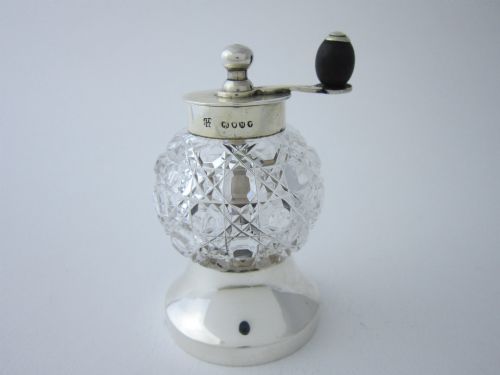
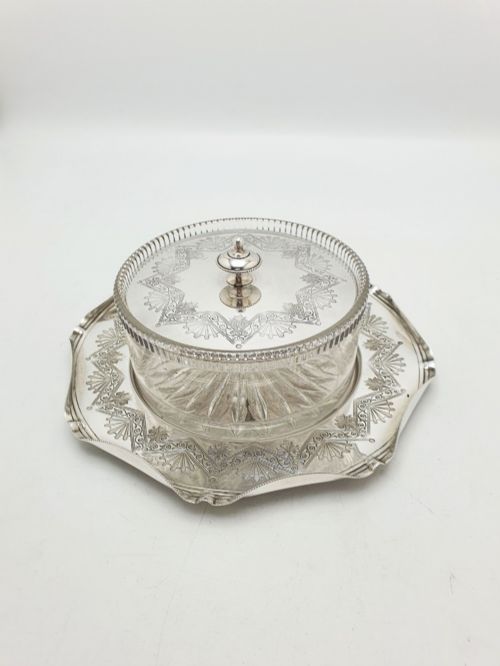
The selections here lean heavily toward pieces combining clear or coloured glass with sterling silver and silver-plated mounts. Cruet sets, mustard pots, and butter dishes dominate the utilitarian side, whilst multi-vial epergnes and centrepieces provide the grand ornamental focal points.
Origins trace across the Victorian and Edwardian periods, utilising English craftsmanship from the middle to the end of the nineteenth century. These objects served functional roles during formal meals, holding condiments, water or floral displays.
Materials and construction
Glass production relied on blowing, pressing and deep wheel-cutting to achieve facets, frosted finishes and engraved patterns. Coloured examples incorporated minerals into the molten batch to secure rich cranberry and cobalt hues.
Metal components brought structural support and ornamentation through sterling silver and silver-plated bases, collars and mounts. Silversmiths cast, stamped and chased these elements to secure glass liners, shakers and bottles securely within frames.
Object forms span cruet sets, finger bowls, epergnes, mustard pots, and table centrepieces from the nineteenth century.
Measures of quality
Quality rests in the crispness of the glass cutting, the depth of wheel engraving and the purity of the metal mounts. Thick, heavy crystal with sharp facets and unblemished surfaces sits well above lighter, pressed alternatives.
Maker attribution and the completeness of matched sets separate standard items from superior examples. Original glass liners matching silver mustard pots or cruet frames retain higher integrity than replacement components.
Walker And Hall·Charles Stuart Harris·Wade Wingfield Wilkins·Sampson Mordan
The Victorian Dining Table Glass Glossary
- Epergne
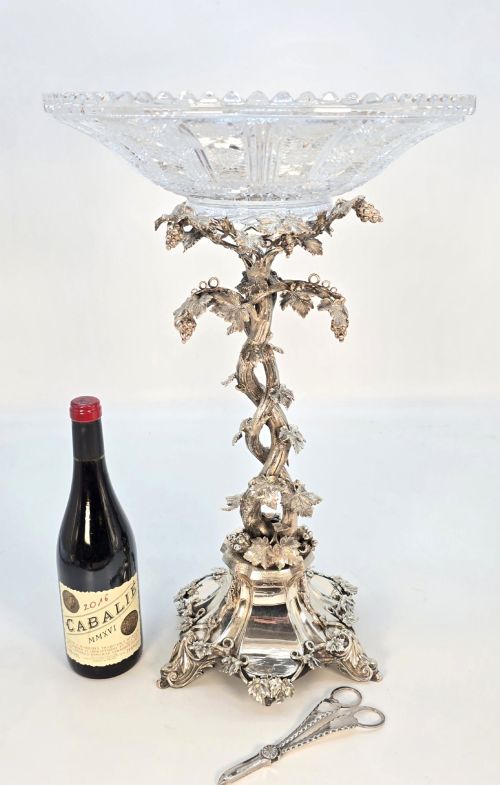
- A large table centrepiece featuring a central trumpet vase surrounded by smaller hanging baskets or trumpets. These pieces held flowers or sweetmeats during formal nineteenth-century dining.
- Finger bowl
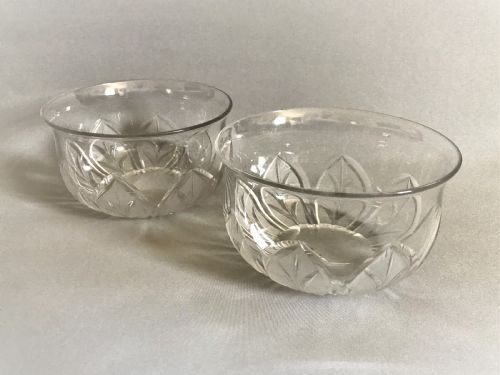
- A small glass bowl placed before a diner between courses for rinsing fingers. They appear in matching sets, sometimes decorated with etched geometric or Greek key patterns.
- Cruet set
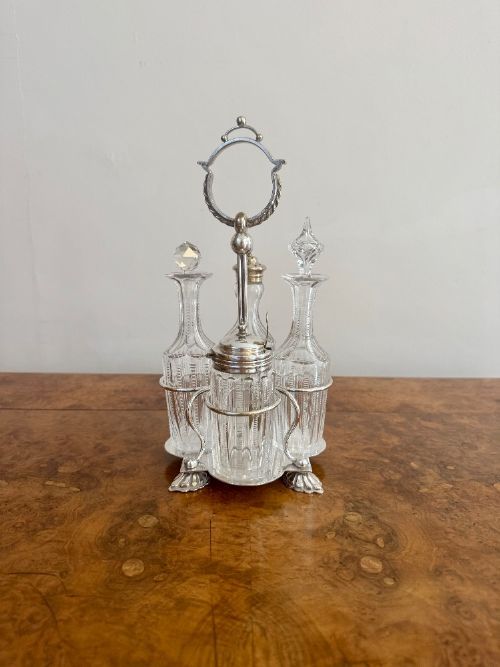
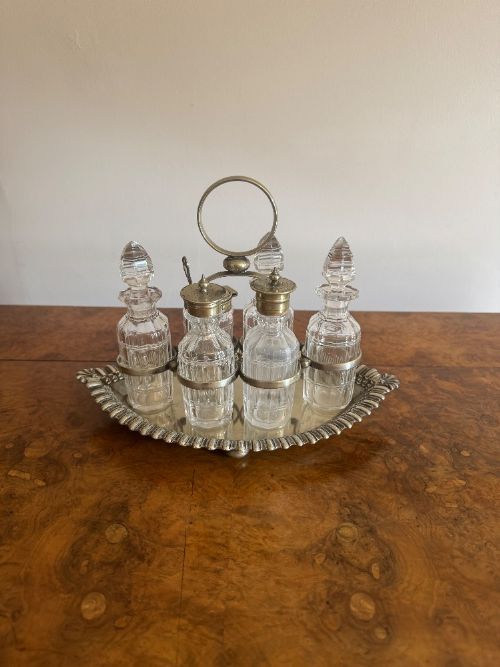
- A matched collection of glass bottles and jars held within a silver-plated or metal stand. They delivered condiments like vinegar, oil, mustard and pepper directly to the dining table.
- Silver plate
- A manufacturing technique applying a thin layer of silver over a base metal foundation. It allowed makers to produce elaborate frames for glass vessels at a lower cost than solid sterling silver.
Victorian Dining Table Glass: Frequently Asked Questions
How were epergnes used on tables?
Epergnes sat at the direct centre of the dining table as ornamental centrepieces during formal meals. Hosts filled the trumpets and baskets with fresh flowers or small sweetmeats.
Their height allowed guests to converse underneath the branches without obstructing vision across the table surface.
Are finger bowls always found in sets?
Finger bowls frequently survived in matched groups of four or more, though single pieces do appear. Sets usually share identical glass colours, etching styles and rim dimensions.
Complete sets held higher status for formal dining where guests received uniform table settings.
What is cranberry glass?
Cranberry glass is a pinkish-red decorative material created by adding gold chloride to the molten glass batch. It gained popularity during the Victorian era for ornamental tablewares and epergnes.
The intensity of the colour varied according to the precise gold content and the temperature of the furnace.
How do I care for these glass pieces?
These items require gentle hand washing in lukewarm water with mild soap. Harsh detergents and modern dishwashers damage antique glass surfaces and erode silver-plated mounts.
Silver components need occasional polishing with a soft cloth to prevent tarnishing without touching the surrounding glass.