


Victorian Dining Room Storage
Victorian dining room storage brings together robust sideboards, carved chiffoniers and burr walnut credenzas built to anchor nineteenth-century interiors.
Victorian Dining Room Storage
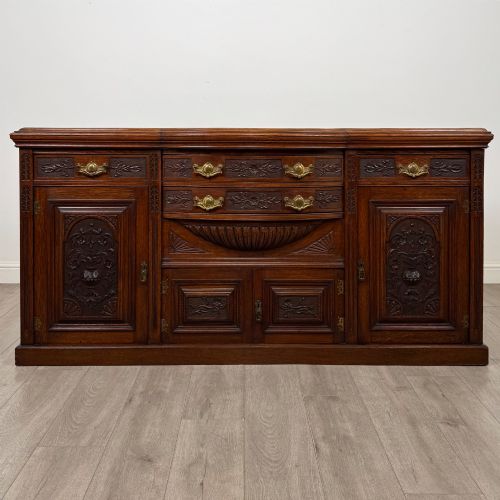
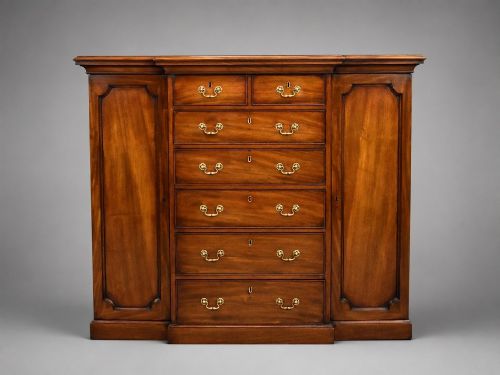
Victorian dining room storage spans substantial mahogany sideboards, compact chiffoniers, credenzas and side cabinets designed for domestic utility and display. Sideboards dominate the selection in three-door and four-door formats, often accompanied by smaller serving pieces and buffets.
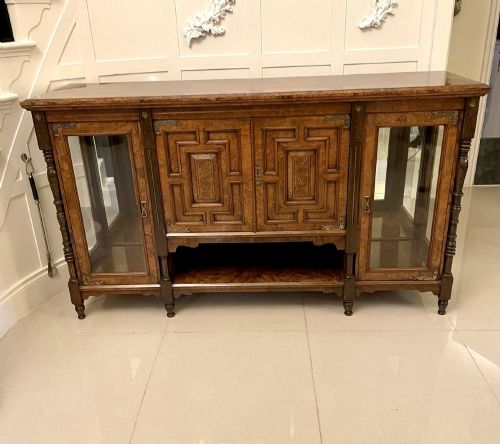
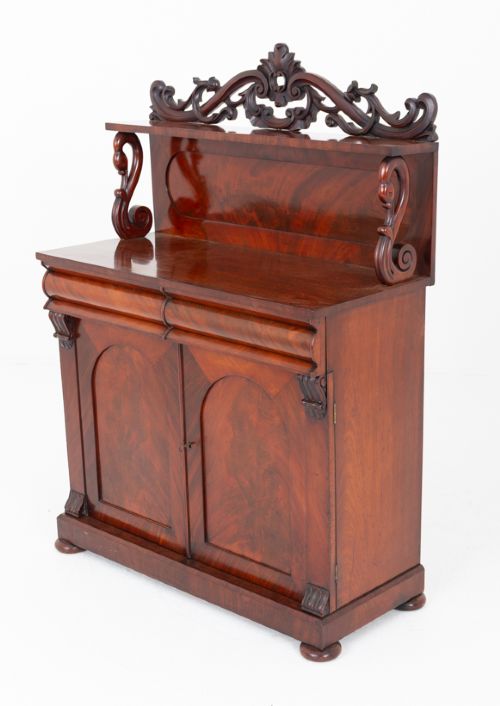
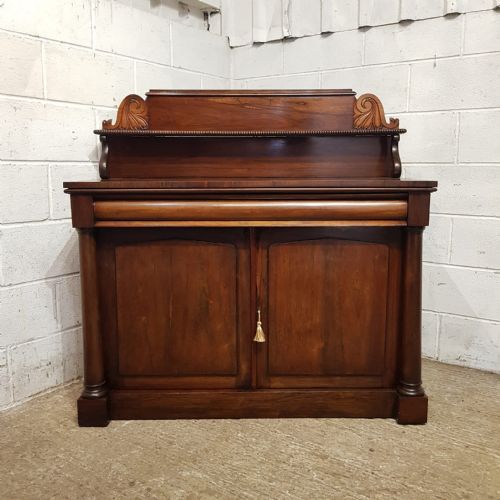
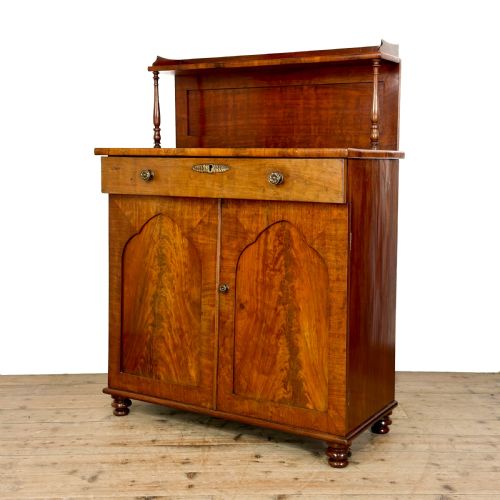
Chiffoniers appear frequently in mahogany and rosewood, offering lower cupboard space paired with raised shelves. Credenzas and side cabinets introduce burr walnut, amboyna inlay and glass fronts into the dining space, shifting the function toward presentation.
Materials and construction
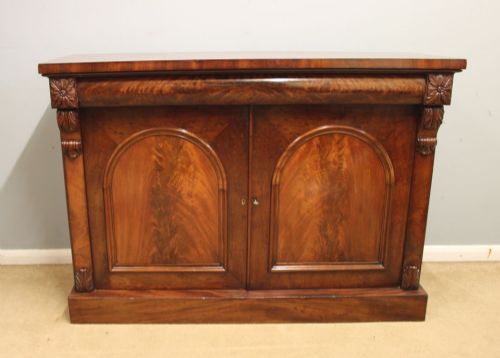
Makers relied heavily on solid mahogany, flame mahogany veneer and varied oaks, complemented by rich rosewood, walnut and burr walnut. Brass fittings and glass panels appear across credenzas and cabinets to punctuate the dark timber surfaces.
Carving, inlay and polished veneer finishes define the exterior work, whether executed in robust oak or figured mahogany. Construction prioritises heavy timber framing to support the generous proportions demanded by the period dining room.
Listings feature mahogany, oak, rosewood and walnut, alongside specialist timbers like pollard oak and burr walnut.
Distinctions in craftsmanship
The standard of timber selection marks the primary division between pieces, particularly in the use of figured mahogany, pollard oak and burr walnut veneers. Rich grain patterns and deliberate book-matching elevate the visual weight of superior sideboards and credenzas.
The crispness of carved detail and the integration of specialised inlays differentiate standard workshop output from pieces bearing recognised maker stamps. Cabinetwork precision in doors, drawers and internal fittings completes the hierarchy.
Maple and Co·Edwards and Roberts·Howard and Sons
The Victorian Dining Room Storage Glossary
- Chiffonier
- A compact sideboard featuring a lower enclosed cupboard and an upper tier with one or more shelves. This form emerged as a practical alternative to larger dining room pieces.
- Credenza
- A low cabinet, frequently glazed or inlaid with decorative timbers, used for display and storage in formal reception rooms. The form often incorporates curved ends and amboyna details.
- Buffet
- A sideboard or serving table designed for presenting food and storing dining utensils. These pieces range from simple mahogany servers to heavily carved oak variants.
- Flame mahogany veneer
- A sheet of timber sliced from the fork of a mahogany tree to produce a flickering, flame-like grain pattern. Cabinetmakers applied this to drawer fronts and door panels for dramatic effect.
- Burr walnut
- A prized timber harvested from walnut tree growths, yielding a swirling, knotted grain. It appears on high-status Victorian credenzas and sideboards.
Victorian Dining Room Storage: Frequently Asked Questions
What is a Victorian chiffonier?
A chiffonier is a low sideboard equipped with enclosed lower cupboards and an upper shelf structure. These pieces provided convenient storage for tableware while keeping everyday items close at hand.
They served smaller dining rooms or parlours where a full-sized sideboard proved too imposing. The upper tier allowed for the display of ceramics or glassware.
How do I identify burr walnut furniture?
Burr walnut is instantly recognisable by its dense, swirling knot patterns and rich brown tones. Cabinetmakers utilised these decorative veneers on prominent surfaces like cabinet doors and drawer fronts.
This timber appeared primarily on mid-Victorian pieces intended for formal reception spaces. It contrasts sharply with the straighter grain of standard walnut or mahogany.
Where were sideboards placed?
Sideboards stood against the main dining room wall, acting as both a serving station and storage unit during meals. Servants placed dishes and silverware upon them before service.
Their substantial proportions anchored the room visually. They often matched dining tables and chairs to create a unified interior scheme.