


Brown Wood Sarcophagus
These brown wood sarcophagus pieces are finely crafted caddies and wine coolers built to hold tea or bottles with formal elegance.
Brown Wood Sarcophagus
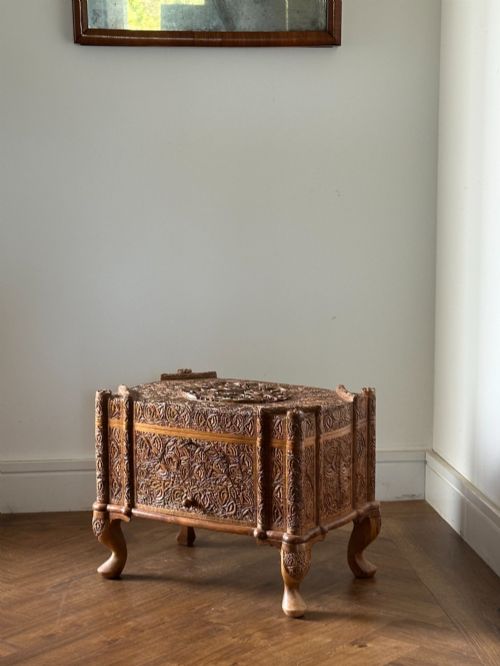
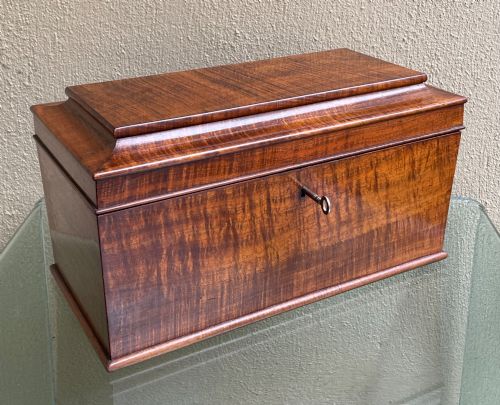
When you search for a brown wood sarcophagus, you encounter a distinct form of antique box or cooler modelled on classical lines. These pieces typically take the shape of a sarcophagus, featuring a tapering or stepped body lifted on feet.
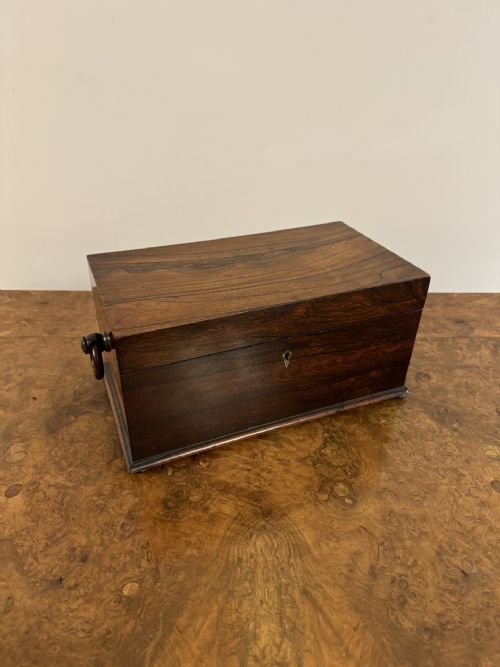
The versions most commonly met on this page belong to the Regency and nineteenth-century periods. They manifest primarily as tea caddies, cellarettes, wine coolers, and jewellery boxes constructed from dense tropical timbers.
Makers shaped these vessels to serve refined domestic rituals in the dining room or drawing room. They combine architectural presence with functional storage for leaves, liquids, or trinkets.
How they were made
The foundational construction relies on substantial hardwoods such as mahogany and rosewood, chosen for stability and grain. Cabinetmakers frequently applied veneers of burr yew, burr elm, or burr thorn to external surfaces to create dramatic, figured patterns.
Finishing touches involved cast brass mounts, handles, and paw feet secured to the timber frame. Interior fitments often included glass bowls, compartments, or bone details tailored to the specific function of the vessel.
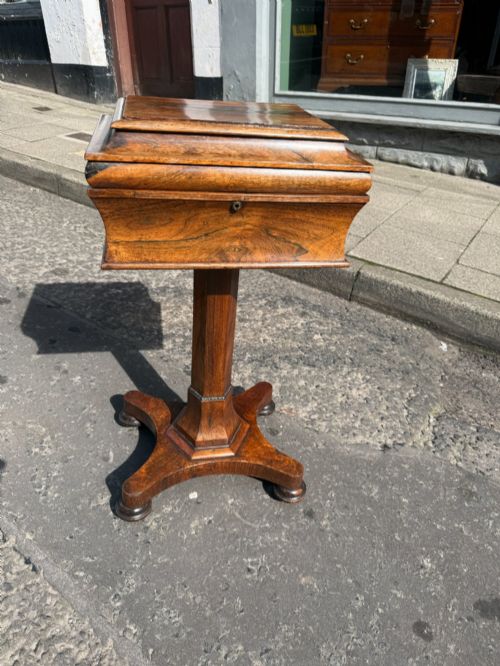
Object types include tea caddies, cellarettes, wine coolers, teapoys, and jewellery caskets.
What varies in quality
The grade of timber and the choice of veneer dictate the visual impact of the piece. Highly figured burr woods and rich rosewood display superior selection by the original cabinetmaker.
Refinement in carving and the crispness of brass mounts separate standard items from ambitious commissions. Attention to internal fittings and the retention of original components complete the hierarchy.
Maples & Co
The Brown Wood Sarcophagus Glossary
- Sarcophagus
- A container form featuring a sloping or stepped lid and sides that taper toward the base. This classical shape mimics ancient stone coffins adapted for domestic furniture.
- Tea caddy
- A box designed for storing loose tea leaves, often fitted with internal compartments and mixing bowls. These vessels were kept locked to protect expensive contents.
- Cellarette
- A lockable container used for storing wine bottles near the dining table. They frequently incorporate lead linings or sturdy stands to manage heavy glass bottles.
- Teapoy
- A small stand or table supporting a tea caddy, positioned in the drawing room. They lift the tea storage off the floor to a convenient working height.
- Burr wood
- A growth deformity on a tree that produces intricate, swirling grain patterns when sliced into veneer. Cabinetmakers prize these sections for decorative panels.
Brown Wood Sarcophagus: Frequently Asked Questions
What is a brown wood sarcophagus?
A brown wood sarcophagus refers to antique boxes, tea caddies, and wine coolers shaped like classical sarcophagi. They date predominantly from the Georgian, Regency, and Victorian eras.
Craftsmen built them from timbers like mahogany, rosewood, and walnut, often accenting them with brass feet or handles.
How were cellarettes used?
Cellarettes held bottles of wine and spirits close to the dining table during formal meals. Their heavy construction and lockable lids kept valuable vintages secure.
Many examples feature internal divisions or fitted metal linings to accommodate bottles and ice.
How do I date a tea caddy?
Dating relies on timber selection, construction methods, and hardware styles. Regency examples often display rosewood veneers, brass paw feet, and neat internal compartments.
Earlier pieces from the eighteenth century utilise solid mahogany or burr thorn wood with simpler joinery and distinct proportions.
Can I use these boxes today?
These pieces function well for storing modern items such as jewellery, documents, or small keepsakes. Their sturdy construction suits daily placement on desks or sideboards.
Care involves protecting polished wood surfaces from moisture and direct sunlight.