
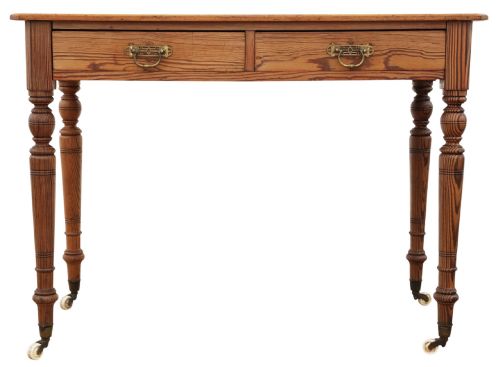
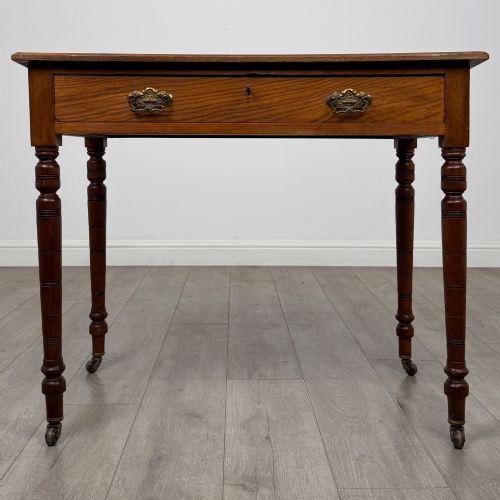
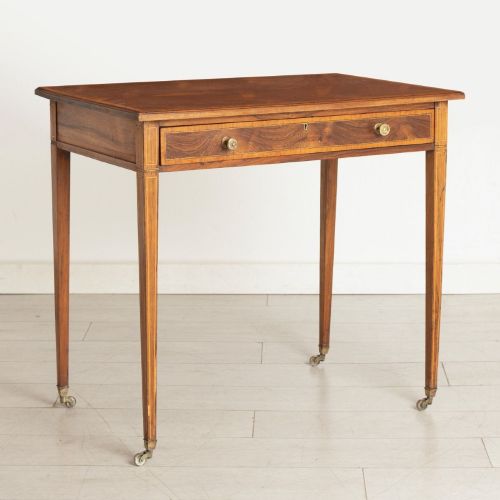
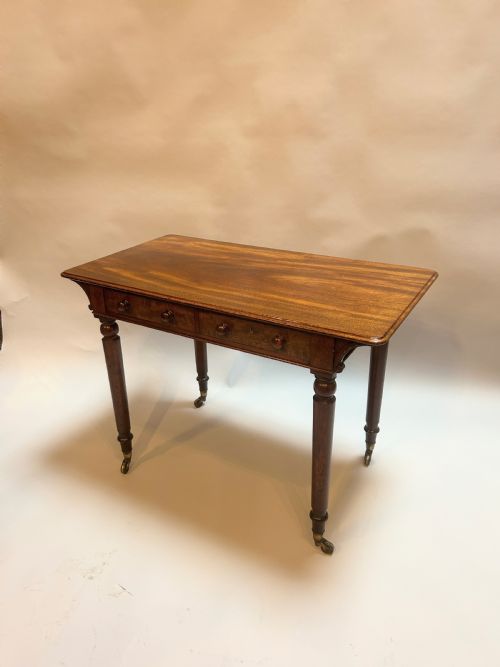

Victorian Desk on Castors
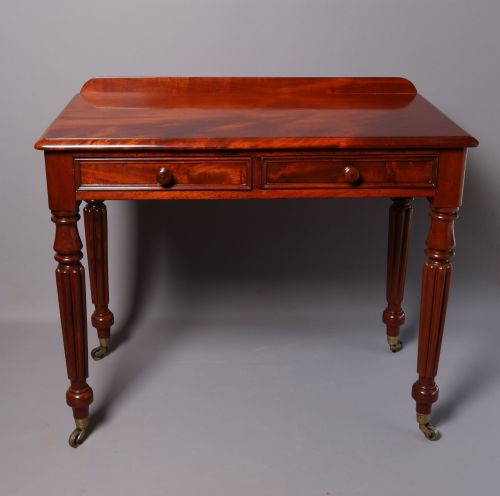
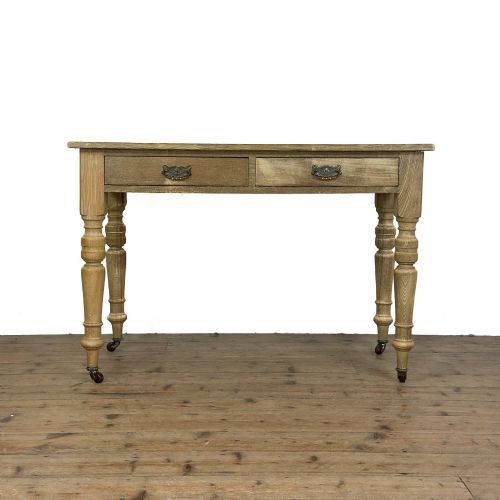
A victorian desk on castors offers mobility alongside solid timber construction, making it a practical writing surface for a study or library.
Victorian Desk on Castors
A victorian desk on castors represents nineteenth-century practicality, combining a sturdy writing surface with the convenience of small wheels for repositioning around a room. The items gathered here encompass writing tables, partners desks, and davenports originating across the nineteenth century.
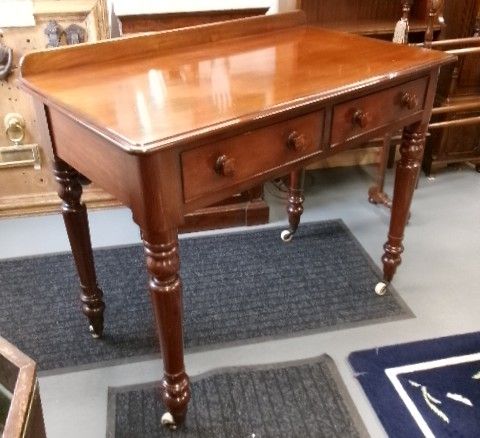
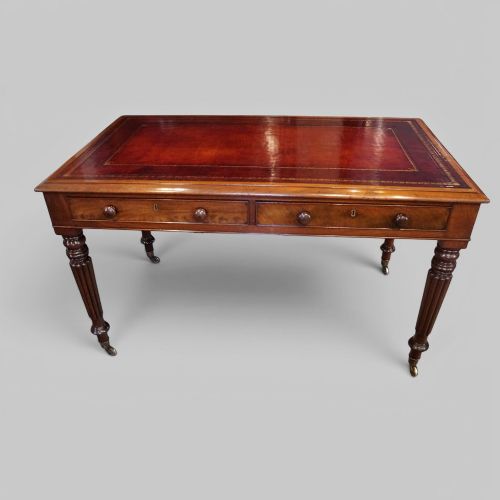
Mahogany and oak dominate the selection, often fitted with twin drawers and leather inserts. These pieces were built for serious correspondence and study, reflecting the functional demands of Victorian workspaces.
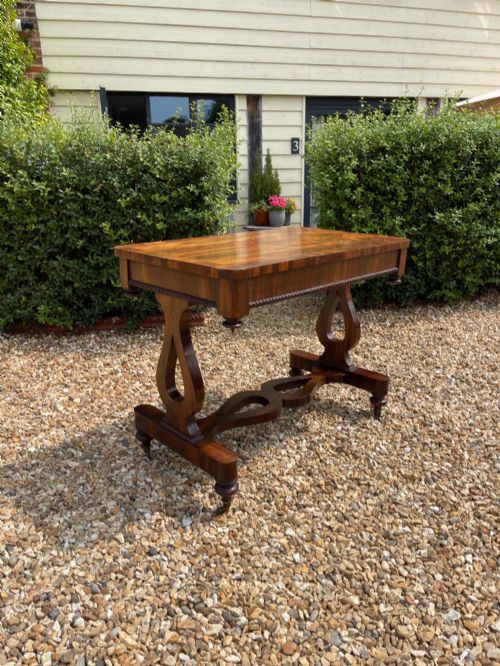
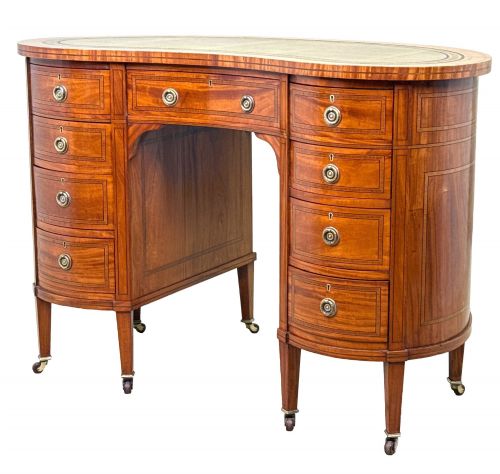
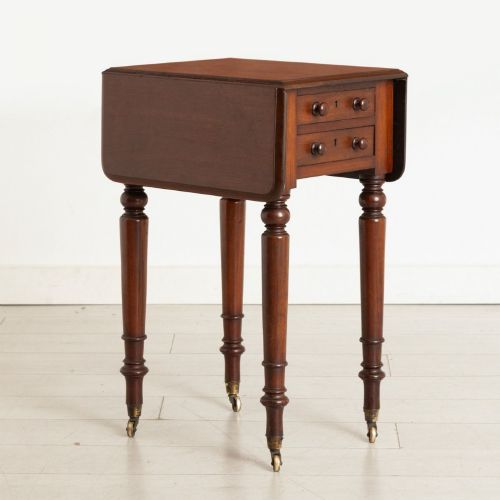
Alongside standard writing tables, the selection includes kidney-shaped desks in satinwood and walnut, plus drop-leaf and pembroke forms. Makers varied from provincial cabinet makers to notable firms, yet all share the characteristic undercarriage wheels.
Materials and Construction
Construction relies heavily on dense timbers such as mahogany, oak, walnut, and rosewood, selected for structural stability. Cabinet makers utilised solid woods and choice veneers, sometimes enhanced with inlaid details or satinwood borders.
Writing surfaces frequently incorporate inset leather panels, whilst the mobility relies on metal fittings such as brass castors attached to turned or tapering legs. Drawers employ traditional jointing methods to withstand daily use.
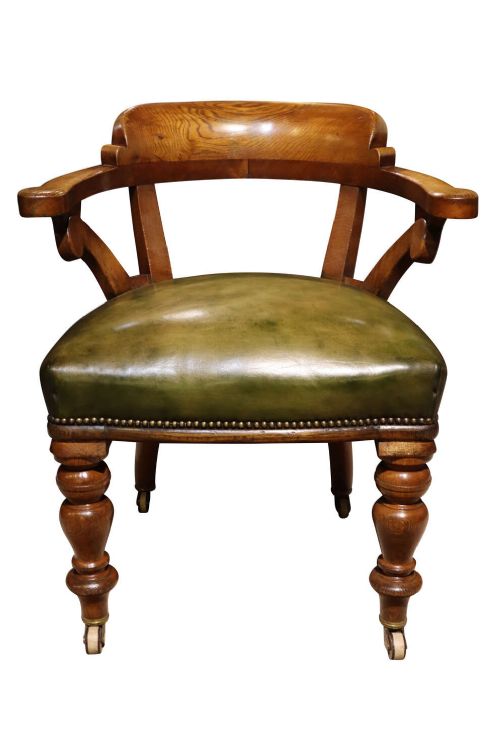
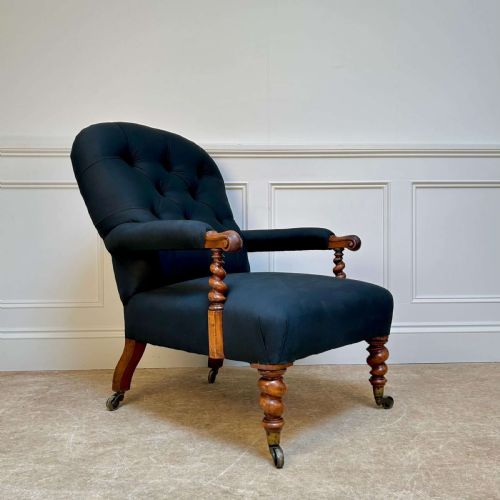
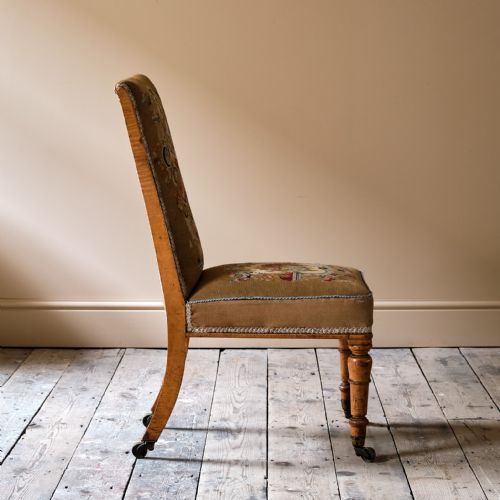
Some chairs roll in with fresh geometric upholstery, ready to test whether Victorian comfort beats modern productivity.
Distinctions in Quality
The choice of timber dictates the initial tier, with figured walnut, satinwood, and Cuban mahogany marking out superior library and writing tables above standard pine or utility pieces. Secondary woods and internal drawer construction reveal the care taken by the cabinet maker.
Fine craftsmanship shows in the crispness of reeded legs, the quality of brass hardware on the castors, and the handling of inlaid veneers. Maker attribution to known firms like Gillows or W. Williamson & Sons adds another layer of distinction.
Gillows·Hindley & Sons·J A Mein Edinburgh Cabinet Maker·W Williamson & Sons·Carters Of London·Howard & Son's
The Victorian Desk on Castors Glossary
- Castor
- A small wheel mounted on a swivel assembly attached to the base of furniture legs for ease of movement. They appear frequently in brass on nineteenth-century tables.
- Partners Desk
- A large double-sided writing table designed for two people to work opposite one another. These typically feature drawers on both sides.
- Davenport Desk
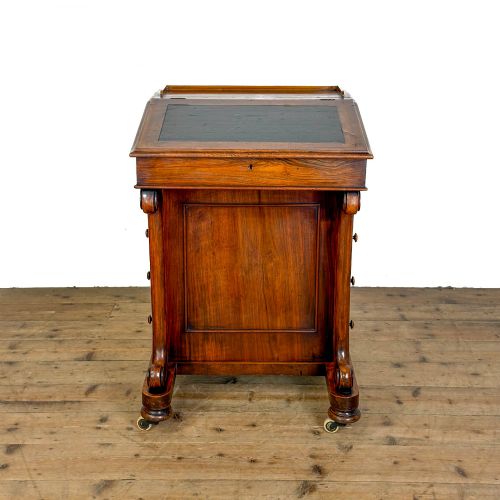
- A compact Victorian writing desk featuring a sloping lid above a pedestal of drawers. The design often includes a side-opening drawer arrangement.
- Pembroke Table
- A drop-leaf table with hinged flaps on either side. They often double as small writing or work tables.
Victorian Desk on Castors: Frequently Asked Questions
What is a victorian desk on castors?
A victorian desk on castors is a nineteenth-century writing table fitted with small wheels on the feet. This addition allowed the heavy timber furniture to be repositioned easily across a carpeted library or study.
These pieces range from simple twin-drawer writing tables in mahogany or oak to grand partners desks and compact davenports. The underlying mobility made them versatile for changing light and room layouts.
Were these desks used in offices?
Whilst some served in commercial or professional offices, many were built for private homes, libraries, and studies. Wealthy households utilised partners desks for estate management and correspondence.
Smaller side tables and davenports were frequently placed in bedrooms or drawing rooms for private letter writing, reflecting the domestic habits of the period.
How should I care for the leather top?
The leather writing surface benefits from gentle cleaning with a slightly damp cloth, avoiding harsh chemical cleaners. Leather dressings can maintain suppleness over time.
Keep the timber surround polished with traditional beeswax to protect the grain. Ensuring the room maintains a stable humidity prevents the wood and leather from drying out.