


Victorian Decorative Majolica
Victorian decorative majolica brings brightly coloured lead-glazed earthenware to life through spirited naturalistic forms and striking revivalist designs.
Victorian Decorative Majolica
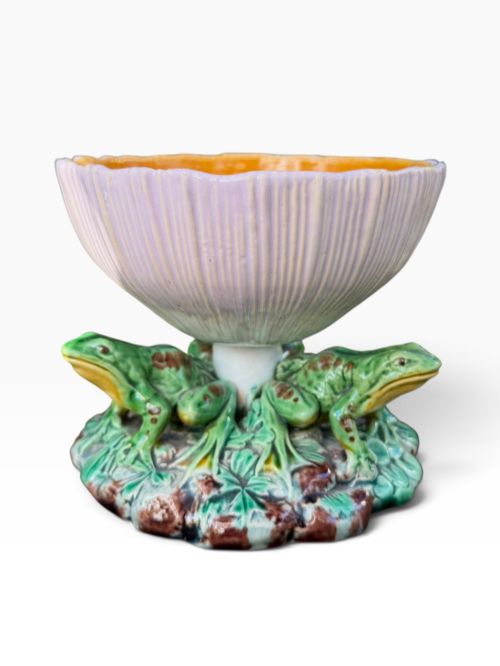
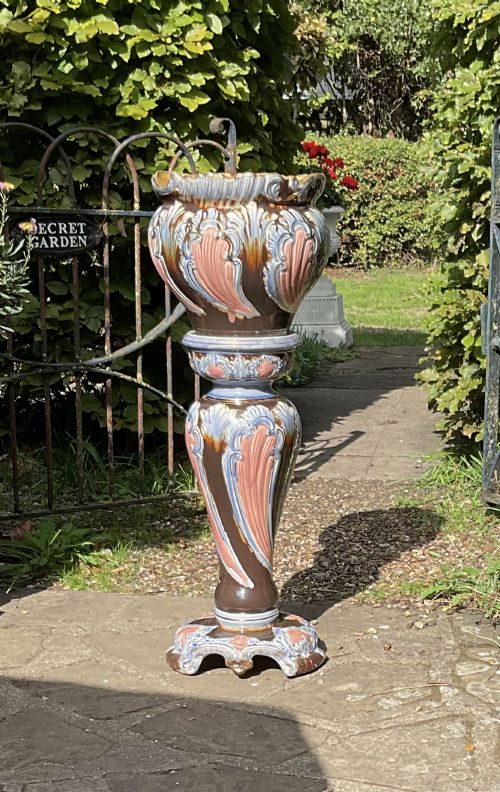
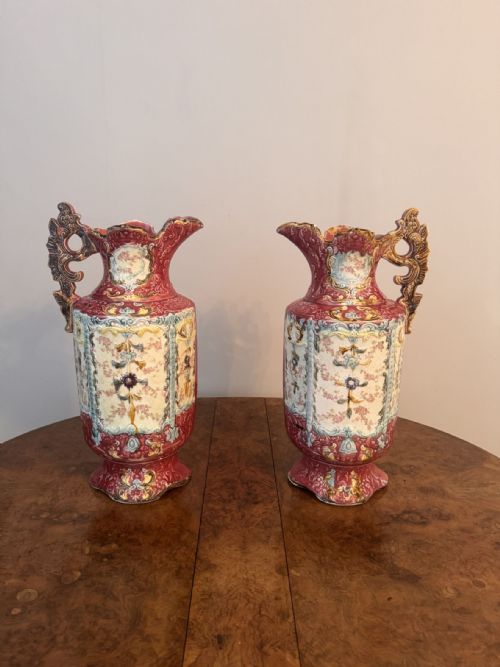
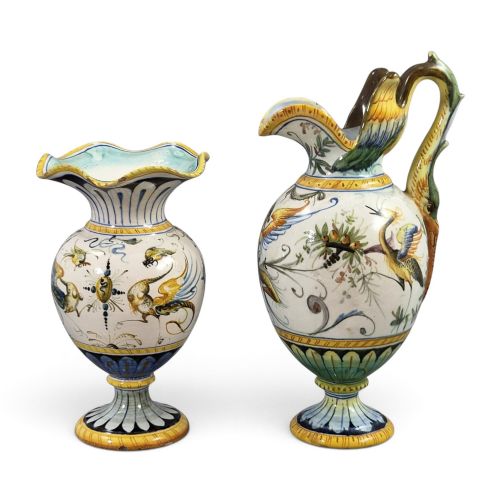
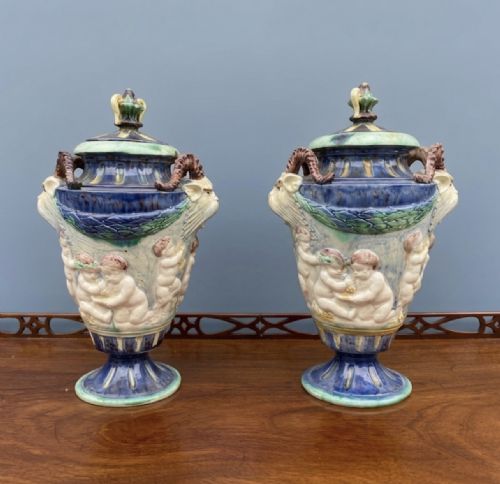
Victorian decorative majolica comprises a vibrant array of lead-glazed earthenware vessels, figures, and architectural elements originating primarily from the nineteenth century. These pieces range from substantial jardinieres and ewers to comports, vases, and figural ornaments displaying distinct Victorian naturalism and Renaissance revival styles.
Buyers frequently encounter utilitarian and display forms such as leaf-moulded comports, figural jugs, and large pedestals. Many examples reflect continental workshops alongside notable British potteries, spanning periods from the 1870s through the Edwardian era.
The aesthetic embraces rich colour palettes and intricate modelling, often combining plant and animal motifs with classical or Chinoiserie influences. Such items served as bold ornamental statements in period drawing rooms and conservatories.
Materials and technique
Potters shaped these objects from earthenware or terracotta clay, often moulding them into complex naturalistic shapes such as overlapping leaves, animals, and human figures. The porous clay body provided a stable foundation for intricate relief details.
Coloured metal oxide enamels were applied over a specialised lead glaze before firing. This technique allowed the vibrant green, brown, blue, and yellow hues to pool naturally in the recesses of the relief work, creating depth and luminosity.
The listings show earthenware and terracotta forms decorated with lead glaze and enamel, spanning the Victorian period to the Edwardian era.
Judging quality
Quality rests upon the crispness of the modelling and the control of the coloured lead glazes during firing. Superior pieces exhibit sharp relief details where leaves, figures, and ornament remain distinct rather than blurred by excessive glaze pooling.
The sophistication of the palette and the ambition of the form distinguish finer examples from standard production pieces. Well-modelled figural elements and balanced proportions indicate skilled factory execution.
Cantagalli Florence·Burmantofts·Choisy-le-Roi·Sarreguemines·Minton·Woodlesford Art Pottery·Joseph Holdcroft
The Victorian Decorative Majolica Glossary
- Majolica
- A type of pottery covered with a colourful lead glaze over an earthenware body. The term largely describes nineteenth-century British and continental wares decorated with opaque coloured enamels.
- Jardiniere
- A large ornamental pot or stand designed to hold growing plants. These often feature heavy relief modelling of natural or architectural motifs.
- Comport
- A raised dish or bowl used for serving fruit or sweets at table. In majolica, these frequently adopt naturalistic plant forms like begonia leaves.
- Ewer
- A large jug with a wide spout and a decorative handle, historically used for pouring water. Victorian examples served primarily as sculptural cabinet pieces.
Victorian Decorative Majolica: Frequently Asked Questions
What is majolica pottery?
Majolica pottery consists of earthenware pieces finished with brightly coloured lead glazes. The style gained immense popularity during the nineteenth century for ornamental domestic objects.
Potters utilised opaque enamel colours to create vibrant surface decoration on moulded plant, animal, and figural forms.
How do I clean majolica?
Clean these glazed ceramic surfaces gently using a soft, dry cloth or a slightly damp sponge. Avoid harsh chemical cleaners that might dull the historic lead glaze.
Submerging porous earthenware or exposing pieces to excessive moisture can damage the underlying clay body over time.
Where were these pieces made?
These items originated across Britain and continental Europe during the nineteenth and early twentieth centuries. Prominent factories operated in England, France, Italy, and Austria.
Each region developed distinct stylistic interpretations, ranging from naturalistic British flora to Italian Renaissance revival designs.