


Antique Fruit Compote Dish
An antique fruit compote dish brings height and ceremony to a table, combining pedestal bowls and flat tazzas in porcelain, glass, and silver.
Antique Fruit Compote Dish
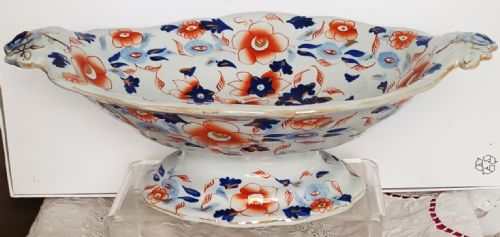
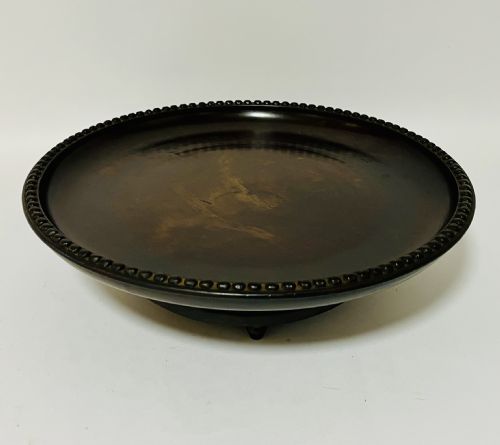
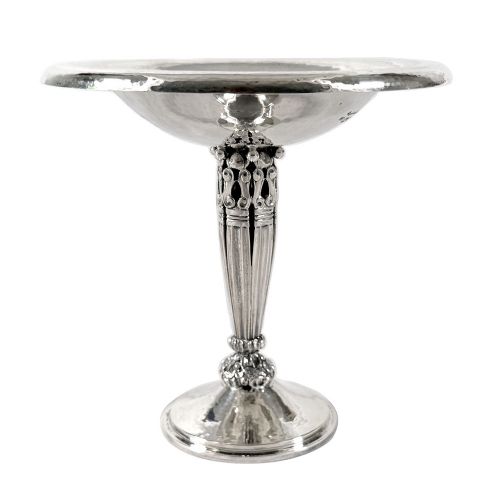
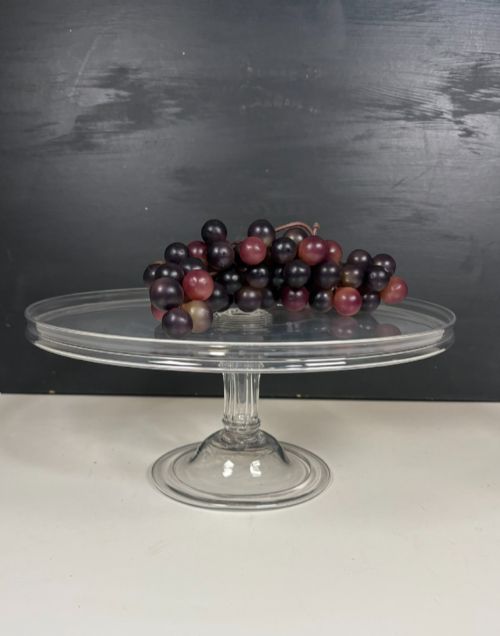
The term antique fruit compote dish covers an array of raised vessels designed to present fruit at the table, from low footed bowls to towering centrepieces. These objects appear primarily across the nineteenth and early twentieth centuries, spanning Victorian, Edwardian, and Georgian periods.
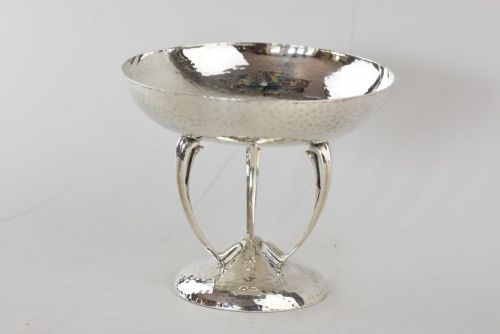
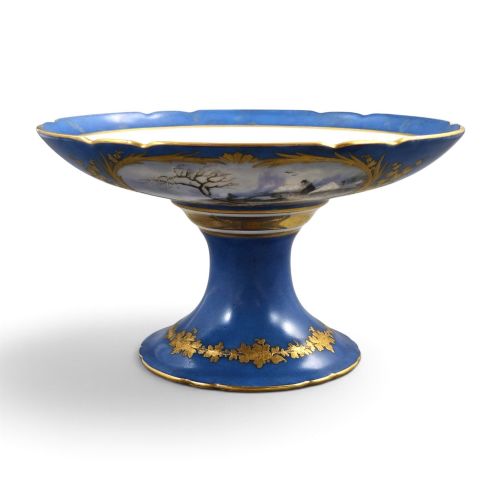
The forms on this page include classical tazzas, pedestal bowls, and decorative centrepieces executed in ceramic, cut glass, porcelain, and sterling silver. Many pieces trace origins to English potteries, continental porcelain factories, and silversmiths from London to Sheffield.
How They Were Made
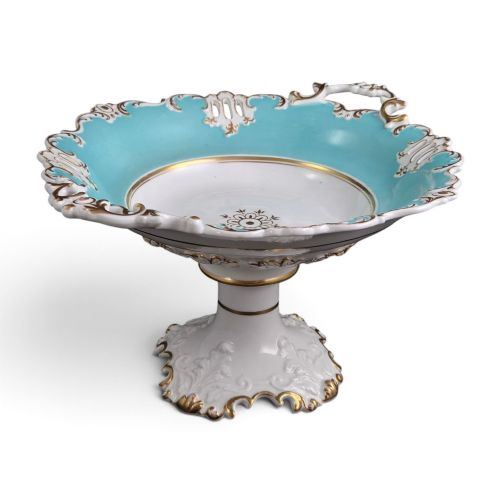
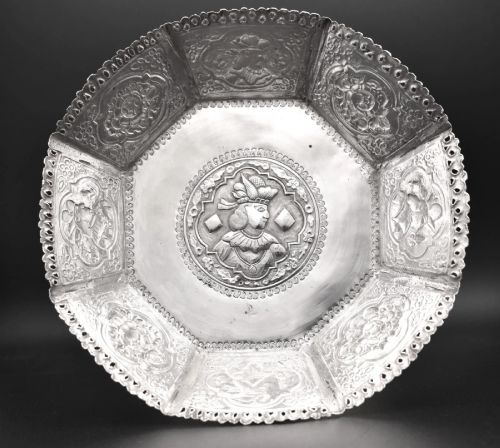
Makers shaped these vessels using methods appropriate to the medium, such as mould-pressed ironstone, blown and cut lead crystal, and hand-hammered or repoussé metals. Porcelain examples combine intricate hand-painting, gilding, and applied ceramic flora or figures.
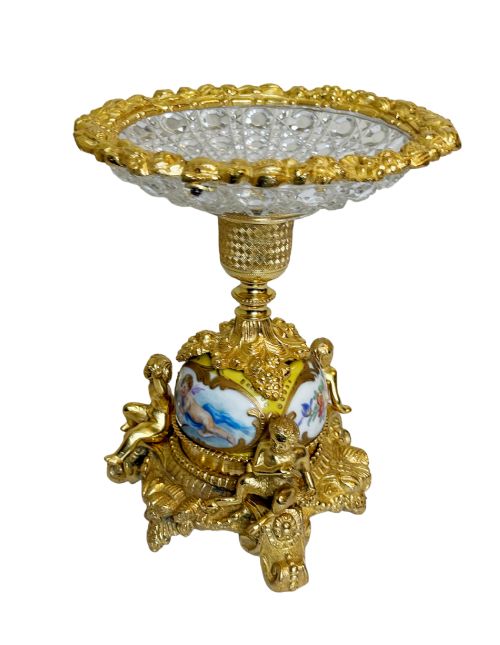
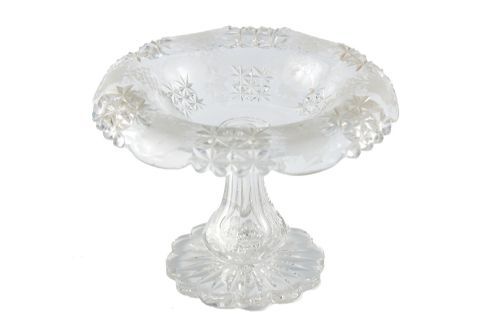
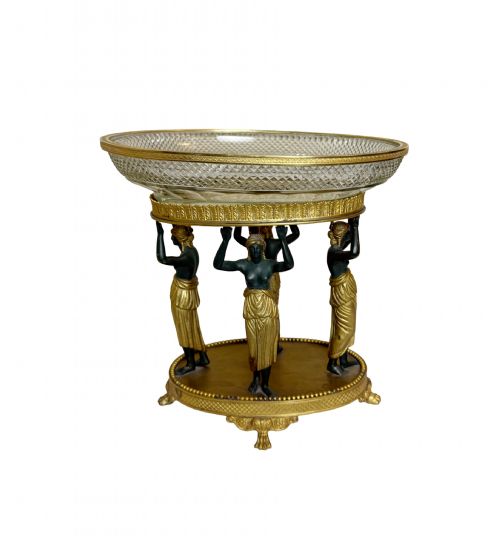
Metal centrepieces frequently employ cast bronze, ormolu, and silver wirework, often assembled from multiple components secured with threaded pins. Glass pieces rely on heavy cutting, moulding, and wheel-engraving to catch the light.
Several Victorian and Edwardian centrepieces feature cheerful groups of sculpted cherubs, putti, and mermen holding up the fruit bowls.
What Varies in Quality
Quality rests on the crispness of the modelling and the depth of the material work, whether in the sharp faceting of cut crystal or the fine relief of cast bronze and silver repoussé. Hand-painted ceramic pieces show distinction through careful brushwork and rich, stable gilding.
Design ambition separates standard tableware from masterworks, evident in sculptural supports like putti, mermen, or cherubs, and complex multi-part constructions in bronze and porcelain.
Goldsmiths and Silversmiths Company·Charles Boyton·Walker and Hall·Minton·Schierholz
The Antique Fruit Compote Dish Glossary
- Tazza
- A shallow bowl or plate mounted on a stem and foot, used for serving fruit or small dishes. This form originates from Renaissance metalware and translates into glass, ceramic, and silver.
- Comport
- A synonym for a compote, representing a pedestal dish designed for fruit or dessert service. These vessels stand above standard table level to create tiered displays.
- Ironstone
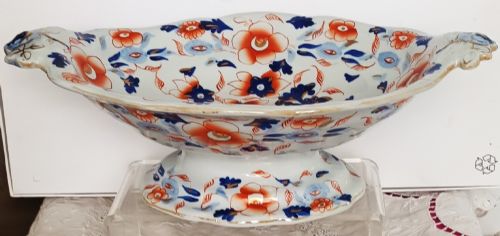
- A type of heavy, durable earthenware patented in the nineteenth century to rival porcelain. It takes brightly coloured transfer prints and enamel decoration very well.
- Repoussé
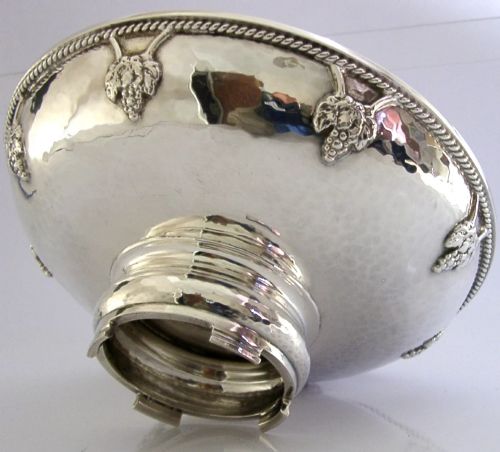
- A metalworking technique where the artisan hammers the design from the reverse side to form raised relief on the front. This method appears on silver bowls and centrepieces.
- Ormolu
- Gilded bronze mounted on decorative objects, popular in French and English grand furniture and metalwork. The technique involves applying a gold amalgam to a bronze base.
Antique Fruit Compote Dish: Frequently Asked Questions
What is an antique fruit compote dish used for?
These vessels served to present fruit, nuts, or sweetmeats at the conclusion of formal meals during the Georgian, Victorian, and Edwardian eras.
Today, they function as striking decorative centrepieces for dining tables or sideboards, holding seasonal displays or standing empty as sculptural objects.
What materials are most common?
The selection includes ceramics such as ironstone, earthenware, and fine bone china, alongside heavy cut lead crystal and pressed glass.
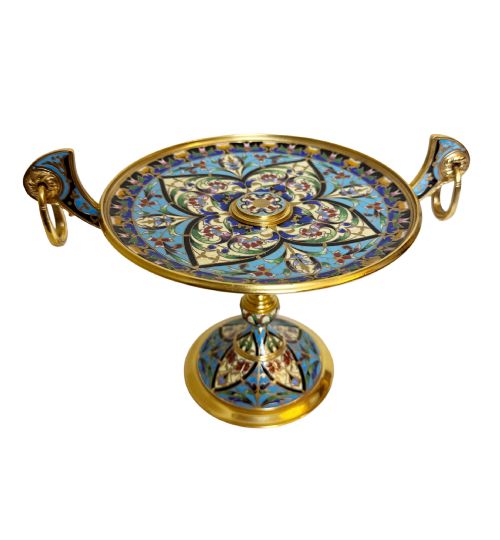
Metal examples span sterling silver, silver-plate, copper, bronze, and gilt bronze, occasionally incorporating enamel or champlevé detailing.
How do I date an antique pedestal bowl?
Dating relies on a combination of material composition, factory marks, style markers, and assay stamps on silver pieces.
Victorian and Edwardian items often display registration marks or specific maker ciphers that narrow down the year of production.