
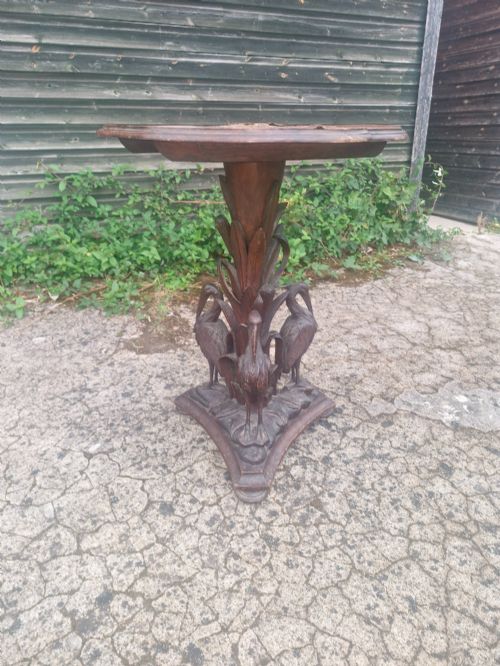
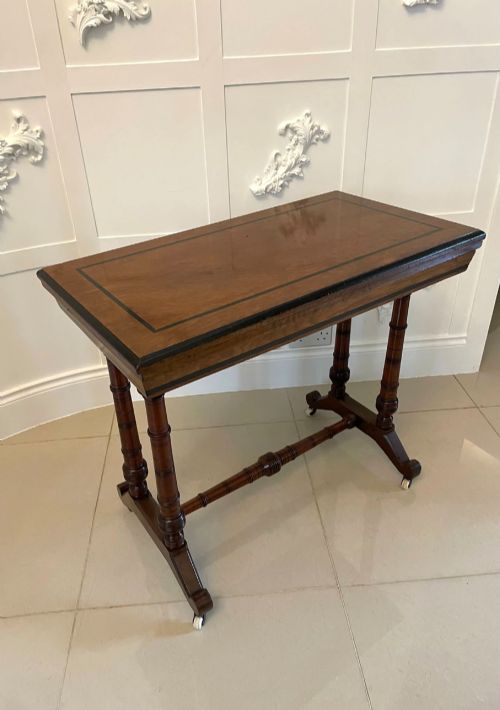
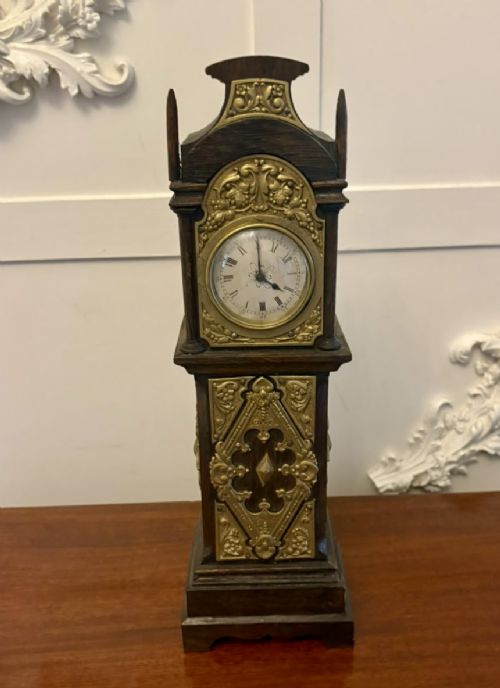
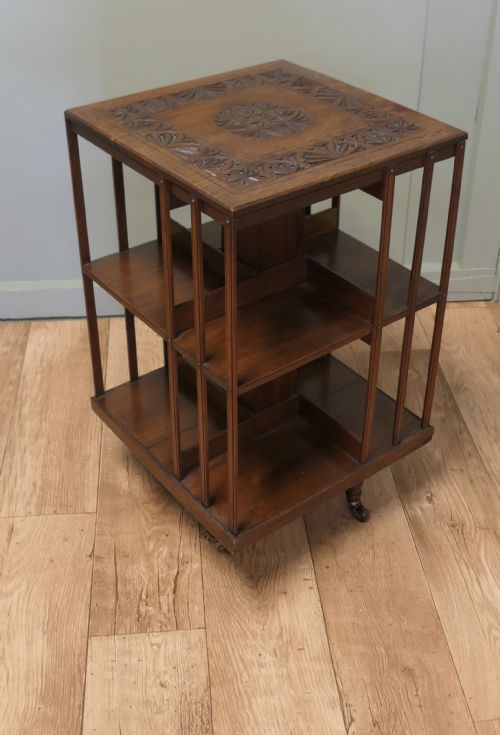
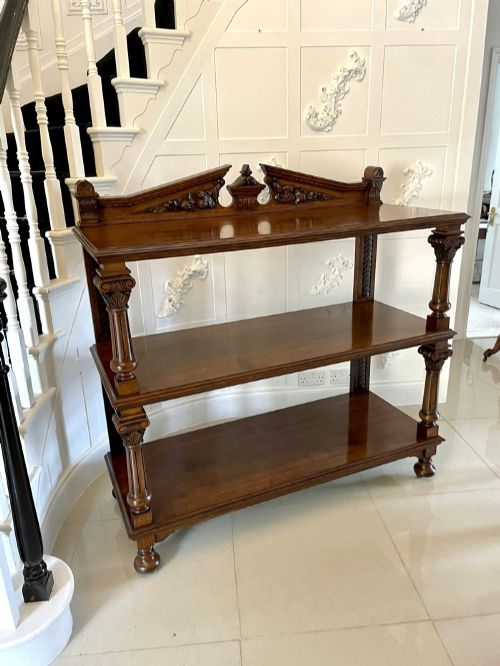
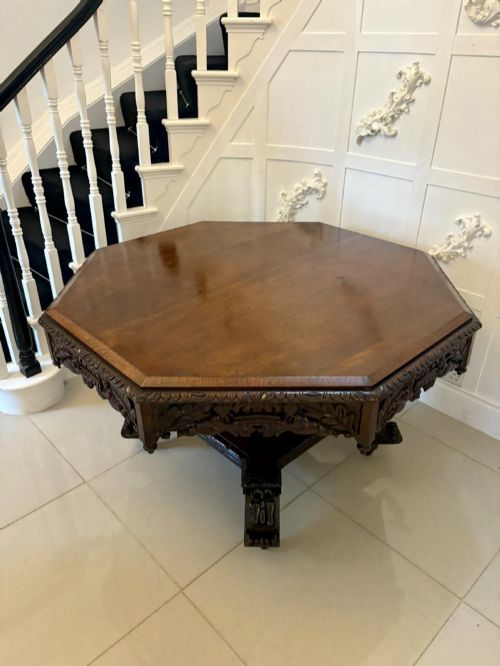

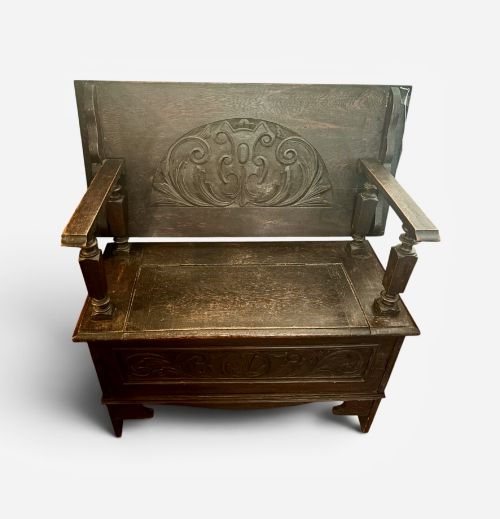
Victorian Dark Oak Table
When you search for a victorian dark oak table, you enter a world of heavy timber, deep patination and robust nineteenth-century construction built to last generations.
Victorian Dark Oak Table
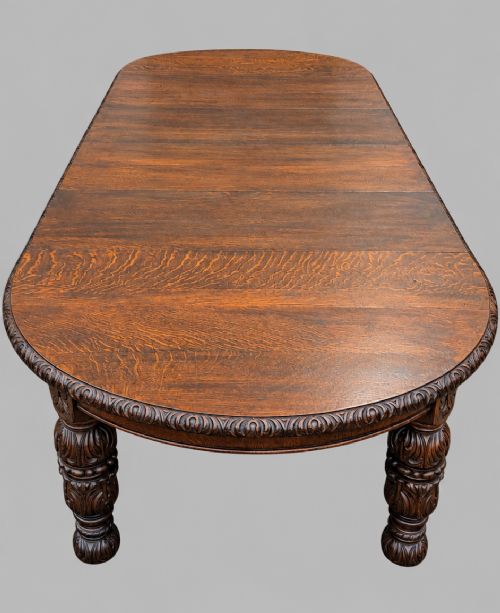
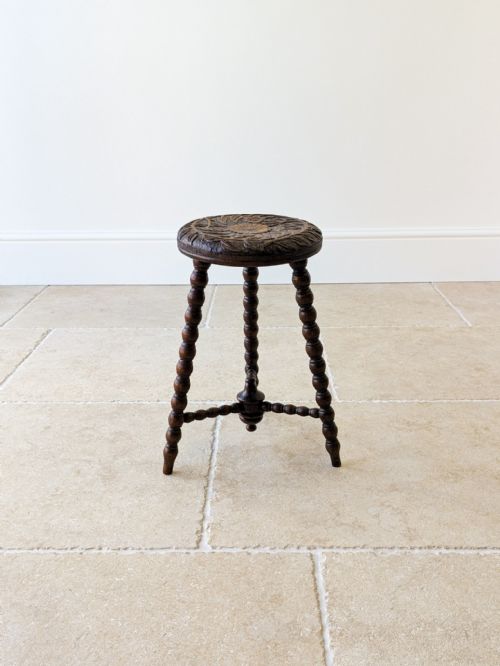
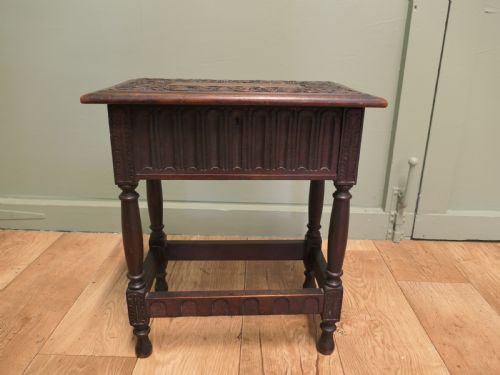
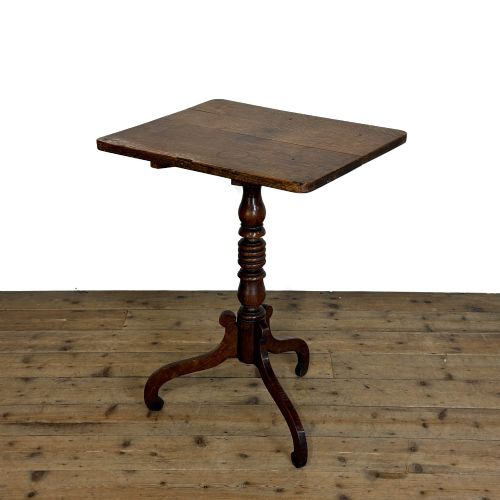
A victorian dark oak table encompasses a variety of domestic forms produced during the nineteenth century, ranging from compact side tables and desks to large dining furniture. The timber typically displays a rich, darkened tone developed through age and finishing, set within periods such as the Victorian era, the 1880s and the 1900s.
Side tables, occasional tables, console tables and extending dining tables dominate the forms available. Stylistic influences often draw upon Gothic Revival, Jacobean Revival and English Country traditions, frequently featuring carved ornamentation such as Green Man motifs or linenfold panels.
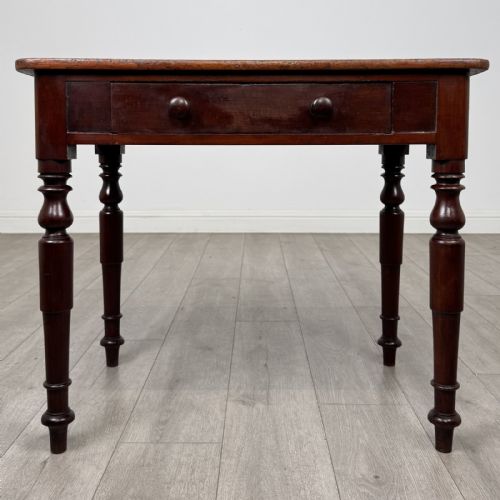
Buyers seeking this phrase most frequently encounter side tables and desks equipped with drawers, alongside substantial dining variants designed for multiple diners. Solid oak and dark oak are standard, occasionally supplemented by secondary woods and leather inserts on writing surfaces.
Evaluating Quality and Craftsmanship
Quality in these pieces is dictated by the depth and crispness of the hand-carving, the selection of figured oak timber, and the integrity of the structural joints. Superior examples exhibit tightly fitted drawers, balanced proportions, and minimal timber shrinkage.
Tables featuring secondary materials like original tooled leather tops, brass hardware, or cast iron elements achieve higher distinction. The uniformity of the dark surface finish and the absence of clumsy later alterations distinguish finer workshop output from utilitarian production.
Listings feature periods from the 1850s through the Edwardian era, predominantly showcasing solid oak, dark oak, and leather.
George Wadham·Liberty of London·William Birch
The Victorian Dark Oak Table Glossary
- Dark Oak
- Timber finished or aged to a deep, warm brown hue. It is characteristic of nineteenth-century revivalist furniture.
- Gothic Revival
- A nineteenth-century architectural and decorative style incorporating medieval motifs like trefoils, pointed arches, and heavy carving. It heavily influences Victorian oak furniture.
- Jacobean Revival
- A style popular in the Victorian period emulating seventeenth-century English design. It typically employs geometric panels, split spindles, and heavy turnings.
- Tilt Top
- A table mechanism allowing the top to hinge vertically for storage when not in use. This form is common in pedestal and occasional tables.
- Barley Twist
- A turned column resembling a spiralling rope or barley sugar stick. It is a frequent decorative feature on Victorian table legs and supports.
Victorian Dark Oak Table: Frequently Asked Questions
How do I identify a Victorian oak table?
Examine the timber grain, construction joints, and decorative motifs for characteristics of the nineteenth century. Look for hand-cut joints, heavy solid oak construction, and styles such as Gothic Revival or Jacobean Revival.
Check for period-appropriate hardware like brass pulls or locks. Maker marks or stamps can sometimes be found inside drawers or underneath tabletops.
Were these tables used for dining or working?
They served multiple domestic functions depending on their specific form and size. Extending dining tables accommodated larger gatherings, while smaller side tables, consoles, and desks were used for writing, reading, and general display.
Many incorporate drawers, leather inserts, or adjustable mechanisms tailored to library, study, or parlour use.
How do I care for dark oak furniture?
Maintain the timber by keeping it away from direct heat sources and strong sunlight, which can dry out and fade the dark finish. Dust regularly with a soft, dry cloth.
Apply a quality beeswax periodically to nourish the wood and preserve the surface sheen without building up a heavy residue.
What is the difference between solid oak and dark oak?
Solid oak refers to the actual timber species used to construct the piece, prized for its density and durability. Dark oak describes the colour or finishing treatment applied to that timber.
Nineteenth-century makers often stained or fumed solid oak to achieve the deep, sombre tones fashionable during the Victorian era.