
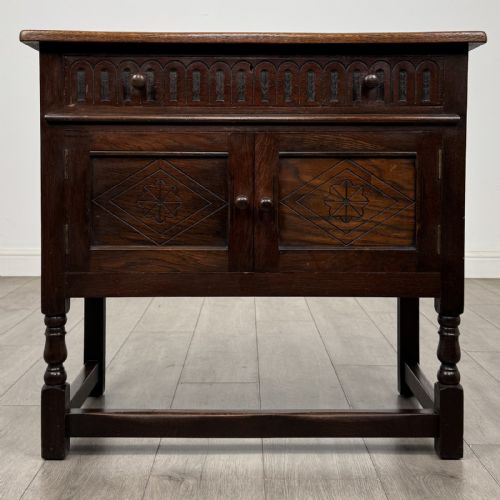
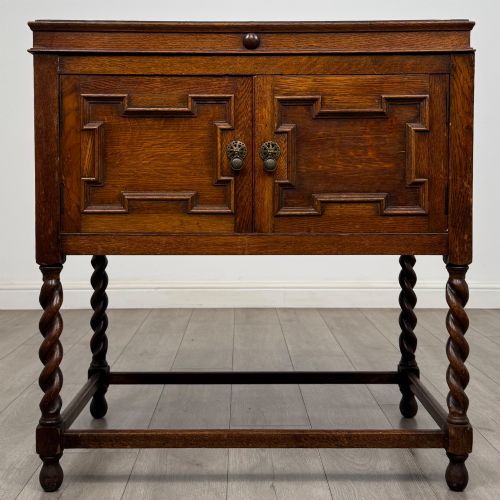


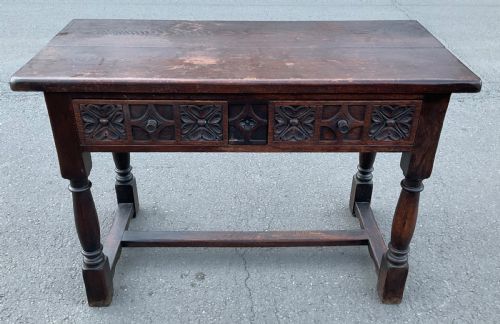


Carved Panel Hall Table
A carved panel hall table brings sturdy timber presence to an entranceway, offering dependable surface space and rich period character.
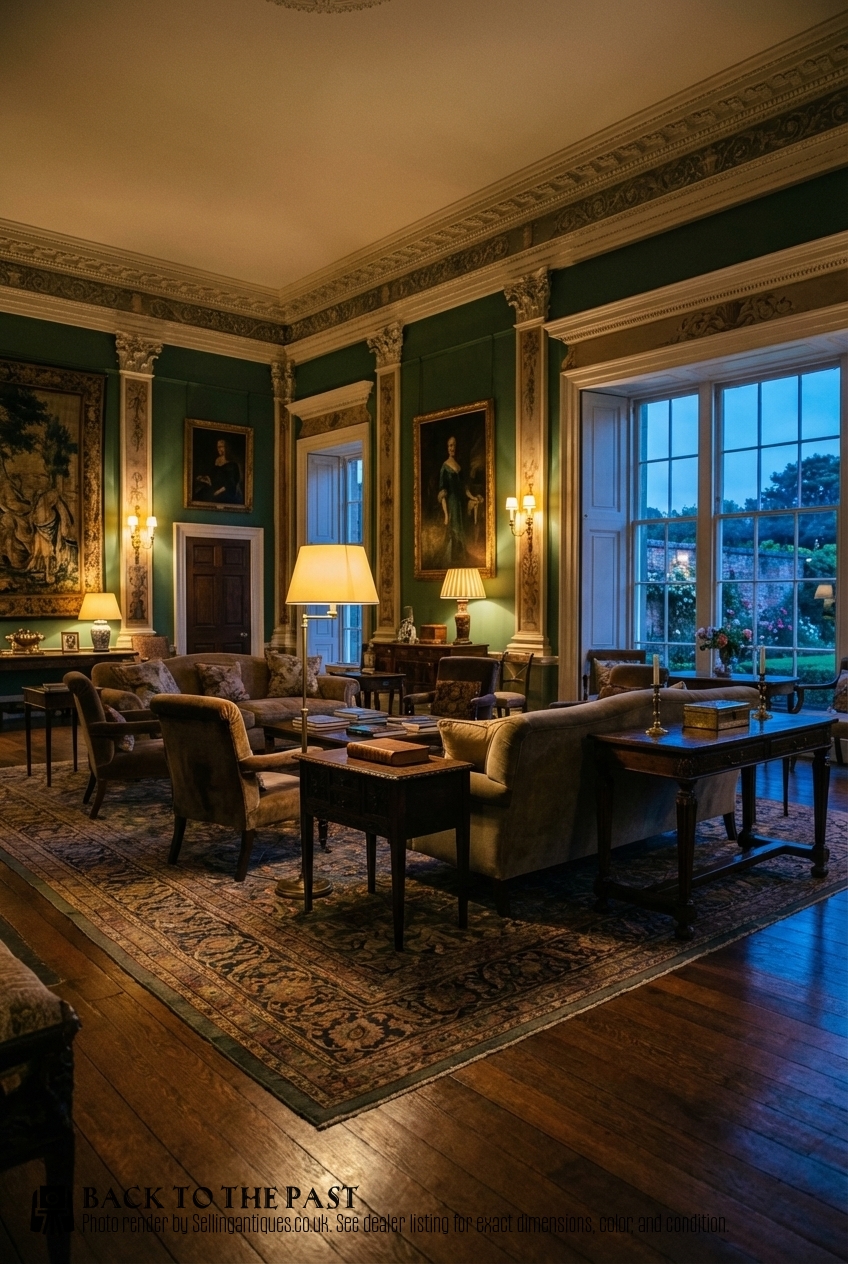
Carved Panel Hall Table
When searching for a carved panel hall table, buyers encounter a diverse selection of sturdy wooden items designed for hallways, including oak benches, side tables, and console tables. These furnishings draw heavily from earlier aesthetics, featuring prominent woodwork suited to functional domestic spaces.
The pieces on this page span several centuries and stylistic revivals, reaching from seventeenth-century server bases up through Edwardian and twentieth-century interpretations. Oak dominates the selection, appearing alongside walnut in forms that range from monks benches to writing desks.
Most examples lean towards robust revival styles, particularly Jacobean and seventeenth-century English motifs, which bring heavy panels and dark finishes to the fore. Buyers are most likely to meet solid oak constructions from the early twentieth century or Victorian eras configured as benches, side cabinets, and low tables.
How they were made
Construction relies primarily on solid oak and walnut, chosen for their durability and capacity to hold deep panel carving. Workshops employed traditional joinery techniques to assemble heavy frames, side panels, and drawer structures that endure through generations.
Surface enrichment often involves geometric moulding and hand-carved panels, alongside functional hardware forged from brass and iron. Finishes lean towards dark patinated treatments that accentuate the natural grain and carved depth of the timber.
Listings on this page span from 1700 through the 19th century up to 1930, demonstrating a strong continuity in oak furniture design.
What varies in quality
The standard of a piece rests heavily on the crispness of its carved panels and the integrity of its timber framing. Superior examples display confident hand-tooling and harmonious proportions rather than mechanical repetition or loose joinery.
Depth of colour and the preservation of original patination distinguish finer items from simpler utilitarian versions. Quality also shows in the weight of the timber and the careful execution of geometric mouldings on drawer fronts.
The Carved Panel Hall Table Glossary
- Dresser Base
- A low sideboard or cabinet featuring drawers and sometimes cupboards beneath a flat top. These pieces originated as practical kitchen storage before entering hallway and living spaces.
- Monks Bench
- A multifunctional item that converts from a table into a bench with a high back. This form maximised space in smaller historical interiors.
- Geometric Moulding
- Raised wooden profiles applied to drawer fronts or panels in symmetrical patterns. This technique added decorative relief to otherwise flat surfaces during the seventeenth century and its later revivals.
Carved Panel Hall Table: Frequently Asked Questions
What is a monks bench?
A monks bench is a dual-purpose item featuring a pivoting back that folds down flat to transform the seat into a table top. This clever design saved space in historical homes.
Such items appear frequently in dark oak across twentieth-century revivals, serving as functional statement pieces in modern hallways.
How do I identify seventeenth century style?
Seventeenth century style is characterised by heavy oak construction, dark finishes, and prominent use of geometric mouldings. Carved panels and sturdy turned supports are also typical hallmarks.
Many pieces meeting this description on this page actually date from Edwardian or later revival periods while closely following historical precedents.
Where should I place a hall table?
A hall table fits naturally in an entranceway or narrow corridor to provide a landing space for keys and correspondence. Console tables and low benches with storage work particularly well in these thoroughfares.
Ensure you measure the walkway clearance carefully, as these solid timber pieces often feature deep overhangs and substantial frames.
Are these pieces made of solid wood?
The listings on this page are predominantly constructed from heavy timbers such as oak and walnut. Solid construction ensures the stability required for frequent daily use in busy areas.
Secondary metals like iron and brass frequently appear as structural bracing or operational hardware.